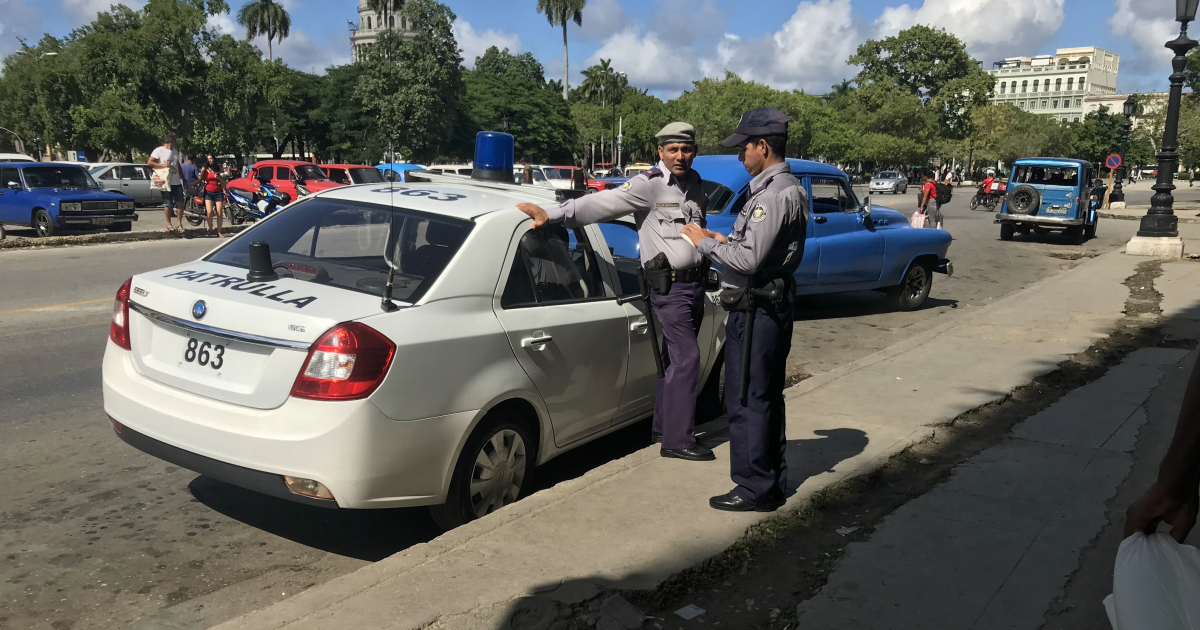
The U.S. Department of Homeland Security has shared through social media a compilation of Latin American nations where security forces demand individuals to present identification under reasonable suspicion or during investigations, specifically mentioning Cuba among these countries.
Posted on X by the U.S. agency responsible for domestic security, the list includes Argentina, Bolivia, Brazil, Chile, Colombia, Costa Rica, Cuba, the Dominican Republic, Ecuador, El Salvador, Guatemala, Haiti, Honduras, Mexico, Nicaragua, Panama, Paraguay, Peru, Uruguay, and Venezuela.
Contrastingly, the Department of Homeland Security's message highlighted that certain “leftist” groups, according to their perspective, are attempting to abolish this routine identity verification practice, and identified the United States as one of the countries where this opposing view is being encouraged.
This statement underscores the official stance of the U.S. government regarding identity control and public security practices in various countries within the region, positioning Cuba as a prime example where authorities mandate identity verification for citizens and visitors under suspicion or during investigative processes, as per the list shared by the agency.
Understanding U.S. Views on Identity Verification Practices in Latin America
Why did the U.S. Department of Homeland Security mention Cuba specifically?
Cuba was highlighted as one of the countries where authorities routinely require individuals to present identification under suspicion or during investigations, according to the U.S. Department of Homeland Security.
What countries are included in the U.S. list of nations requiring identification checks?
The list includes Argentina, Bolivia, Brazil, Chile, Colombia, Costa Rica, Cuba, the Dominican Republic, Ecuador, El Salvador, Guatemala, Haiti, Honduras, Mexico, Nicaragua, Panama, Paraguay, Peru, Uruguay, and Venezuela.
How does the U.S. view efforts to eliminate identity checks?
The U.S. Department of Homeland Security suggests that some leftist groups are pushing to remove these identity verification practices, which they see as a standard security measure.