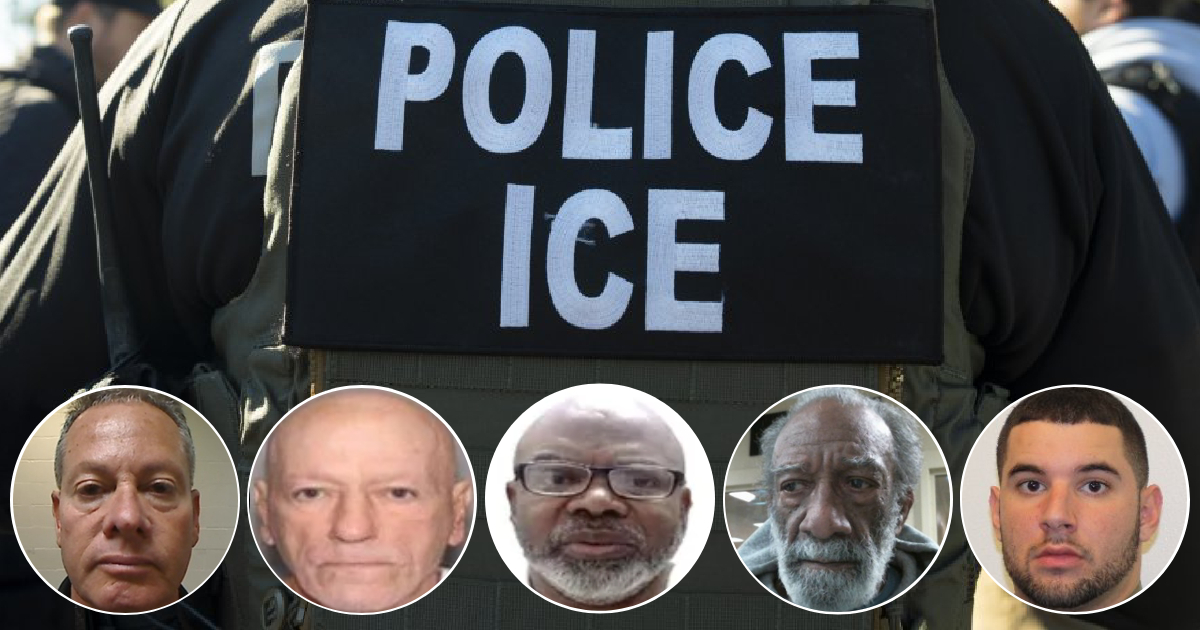
The United States government’s ongoing crackdown on illegal immigration has led to the arrest of five Cuban nationals, all convicted of serious crimes, who now face imminent deportation, according to the Immigration and Customs Enforcement (ICE).
Amidst the aggressive immigration policies spearheaded by the Trump administration since 2025, the federal agency has announced further arrests of undocumented immigrants. This includes several Cubans labeled among the most dangerous foreign criminals in the country, charged with offenses such as murder, assault, armed robbery, and drug trafficking.
The Department of Homeland Security (DHS) underscores that these individuals are considered a public safety threat and are actively sought to ensure their permanent removal from the United States.
Arrests in Multiple States: A Breakdown
In Miami, ICE apprehended Roberto Cámara Sánchez, convicted of second-degree murder in 2005 and currently facing charges for another homicide. "Residents of Florida can breathe easier knowing this illegal immigrant criminal is off the streets," the agency stated in a recent post on social media platform X.
In Colorado, ICE agents in Denver detained Pedro Enrique Zayas Rodríguez, who has prior convictions for dangerous drug possession, attempted homicide during a robbery, and second-degree assault on a law enforcement officer. His deportation was ordered in 2014 and he remains in ICE custody awaiting removal.
Osvaldo Rivero Ledesma, aged 67, was captured in Houston, Texas. Convicted of murder and robbery in Rusk County, he is identified as a former member of the gang Brotherhood of Latin Gunmen. Furthermore, Andrés Linares Cárdenas was arrested in New York with prior assault charges.
During Operation Metro Surge in Minnesota, Erasmo Díaz de la Luz was detained with convictions for drug trafficking and dangerous drug possession. He has had a final deportation order since 2011, revealed ICE.
Impact of Deportation Efforts
Recently, two more Cuban nationals with extensive criminal records were arrested in Florida. Meanwhile, 170 Cuban migrants were deported back to the island from the U.S., marking the first deportation flight of 2026, as reported by Cuba’s Ministry of the Interior (MININT).
According to DHS data cited by Café Fuerte, this latest deportation raised the total number of Cubans returned since January 2025 to 1,668. Under President Trump’s two terms, a record total of 5,053 Cuban nationals have been expelled from the U.S.
Controversy and Criticism Surrounding Immigration Policy
President Trump’s measures to curb illegal immigration include sweeping ICE raids, border patrol operations, and local law enforcement efforts to locate and detain individuals without legal status, aiming at their expulsion. The DHS claims that about 70% of those arrested are convicted criminals or face legal proceedings. Nevertheless, human rights organizations, community leaders, and citizens argue that these operations also target law-abiding workers with no criminal history, who have lived in the country for years, paid taxes, and supported their families.
Reports of violent ICE operations in various cities have sparked widespread protests and allegations of poor conditions, abuse, inadequate medical care, and other human rights violations in migrant detention centers.
In early 2026, the city of Minneapolis became the focal point of social unrest following aggressive ICE raids that led to multiple confrontations and protests, particularly after immigration agents fatally shot U.S. citizens Renée Nicole Good on January 7 and Alex Jeffrey Pretti on January 24.
Understanding the Crackdown on Cuban Immigrants
Why were these Cuban nationals arrested by ICE?
These Cuban nationals were arrested due to their criminal records, which include serious offenses such as murder, assault, and drug trafficking, posing a threat to public safety in the U.S.
What is the response of the DHS to these arrests?
The DHS supports these arrests, emphasizing that individuals with criminal backgrounds are a public safety threat and need to be removed from the country.
How have local communities reacted to ICE operations?
Local communities have responded with protests and criticism, highlighting incidents of violent raids, and the arrest of individuals without criminal records.