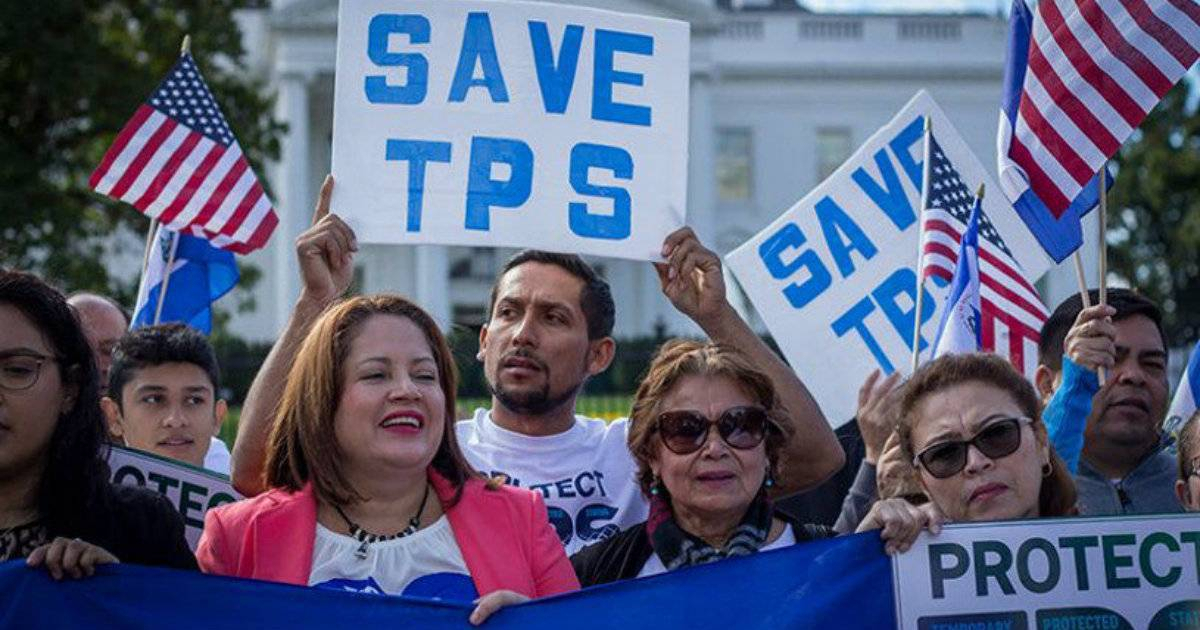
An appeals court in the United States has temporarily paused the government's efforts to terminate Temporary Protected Status (TPS) for migrants from Honduras, Nicaragua, and Nepal. This move marks a significant setback for the beneficiaries of these immigration programs.
Homeland Security Secretary Kristi Noem expressed her approval on social media platform X regarding the Ninth Circuit Court of Appeals' decision, which overturns a previous court ruling that had prevented the termination of TPS for these nations.
Noem praised the decision as "a victory for the rule of law," claiming that the Biden administration had misused TPS. "Under the previous administration, Temporary Protected Status was exploited to permit the entry of violent terrorists, criminals, and national security threats into our nation," Noem stated.
Judicial Order Puts a Hold on TPS Termination Block
The Ninth Circuit's six-page order temporarily suspends a December 2025 ruling by Federal Judge Trina Thompson of the Northern District of California. Judge Thompson had previously invalidated the TPS terminations, arguing that the government failed to follow appropriate procedures and did not accurately assess the actual conditions in the affected countries.
With the suspension in place, Thompson's ruling is effectively nullified while the legal proceedings continue, enabling the Department of Homeland Security (DHS) to proceed, at least temporarily, with its plan to end the program for these countries.
Noem's Stand on the Non-Permanence of TPS
In her message, Noem reiterated that TPS "was never meant to be a permanent status" and accused previous administrations of using it as a de facto amnesty over the years. "Given the improvement in conditions in each of these countries, we are appropriately concluding what was intended to be a temporary designation," Noem wrote.
Uncertainty Looms for Thousands of Migrants
The appeals court's decision reignites uncertainty for tens of thousands of migrants from Honduras, Nicaragua, and Nepal who have legally resided and worked in the U.S. under TPS, some for over two decades.
Although the suspension does not represent a final verdict on the case, it is a major legal win for the administration and a crucial step in its approach to limit the use of temporary immigration programs.
The legal battle will persist in the courts, while immigrant advocacy groups warn that ending TPS could have humanitarian, economic, and social ramifications for both the beneficiaries and their families in the U.S.
Impact of TPS Decision on Migrants and Policy
What does the suspension of TPS termination mean for migrants?
The suspension allows migrants from Honduras, Nicaragua, and Nepal to continue residing and working legally in the United States under TPS, at least temporarily, while the case proceeds in court.
How does this decision affect the Biden administration's immigration policy?
The decision supports the Biden administration's efforts to limit the scope of temporary immigration programs like TPS, emphasizing stricter adherence to the original intent of these policies.
What are the potential consequences of ending TPS for these countries?
Ending TPS could lead to humanitarian challenges for migrants, as well as economic and social impacts for both the individuals affected and their communities in the United States.