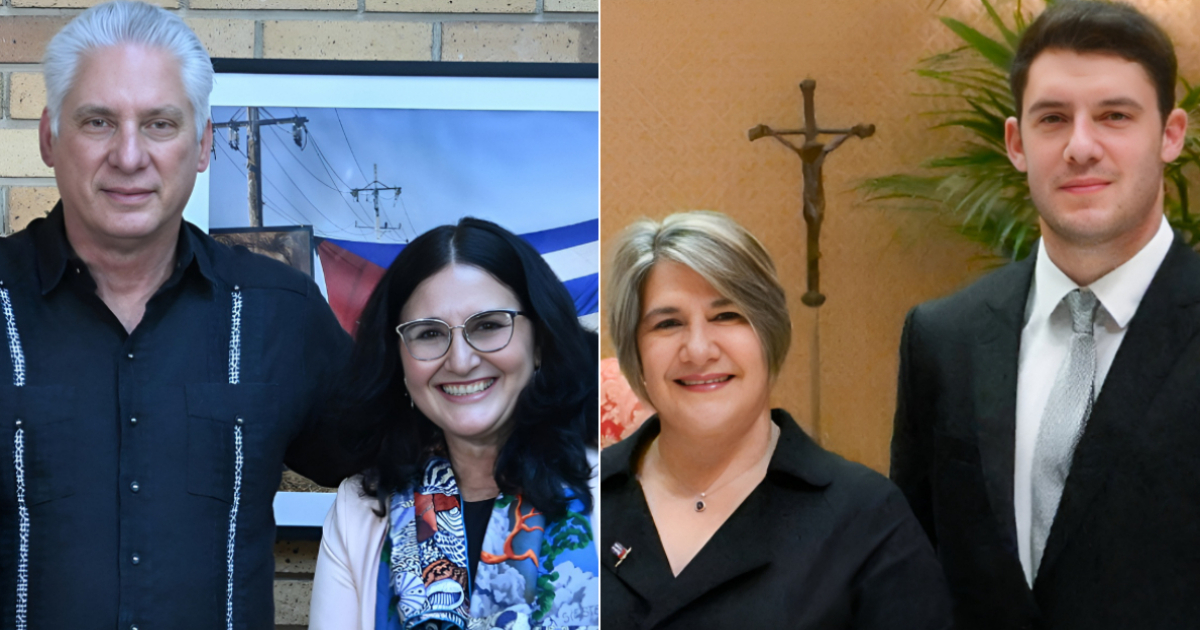
A digital storm erupted on CiberCuba's Facebook page this past Monday when Cubans reacted to a post about Lis Cuesta Peraza's son attending a prestigious private university in Spain. Johana Tablada de la Torre, a Cuban diplomat, had responded to a question about whether the "blockade" was to blame for this situation, sparking widespread anger.
Lissette Iglesias Rossell, among others, criticized the Ministry of Foreign Affairs (MINREX) official, questioning why Cubans endure hardships while Manuel Anido Cuesta studies abroad. "The people are tired of enduring hardships while the elite's children vacation outside of Cuba," she expressed.
Tablada de la Torre, serving as ambassador to Mexico alongside her diplomat husband Eugenio Martínez Enríquez, responded with the familiar excuse: "If not for the criminal blockade, there would be no shortages," inadvertently highlighting a deeper ethical issue.
Within hours, hundreds of comments flooded the post, expressing a common sentiment: frustration with the government's hypocrisy and privilege. This topic resurfaced the controversy from June 2025 when it was revealed that Manuel Anido Cuesta, Miguel Díaz-Canel's stepson, was enrolled in an executive program at Madrid's IE University Business School, one of Europe's most expensive institutions.
While his stepfather urged Cubans to "be resourceful" and endure daily 12-hour blackouts, Cuesta Peraza's son was living lavishly in Madrid, even making headlines with actress Ana de Armas.
Public Outcry: "We're Paying for This"
Among the thousands of comments, one phrase stood out: "We're the ones paying for this." This sentiment captured the widespread belief that the ruling class's luxuries are funded by the sacrifices of ordinary Cubans.
Questions about the source of the funds for such an education were rampant. "How do they pay for that university? With the sweat of those who can't even afford a liter of oil," one commenter said. Another sarcastically noted, "Poor kid, forced to study in Spain because of the blockade. What a huge sacrifice!"
Many questioned why Díaz-Canel's stepson didn't attend the University of Havana, hailed by the regime as a "model of free excellence." One comment asked, "If the Cuban educational system is so great, why is Lis Cuesta's son studying at a capitalist university costing 12,000 euros?"
From Sarcasm to Despair: Responses to Power
The tone of the comments swung from anger to mockery. "The blockade doesn't block the euros," read numerous responses, while others were more biting: "The blockade must be why Ana de Armas left him;" "He didn't study at Harvard because of the embargo;" "The blockade only stops them from living in the country they rule."
Some pointed out the political undertones: "These are not scholarships; they're payments for loyalty and preparing the next generation to exploit the people." Another bluntly summarized: "While the first lady's son studies in Spain, my kids walk miles because there's no transport to school."
Demand for Transparency and Accountability
The economic aspect was a major focus. Many demanded concrete explanations about the financial means supporting the young man's education in Madrid. "How many months of a doctor's or teacher's salary does it take to pay for just one semester of that?" a Cuban woman asked. "The cost of his education could fund an entire school in Cuba."
Others called for transparency: "They should explain on the Round Table where the money for these scholarships comes from," and "Let the Comptroller's Office investigate how the children of the powerful can live like millionaires abroad while the people have no electricity."
The Real Blockade: A Crisis of Conscience
A significant portion of the comments directly challenged Tablada de la Torre's blockade argument. The people's response was clear: "The blockade is them, blocking the people from living with dignity;" "It's not the blockade, it's the looting;" "They've been telling the same story for 60 years. Even they don't believe it anymore."
Some reminded that Cuba trades with over 190 countries and that the U.S. embargo doesn't prohibit humanitarian transactions or food purchases. "A farmer is blocked when the State won't let him sell his crops. An entrepreneur is blocked when their business is seized," one user wrote.
Personal Rejection and Popular Humor
Tablada de la Torre herself became a target of personal disdain. "Her name suits her, face like a board;" "The board she calls a face feels no shame;" "Another one defending the indefensible for the privileges she receives," read numerous reactions.
Popular humor didn't take long to appear: memes, wordplay, comparisons with soap opera characters, and jokes about "blocked scholarships" filled the comment section. One widely shared joke stated: "If my child studies in Cuba, it's the blockade's fault. If yours studies in Spain, it's merit."
Many comments alluded to the political elite's hypocrisy: "They talk about equality and socialism, but all their children live like princes in capitalism."
One user suggested a reality check: "They should spend a week with blackouts, cooking with firewood, and studying by flashlight to see if their rhetoric holds up." Another summed up the common sentiment: "What hurts most isn't that they live well, but that they do so with the people's money and then mock us."
This digital debate highlights what the government tries to ignore: the growing chasm between official rhetoric and reality. The old blockade narrative no longer convinces, and each new luxury revealed — every child in Europe, every mansion or hidden business — reinforces the perception of a ruling class disconnected from its people.
One user articulated a poignant observation: "There's no revolution without morality, and they've lost it long ago." "Cubans no longer believe in fairy tales. They just want to live without being the ones funding others' luxuries."
The true blockade is a moral one. Among the flood of reactions, a powerful idea emerged repeatedly: "The real blockade is in the conscience of those who govern."
Thus, through sarcasm, anger, and fatigue, Cubans commenting on CiberCuba's post exposed what the regime tries to conceal: while preaching equality and sacrifice, their children study in European luxury, funded by money the people don't possess.
FAQs on Cuba's Educational Inequality and Government Privilege
Why are Cubans frustrated with Lis Cuesta's son's education in Spain?
Cubans are upset because they perceive that while they endure daily hardships, the ruling class's children, such as Lis Cuesta's son, enjoy luxurious education abroad, seemingly funded by the sacrifices of ordinary citizens.
What arguments do Cubans use against the government's blockade excuse?
Many argue that the real blockade comes from the government itself, which prevents citizens from living with dignity and transparency. They point out that Cuba trades with numerous countries and that the U.S. embargo does not prohibit humanitarian aid.
How do Cubans view the financial aspect of their leaders' privileges?
Many Cubans question the source of the money that allows the ruling class's children to study abroad, demanding transparency and accountability for these apparent luxuries funded at the expense of the general populace.