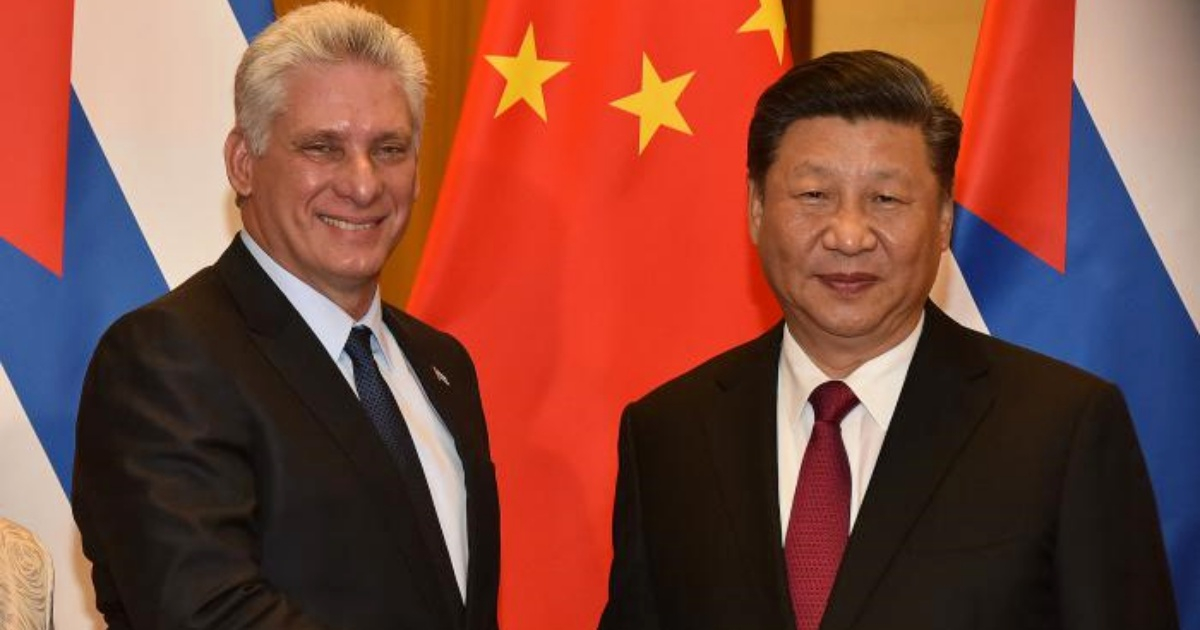
On Tuesday, China announced its readiness to assist Cuba with its severe fuel shortage, a crisis that has started to impact air travel on the island.
This announcement, reported by Reuters and Chinese state media like the Global Times, comes at a time of heightened geopolitical tensions and increasing energy isolation for Havana.
"China firmly supports Cuba in defending its national sovereignty and security, and opposes foreign interference," stated Lin Jian, spokesperson for China's Ministry of Foreign Affairs, during a routine press briefing held on February 10th.
Lin further emphasized that China "will always provide support and assistance to the Cuban side to the best of our abilities." However, the Chinese government did not specify the form this aid might take.
A Strong Rejection of External Pressures
In his remarks, Lin Jian also addressed these pressure tactics, asserting that China "strongly rejects inhumane actions and practices that deprive the Cuban people of their right to survival and development."
The message was clear: Beijing not only backs Havana as a strategic ally but also openly criticizes U.S. policies that exacerbate the island's shortages.
Alongside this explicit political backing, Lin noted that there have been no reports of Chinese citizens stranded in Cuba, referencing recent flight cancellations due to a lack of aviation fuel, a stark indicator of the country's deteriorating logistics.
Geopolitical Solidarity: China, Russia, and Mexico Stand with Cuba
In parallel with China's statements, the Kremlin confirmed on Monday that it is in talks with Havana to help counteract the energy restrictions imposed by the United States.
Moscow claims that Washington employs "suffocating tactics" that directly impact the Cuban populace.
Meanwhile, Mexico's President, Claudia Sheinbaum, sharply criticized U.S. pressure and emphasized that her government will continue exploring "diplomatic channels" to facilitate the shipment of oil to the island.
Last month, Mexico sent two Navy ships with humanitarian aid to Cuba, carrying over 800 tons of food and essential goods.
Symbolic Support with Cautionary Limits
Although China reiterated its commitment to "support and assist" Cuba, its statements were not accompanied by specific announcements of fuel deliveries or immediate logistical assistance.
The phrase "to the best of our abilities" suggests a conditional backing, likely calculated to avoid escalating tensions with the United States on other commercial and geopolitical fronts.
Nevertheless, China's symbolic message is significant. Amid an energy crisis with visible effects—from power outages in public services to impacts on tourism and air travel—Cuba clings to its traditional allies to navigate an increasingly restrictive scenario.
Understanding the Global Dynamics of Cuba's Fuel Crisis
Why is Cuba facing a fuel shortage?
Cuba is experiencing a fuel shortage due to geopolitical tensions and energy restrictions imposed by external forces, primarily the United States, which have severely limited the island's access to necessary resources.
What role is China playing in Cuba's fuel crisis?
China has expressed its willingness to support Cuba during its fuel crisis, offering political backing and potential future assistance, although specific measures have not been outlined.
How are other countries responding to Cuba's situation?
Russia has engaged in discussions with Cuba to counteract U.S.-imposed energy restrictions, while Mexico has criticized U.S. pressure and has provided humanitarian aid, including essential goods, to Cuba.