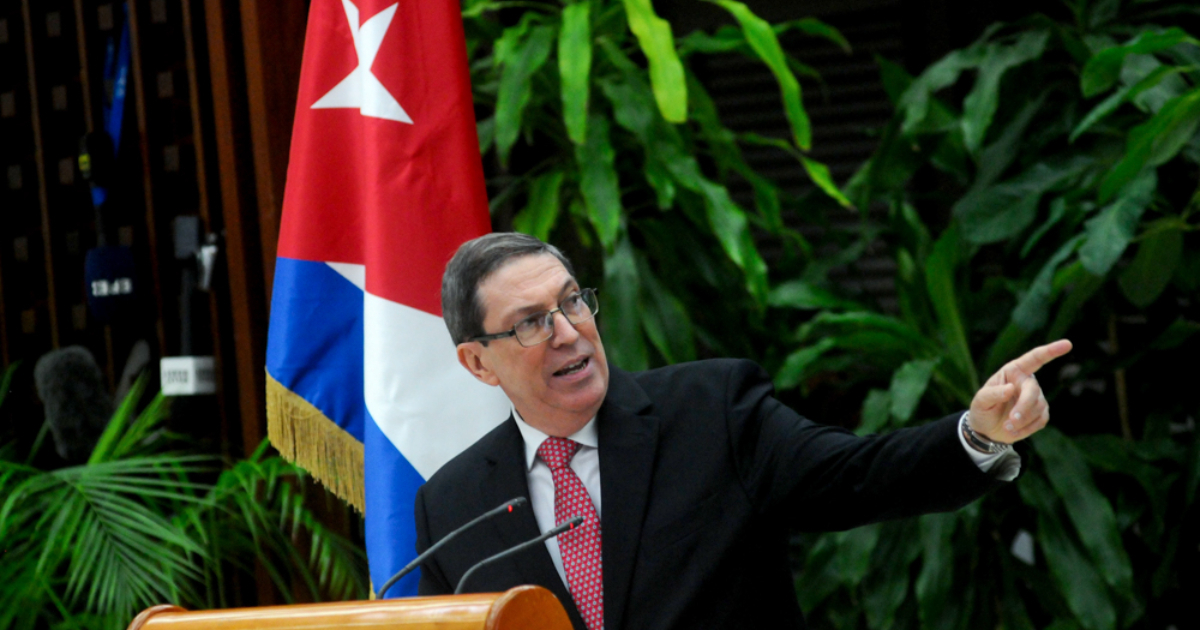
Cuban Foreign Minister Bruno Rodríguez declared on Sunday that the nation is navigating a particularly challenging period, necessitating greater efforts from its citizens. "Challenging times demand significant sacrifice," he stated in a post on the social media platform X, once again blaming the United States for the economic and energy crisis on the island.
In his post, Rodríguez emphasized that "U.S. aggression against Cuba is not new" and has intensified in recent years, with efforts aimed at completely blocking fuel supplies to the island. According to Cuba's top diplomat, Washington's goal is to "break the political will of Cubans," a target he deemed impossible, though he noted some persist "with the intent to inflict maximum harm on the people."
Rodríguez also reiterated the Cuban government's openness to dialogue. "Our readiness for dialogue is clear and well-known. It has been stated both directly and publicly," he noted, adding that Cuba enjoys "international solidarity and support" and is not "sitting idly by."
These statements arise amid escalating tensions following measures introduced by the Trump administration aimed at heightening economic pressure on Havana, particularly in the energy sector. In recent weeks, Rodríguez had already spoken of an "international emergency" and condemned what he described as an escalation of sanctions and pressures on third countries supplying oil to Cuba, amidst a crisis marked by blackouts, shortages, and economic paralysis.
His message sparked a wave of critical reactions on platforms like X and Facebook. Many questioned the call for sacrifice. "You talk about sacrifice... yet it's always the people who sacrifice, never the leaders," wrote one user.
Others challenged the official narrative regarding the country's "political will." "The political will of the Cubans? Are you serious?" read one comment, while another stated, "Your system has bent the will of the Cuban people, with blackouts, hunger, and repression."
The discourse on dialogue was also scrutinized. "When you say 'our readiness for dialogue,' who is included in that 'our'?" asked one comment. "You speak of dialogue while imprisoning young people and persecuting those who think differently," remarked another user.
On Facebook, several comments insisted that the crisis cannot be solely attributed to external factors. "Blaming the United States is the oldest excuse of a power that refuses to look in the mirror," wrote one individual, while another noted, "If Cuba were well-governed, no sanctions would have led it to collapse."
Some messages called for concrete political changes. "All these problems could be solved with free multiparty elections, something normal in any country," commented a user, while another added, "The solution is to relinquish power and let the people freely choose their destiny."
Other comments reflected the accumulated social fatigue. "Don't ask for more resilience from a mother who has no food for her children or an elderly person who can't sleep due to blackouts," shared one user. "We've been sacrificing for decades and things keep getting worse," summarized another message.
This frustration had already been evident in recent reactions to statements from other regime leaders, such as when Miguel Díaz-Canel publicly thanked Mexico for its aid, prompting numerous Cubans to respond with criticism and questions about how long the nation will continue to rely on external assistance without addressing its structural issues. In this context, the call for "significant sacrifice" highlighted the gap between official rhetoric and the sentiments of many within the population.
Understanding the Current Crisis in Cuba
What are the main reasons for the current crisis in Cuba?
The crisis in Cuba is attributed to a combination of factors including intensified U.S. sanctions, internal economic mismanagement, and a lack of energy supplies leading to widespread blackouts and shortages.
How is the Cuban government responding to the situation?
The Cuban government claims to be open to dialogue and emphasizes its international support. However, it continues to blame the U.S. for the hardships while facing criticism from its citizens for not addressing internal governance issues.
What has been the public reaction to the government's call for sacrifice?
Public reaction has been largely negative, with many criticizing the government's call for sacrifice as the burden falls predominantly on the people rather than the leadership. Citizens have expressed frustration over enduring hardships without seeing improvements.