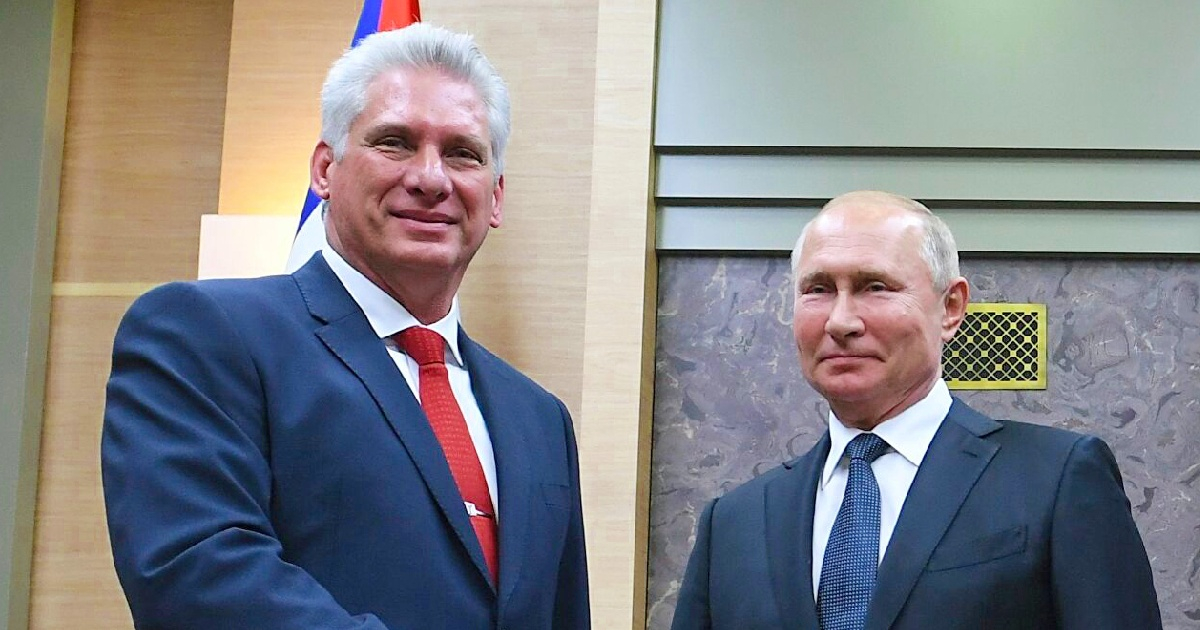
The Kremlin has officially acknowledged the severe energy crisis in Cuba, emphasizing that they are maintaining "intensive contacts" with the island's authorities to address the fuel shortage, which has been exacerbated by U.S. sanctions and disruptions in Venezuelan supplies.
"Russia is engaged in talks with Cuba to find solutions to the country's challenges and provide every possible assistance," stated Dmitri Peskov, the Russian presidential spokesperson, to the Russian media. He affirmed that Vladimir Putin's administration is fully aware of the worsening energy conditions.
Peskov admitted, "Cuba is facing a truly critical fuel situation."
"We are aware of it. We maintain intensive contact with our Cuban friends through diplomatic and other channels," he continued.
He highlighted that the primary cause of this crisis is the pressure exerted by the United States:
"In reality, let's say the U.S. stranglehold is creating significant difficulties for the country. We are discussing potential solutions with our Cuban friends, at the very least, providing them with every possible help."
However, the Kremlin spokesperson refrained from offering specific details on the actions Moscow might undertake or the strategies being evaluated to ease the fuel shortage on the island.
He did mention that among the topics under discussion is the repatriation of stranded Russian tourists in Cuba, but no specific plan was outlined.
Russian Tourists on the Island: Flights Under Strain
The Russian Union of Travel Industry (RUTI) reported that around 4,000 Russian tourists are currently in Cuba.
According to the tour operator Pegas Touristik, the situation regarding the return of these travelers is "stable," and scheduled flights continue to operate.
Nonetheless, RUTI confirmed that the supply of Jet A-1 kerosene was suspended at nine Cuban airports, including those in Havana, Varadero, and Cayo Coco, from February 10 to March 11.
This has forced Russian airlines to carry additional fuel from their points of origin or make technical stops in third countries.
In a recent case, Rossiya Airlines dispatched an empty plane to Cuba with the sole purpose of repatriating passengers.
U.S. Tightens Sanctions: "No Oil or Money for Cuba"
The U.S. offensive has intensified in recent weeks. On January 29, President Donald Trump signed an executive order authorizing tariffs on countries that supply oil to Cuba, directly or indirectly.
Moreover, he declared a national emergency, citing an alleged threat to national security originating from Havana.
"Cuba has long relied on large quantities of oil and money from Venezuela in exchange for security services. But the situation has changed. There will be no more oil or money for Cuba, zero!" Trump declared.
Russia: A Steadfast Supplier and Ally
In recent years, Russia has been one of Cuba's most consistent strategic partners in the energy sector.
It has delivered oil shipments at critical times and fortified a bilateral relationship strengthened in military, economic, and political spheres.
However, no new shipments or specific material commitments have been announced in response to this new emergency.
Peskov's statement leaves the door open to that possibility, but for now, it remains in the realm of diplomatic support rhetoric.
The phrase "at the very least, provide every possible help" conveys a message of political backing, albeit without concrete guarantees.
Key Questions on Cuba's Fuel Crisis and International Relations
What are the main causes of Cuba's current fuel crisis?
Cuba's fuel crisis has been primarily caused by U.S. sanctions and the disruption of oil supplies from Venezuela.
How is Russia responding to Cuba's energy crisis?
Russia is in discussions with Cuba to find solutions and is offering diplomatic support, although specific actions or commitments have not yet been announced.
What impact have U.S. sanctions had on Cuba?
U.S. sanctions have intensified Cuba's fuel shortages and economic difficulties by limiting the country's access to oil and financial resources.