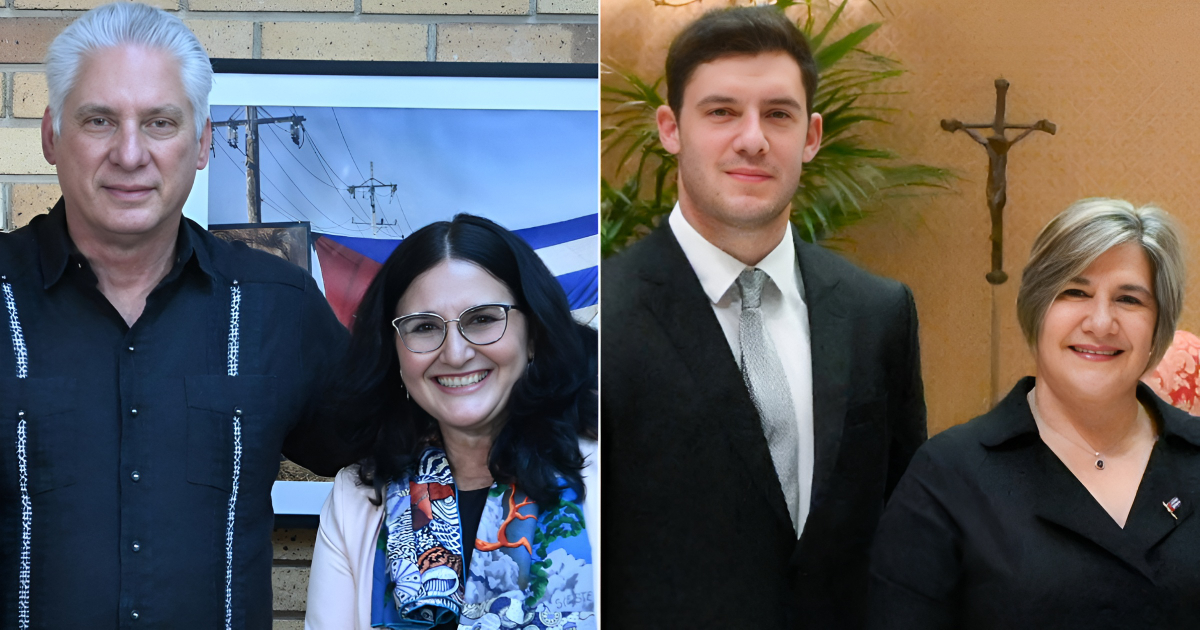
Johana Tablada de la Torre, a Cuban diplomat known for her paternalistic rhetoric, has once again stirred controversy with a political post on Facebook.
In her message, Tablada likened Cuba to a "house" and the United States to a "bully" who cuts off "water, electricity, gas, and rights" from the Cuban people.
She suggested that it's beneficial for "brothers" to debate about how to paint the house, but when facing external threats, it's logical to put differences aside to stand against aggressors.
This allegory aimed to promote national unity against "imperialist aggression," but it inadvertently highlighted public divisions over inequality, privilege among the ruling class, and a populace weary of empty rhetoric.
The People's Frustration: A Comment Sparks a Debate
Among numerous responses to Tablada's post, a comment by Lissette Iglesias Rossell resonated with many Cubans: "The people are tired of being asked for creative resistance. It's enough to see the difference between the underfed and poorly dressed majority, while leaders are well-fed, shiny, and flaunting expensive attire and gadgets."
This direct reference to Manuel Anido Cuesta, stepson of Miguel Díaz-Canel and son of Lis Cuesta Peraza, ignited widespread debate.
In June 2025, independent media revealed that Anido Cuesta was attending IE University in Madrid, one of the most expensive private institutions, while Cuba faced power outages, inflation, and meager wages averaging $15 a month.
"If There Were No Criminal Siege...": The Usual Excuse
Tablada quickly responded, avoiding any denial or clarification of the accusations on her Facebook post. Instead, she resorted to the familiar narrative: "If there were no criminal siege, there would be no shortages."
By blaming the U.S. embargo, Tablada attempted to deflect responsibility without addressing why the children of officials enjoy luxuries in Europe while millions of Cubans struggle with the bare minimum.
This response further angered users. Yoander Rubio Carmona asked, "How is it that leaders live better than the people? This blockade seems selective, only affecting the population!"
Iglesias Rossell continued, questioning, "What siege allows tons of chicken from the U.S.? The one supplying hotels or Sandro Castro's bar while the country is in darkness?"
Defenders of the Regime: Denial and Absurdity
Some regime supporters attempted to quell the uproar. One claimed that "any young Cuban, from any family, can study abroad," a comment met with skepticism as most pointed out that a state salary wouldn't cover a week's expenses at a European university.
Another officialist insisted it was untrue that Cuban leaders are "overweight" or that their watches and phones are excessive, sparking laughter among critics.
Privilege Versus Sacrifice
Tablada's call for Cuban unity reminded users of Anido Cuesta's lifestyle in Madrid. According to Martí Noticias, he lived in an exclusive area and attended events with figures like Ana de Armas, with whom he was romantically linked.
Meanwhile, back in Cuba, power outages stretched over 18 hours daily, hospitals deteriorated, and public transport was nearly non-existent. The gap between the regime's calls for "creative resistance" and the reality of privilege and impunity became ever more evident.
"They talk about defending the house, but they've already moved to another," one commenter noted on Tablada's post about brotherhood among compatriots.
From Heroic Speeches to Daily Embarrassment
This incident exposed the erosion of the revolutionary narrative. Each statement from Tablada, Bruno Rodríguez Parrilla, or Carlos Fernández de Cossío follows the same pattern: denial of issues, vilifying an external enemy, and calling for "unity."
But after more than six decades, this rhetoric has lost its persuasive power. Cubans now live in daily contradiction: while the regime accuses the U.S. of "encouraging mass migration," it also complains about "breaches in migration agreements." And as it preaches austerity, its leaders' children live and study in Europe.
The crisis is not only economic but also moral and narrative. Official spokespeople like Tablada defend a system crumbling from within, where the "blockade" is no longer the embargo but a wall of privilege separating power from the people.
"It's not the blockade, it's double standards," summarize the most common sentiments in the comments. In Cuba, blackouts, scarcity, and repression can no longer be explained with slogans. What outrages Cubans is not just the crisis, but the cynicism with which their leaders justify it.
Tablada's metaphor about "painting the house" backfired: how can one talk about painting when the house is dark, without water, and half collapsed?
While the privileged study in Europe, ordinary Cubans continue to wait for the light—not just from the power grid.
Understanding the Cuban Crisis
What did Johana Tablada's Facebook post allege?
Tablada's post compared Cuba to a house and the U.S. to a bully, suggesting that external threats require Cubans to unite despite internal differences.
Why did Tablada's response anger many Cubans?
Her response deflected blame onto the U.S. embargo without addressing why Cuban leaders' children enjoy privileges abroad while ordinary Cubans face severe hardships.
What are some criticisms regarding the Cuban leadership's lifestyle?
Critics point out the disparity between the luxurious lifestyles of leaders' families and the widespread poverty and deprivation experienced by the Cuban populace.
How has the Cuban government's rhetoric changed over time?
The repetitive narrative of blaming external forces and calling for unity has lost its effectiveness, as many Cubans now see it as disconnected from their reality.