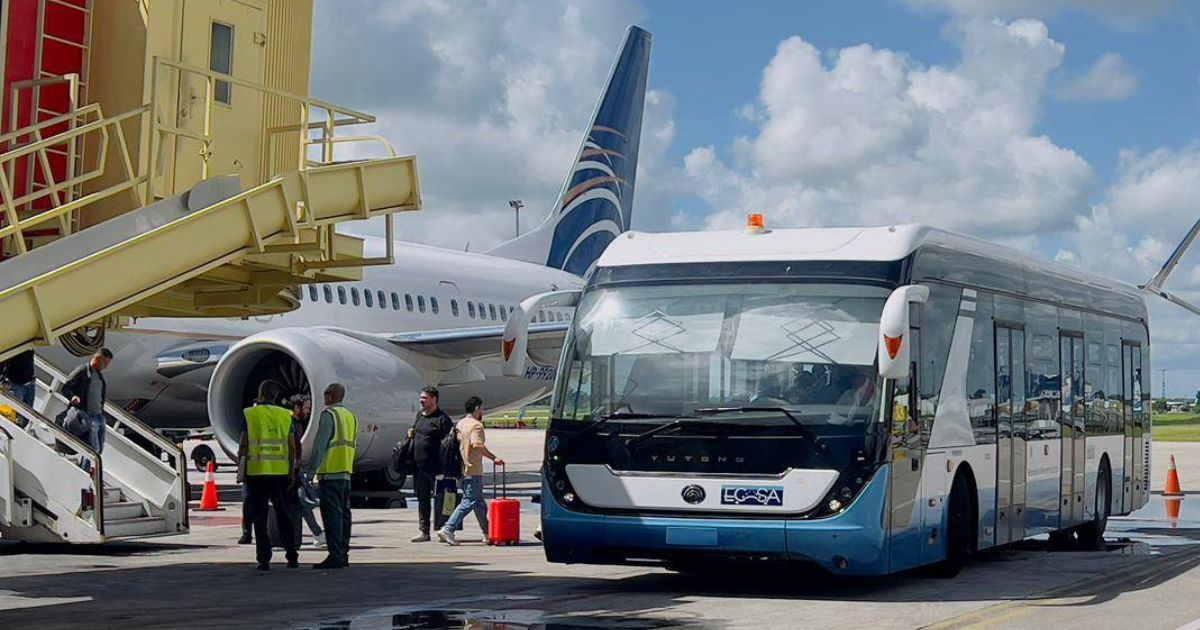
Despite the ongoing crisis and energy constraints impacting various sectors in Cuba, officials from the civil aviation system reassured the public on Monday that the nation's airspace continues to be fully functional.
The Cuban Air Navigation Company S.A. released a statement on their official Facebook page, emphasizing that their services remain active around the clock, every day of the week. They reiterated that the safety of all operations they oversee continues to be their primary concern.
Striving to maintain technical and air traffic control services with utmost efficiency and accuracy, the organization is committed to adhering to international standards and protocols. This commitment aims to ensure smooth and orderly air traffic.
"We are tirelessly working to guarantee the safety, fluidity, and order of our airspace, supporting airline operations and maintaining the reliability that characterizes Cuban aviation," the official statement highlighted.
Similarly, the Juan Gualberto Gómez Ferrer International Airport in Varadero communicated via Facebook that it is sustaining its scheduled operations for the week, underscoring the efforts of its team to uphold airport activity amid current challenges.
Both announcements were made on Monday, amidst growing concerns about the energy crisis's impact on essential services, including air transport.
An official aeronautical notice (NOTAM) from José Martí International Airport in Havana confirmed on Sunday that the terminal was out of Jet A-1 fuel, the standard fuel used by commercial aircraft.
The NOTAM, identified as A0356/26 and classified as international, explicitly stated: “JET A-1 FUEL NOT AVBL” (Jet A-1 fuel not available).
This notice has been in effect since February 10, 2026, at 05:00 UTC and will remain active at least until March 11, 2026, at 05:00 UTC, indicating a full month without guaranteed supply at the country's main airport.
On Monday, Cuba woke up to a virtually empty commercial airspace, a stark and unprecedented image that vividly underscores the severity of the ongoing fuel crisis.
Impact of Energy Crisis on Cuban Aviation
How is the energy crisis affecting air travel in Cuba?
The energy crisis has led to a lack of Jet A-1 fuel at major airports, resulting in a significant reduction in visible commercial air traffic over Cuba.
What measures are being taken to ensure aviation safety in Cuba?
Despite challenges, Cuban aviation authorities are working diligently to maintain uninterrupted air traffic control services, focusing on safety, efficiency, and adherence to international standards.