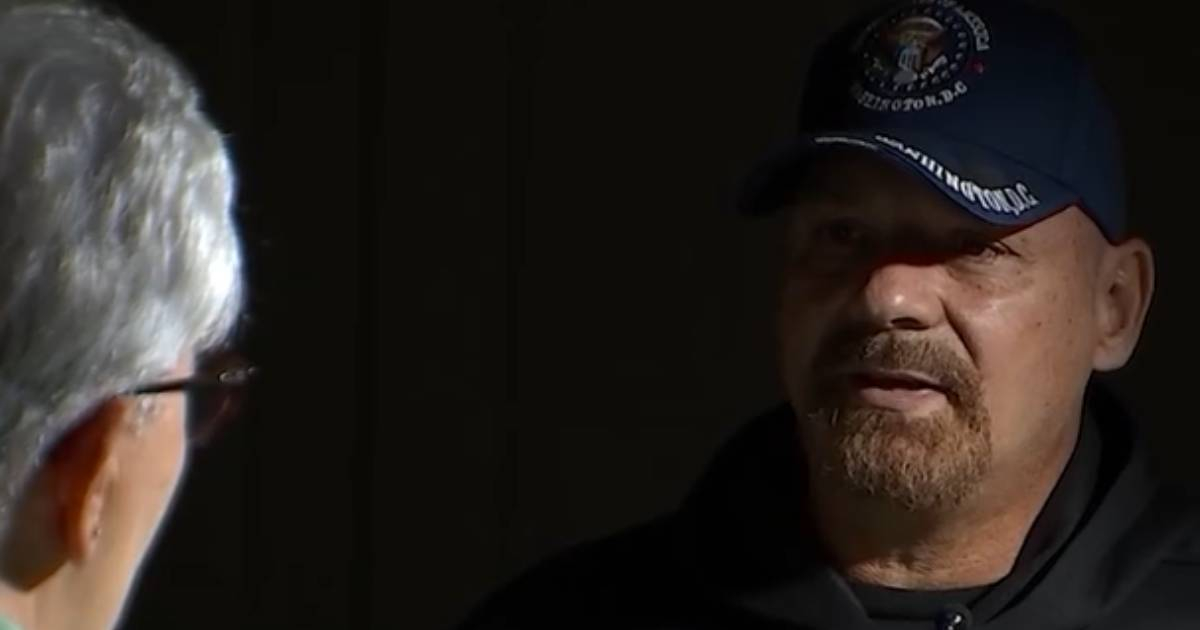
Dahud Hanid Ortiz, a former Marine sentenced to 30 years for the murder of two Cuban women in Madrid, has resurfaced in a Miami interview, claiming he was tortured in Venezuelan prisons.
His narrative, however, has sparked outrage in Spain, reopening the wounds of Elisa Consuegra Gálvez and Maritza Osorio Riverón, two women whose lives were tragically ended in a crime that, according to the courts, was not intended for them.
This interview, aired on Telemundo 51, marks Ortiz's first public appearance since his controversial release from prison, following a detainee swap between Caracas and Washington last year.
On camera, the ex-military man maintains his innocence regarding the "Usera triple murder," alleging it was all a "set-up" and recounting the severe mistreatment he endured in facilities associated with the Venezuelan regime's counterintelligence operations.
The program's angle of "victim or murderer?" has been met with criticism. The Spanish newspaper 20minutos bluntly stated that Ortiz is not merely "accused" but convicted, and his public reappearance has incited anger among the victims' families, who see the convicted individual attempting to rewrite the narrative.
The tragic events linked to Ortiz date back to June 2016, when three people were killed at a law office in the Madrid district of Usera. Among them were Elisa, a Havana-born lawyer, and Maritza, a receptionist and mother from Holguín, along with an Ecuadorian client.
Media coverage emphasized the brutal nature of the crime, the passionate motive investigated, and the fact that the victims "died by chance," caught in an unrelated act of revenge.
Outrage is not limited to the interview. It also revisits the most perplexing aspect for the families: how a man with a definitive sentence ended up free.
In January 2024, a Caracas court sentenced Hanid Ortiz to 30 years for the triple murder in Madrid in 2016. This ruling followed a process involving Spanish and German authorities, with evidence and testimonies linking him to the crime. Venezuelan justice took over the case after Caracas denied Spain's extradition request, arguing that Ortiz, a Venezuelan-born and citizen, should be tried in his own country and could not be handed over to another state.
In July 2025, the case reignited when Ortiz was among those released in a swap between Venezuela and the United States. His classification as a supposed "political prisoner" led to criticism and feelings of betrayal among the victims' circles.
In Telemundo's report, apart from Ortiz's account, the demand for justice is voiced by the father of one of the victims from Cuba, who questions why the convicted man is free in the United States.
While Ortiz presents "his version," for the families of Elisa and Maritza, it feels like a second assault: seeing their daughters' names relegated to mere footnotes as the convicted man attempts to rewrite history on camera.
Key Questions About Dahud Hanid Ortiz's Conviction and Release
What was Dahud Hanid Ortiz convicted for?
Dahud Hanid Ortiz was convicted for the murder of two Cuban women and an Ecuadorian client at a law office in Madrid's Usera district in 2016.
Why did the interview with Dahud Hanid Ortiz cause outrage?
The interview sparked outrage because Ortiz, a convicted murderer, appeared to be attempting to portray himself as a victim, which upset the families of the victims and the Spanish public.
How did Dahud Hanid Ortiz end up in the United States?
Ortiz was among those released in a detainee exchange between Venezuela and the United States, where he was classified as a "political prisoner."