Amid a severe energy crisis, recent tanker movements have once again cast a spotlight on Cuba's murky fuel management practices.
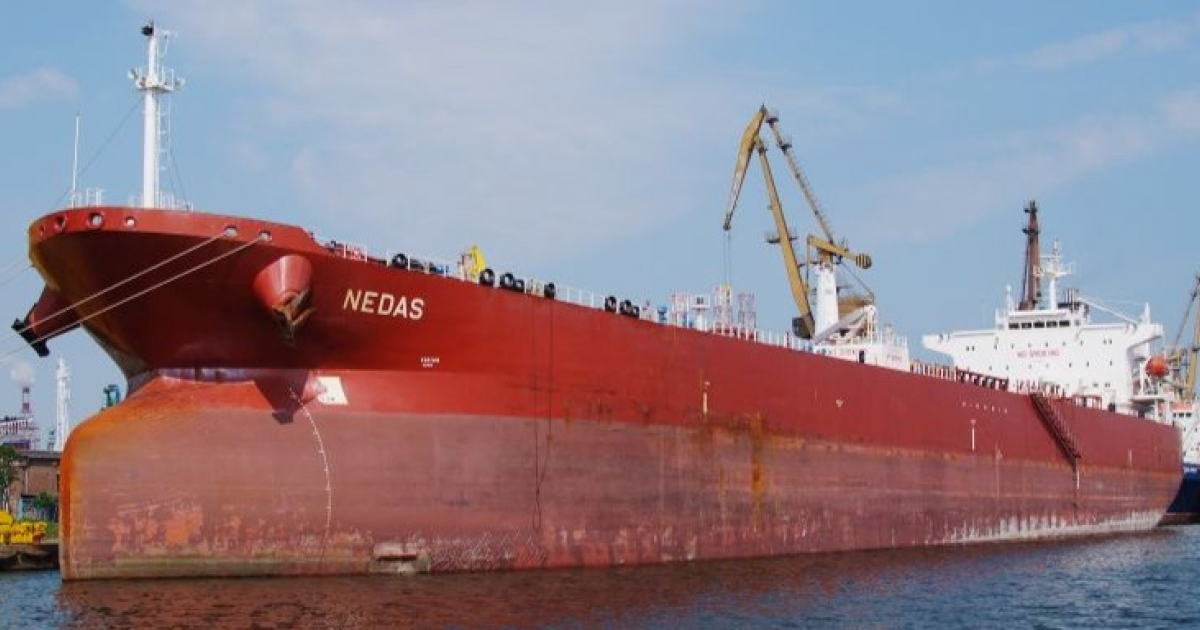
The Esperanza, a Cuban-flagged oil tanker, is currently en route from Matanzas to Cienfuegos. Independent observers suggest that it is probably carrying a portion of the cargo recently delivered by the Sandino tanker.
Constructed in 2005, the Esperanza measures 213 meters in length, has a beam of 32 meters, and a current draft of 9.2 meters. VesselFinder, a maritime tracking website, last recorded its position in Matanzas on December 30.
Currently traversing the Northwest Atlantic Ocean, the Esperanza is expected to arrive at the port of Cienfuegos by 6:00 am on February 10.
This movement comes shortly after the Sandino tanker docked at Matanzas from Nipe Bay in Holguín, carrying an estimated 390,000 to 410,000 barrels of fuel, according to maritime monitoring data shared by researcher Joankelin Sánchez.
While no official confirmation has been made, evidence suggests that the Esperanza is likely transporting part of this cargo to central Cuba's refinery and energy system.
The Usual Silence from the Government
As is often the case, the Cuban government has not provided any public explanation regarding the true origin of the fuel, its exact type, distribution plans, or the volumes being moved between ports.
In a country where millions endure power outages lasting over 15 to 20 hours, endure long lines for gasoline, and face a virtually paralyzed public transport system, this silence only fuels perceptions of improvisation, secrecy, and mismanagement.
While citizens endure the worst energy crisis in decades, the state continues to operate the fuel system like a military secret: lacking in transparency, accountability, and clear information about what enters, moves, and who receives priority.
The Esperanza's transport from Matanzas to Cienfuegos, likely carrying part of the Sandino's cargo, is another example of how the regime manages a vital resource without providing any explanation to the population that bears the brunt of the consequences.
Significance of the Esperanza's Movement
The Sandino's arrival in Matanzas brought hope amid a collapsing energy context. However, experts assert that even a shipment of nearly 400,000 barrels cannot address the structural issues plaguing Cuba's electrical system.
The nation relies almost entirely on imported fuels to sustain its thermal generation, a dependency compounded by outdated thermoelectric plants, lack of maintenance, and a grid teetering on the brink of collapse.
The current crisis is not merely a matter of sporadic shortages but a lack of reliable and predictable supplies. Cuba no longer has allies to ensure regular shipments, lacks access to international credit, and operates on minimal reserves.
Within this context, each shipment acts as a temporary fix rather than a lasting solution.
The Situation Deteriorates Further in 2026
During the initial weeks of 2026, the situation became even more precarious. Six vessels operated by the military conglomerate GAESA concentrated the last available reserves in Matanzas.
Subsequently, it was revealed that the Mia Grace, a tanker that had departed from Togo for Cuba, changed its course towards the Dominican Republic, highlighting the regime's struggles to secure supply agreements.
In this scenario, the arrival of the Sandino and now the Esperanza's movement do not signify a recovery of the energy system but rather a desperate attempt to buy time.
The underlying issue remains unchanged: an economy devoid of foreign currency, credit, stable suppliers, and an electrical infrastructure in shambles.
Meanwhile, the government continues to treat fuel control as a state secret, withholding information from citizens about what is being moved, how much is entering, and how it is distributed.
The result is a crisis that directly impacts the daily lives of millions of Cubans, with no clear, transparent, and sustainable strategy in place to resolve it.
Understanding Cuba's Energy Crisis
Why is the movement of the Esperanza significant?
The Esperanza's movement is significant because it highlights the secretive and inefficient management of Cuba's fuel resources amid a severe energy crisis impacting daily life.
What challenges does Cuba face in terms of energy supply?
Cuba faces challenges such as dependency on imported fuels, outdated infrastructure, lack of international credit, and unreliable supply chains, contributing to its ongoing energy crisis.
How does the Cuban government manage its fuel resources?
The Cuban government manages its fuel resources with a lack of transparency and accountability, treating the distribution and movement of fuel as a state secret.