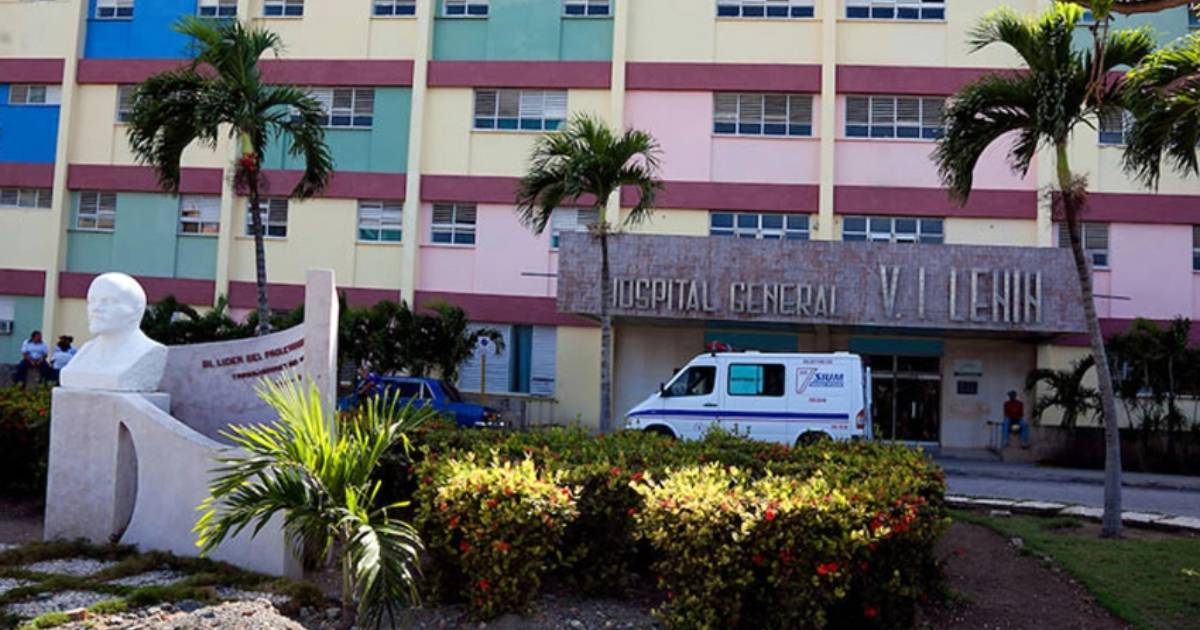
The energy and fuel crisis in Cuba has moved beyond mere statistics, manifesting in shuttered operating rooms and hospitals operating in survival mode.
In Holguín, the General Directorate of Health has announced an immediate halt to all elective surgeries. This drastic measure puts thousands of non-urgent procedures on hold, underscoring the dire conditions under which the healthcare system currently operates.
As reported by Radio Holguín la Nueva on Facebook, authorities describe the situation as "extremely complex," with severe electricity and transportation restrictions necessitating a profound reorganization of services.
From now on, only emergency and urgent surgeries will proceed, along with specific cases where the patient's life is at risk. Essentially, access to scheduled procedures remains suspended indefinitely.
Accompanying this decision is a stringent prioritization of resources.
All patients undergoing hemodialysis will have guaranteed admission and treatment at the province's five centers, starting with those in remote areas to ensure ongoing therapy.
Special protections are in place for pregnant women: all expectant mothers at term will be admitted from 37 weeks; in geographically challenging areas, from 34 weeks; and in Sagua de Tánamo, from 32 weeks.
Additionally, mandatory hospitalization extends through the postpartum period for teenage mothers over 26 weeks and any pregnant woman at that gestation period with risk factors such as gestational hypertension or intrauterine growth restriction.
To conserve scarce fuel, the community outreach of health teams to other municipalities is temporarily halted, with activities confined within each territory.
Simultaneously, there is a directive to increase the use of natural and traditional medicine as therapeutic alternatives amid these constraints.
How long will these "temporary" measures last? Authorities frame these decisions as "necessary and temporary," aimed at safeguarding the most vulnerable groups.
Beyond the administrative rhetoric lies a harsh reality: hospitals unable to ensure scheduled operations due to a lack of electricity, transportation, and fuel.
This is not a transient incident but the result of years of mismanagement, disinvestment, and lack of transparency.
The government retains control but has forfeited, through its inefficiency, the ability to support daily life. Security is enforced through coercion, while human security—energy, health, transportation—dissipates.
The suspension of elective surgeries in Holguín signals a healthcare system perpetually in emergency mode.
A Nation at Standstill
When a state fails to maintain the basics—electricity for operations, fuel for ambulances, supplies for treatment—its legitimacy grounded in performance evaporates.
The government recently acknowledged a suite of measures in response to the fuel shortage, prioritizing "essential services" like health, water, and food production, while announcing direct restrictions on the populace, including adjustments in public fuel sales.
In transportation, fewer national bus departures, suspension of waiting lists, and specific services for health personnel in Havana are anticipated.
This all points to a nation managed through constant crisis, lacking stable operational capacity.
The deterioration cannot be solely attributed to external factors. Structural opacity, a lack of accountability, and the economy's capture by military-business elites have diminished the state's ability to convert revenue into public goods.
The public sees no structural solutions, only cuts and delays.
Production is at its lowest, services run on makeshift solutions, and the energy crisis—with blackouts lasting up to twenty hours—simultaneously undermines production, services, and daily life.
In this context, Holguín's suspension of elective surgeries is not an anomaly but a symptom of systemic collapse. The government commands but can no longer guarantee.
When a country's healthcare relies on the availability of electricity, the blame lies not with emergent circumstances but with management that allowed the situation to deteriorate to this extent.
Understanding Cuba's Healthcare Crisis
What caused the halt of elective surgeries in Holguín?
The halt of elective surgeries in Holguín was caused by the severe energy and fuel crisis, leading to restricted electricity and transportation resources.
How are resources being prioritized in Cuba's healthcare system?
Resources are being prioritized by ensuring treatment for hemodialysis patients, special care for pregnant women, and suspending non-essential community outreach.
What measures has the Cuban government taken in response to the energy crisis?
The government has prioritized essential services like health and food production while imposing restrictions on public fuel sales and adjusting transportation services.