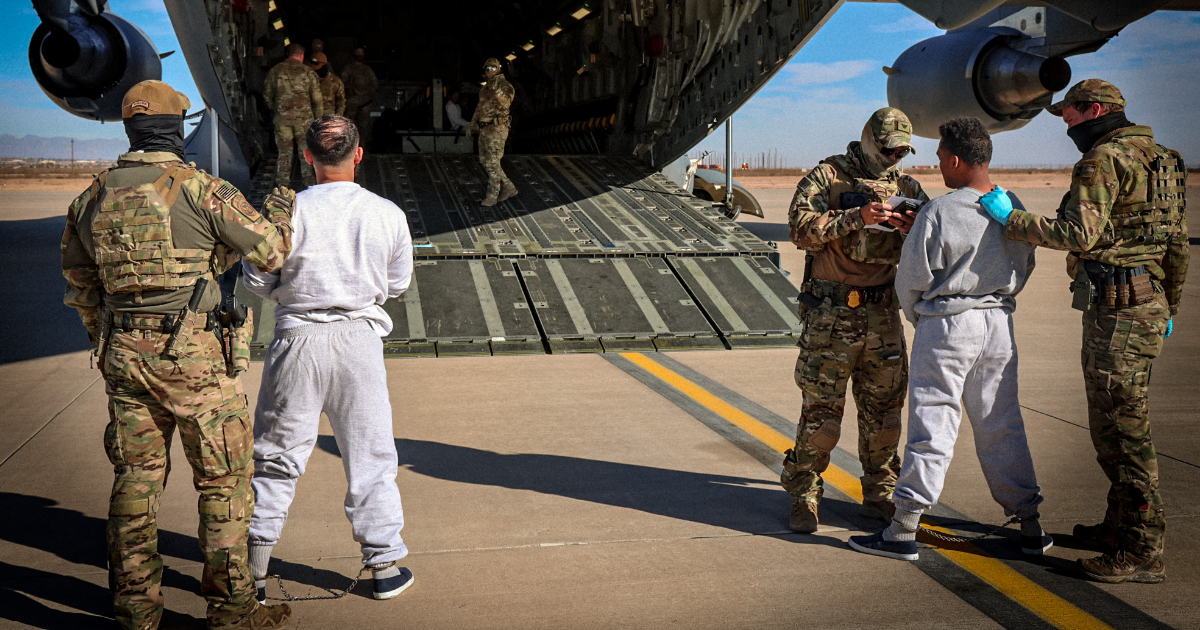
For numerous Cuban migrants, what seemed like the end of their harrowing journey turned into a prolonged saga filled with uncertainty and confusion.
After spending weeks detained at the Guantanamo Bay Naval Base, a group of Cuban deportees was unexpectedly returned to the United States, leaving families in a state of mixed relief and renewed anxiety.
As reported by The New York Times, most of these individuals are currently held at the Adams County Correctional Center in Natchez, Mississippi, with one person separated and sent to Houston for medical care.
According to relatives quoted by the New York outlet, the deportees were brought back to U.S. soil on a charter flight operated by Global X, a 175-seat passenger plane. Their return, however, marked just another phase in an ongoing limbo.
The ordeal for these Cubans began when many agreed to deportation, believing they would return to Cuba by Christmas to reunite with their families and end years of uncertainty. Some even voluntarily halted their immigration court processes, thinking it would expedite their departure, as their relatives recounted to the New York Times in late January.
However, the plane never landed in Havana.
Starting in December, the first 22 found themselves at the U.S. base in Guantanamo, confined in facilities that have been historically associated with terrorism detainees. Over the following weeks, additional flights brought more Cubans, raising the number of those held at the base to 55 by early January, according to the report.
At that time, relatives claimed that several were "tricked" into relocation, kept incommunicado for days, handcuffed, and treated like criminals, despite many having no criminal record and some having applied for asylum or holding work permits.
Now, after weeks in Guantanamo, the group remains ensnared, albeit within the borders of the United States.
The Department of Homeland Security has not publicly clarified why these Cubans were chosen to be sent to Guantanamo or why they were returned to Mississippi, in a process critics have described as a costly political stunt.
Lee Gelernt, an ACLU lawyer quoted by the New York Times, stated, "The fact that the Trump administration sent dozens of Cubans to Guantanamo for weeks only to bring them back to the U.S. later highlights the absurdity of the government policy at Guantanamo. Plainly put, it's political theater designed to intimidate immigrants."
The Guantanamo operation is part of a broader immigration crackdown led by President Donald Trump. According to figures cited by The New York Times, around 780 migrants have been processed through the base during this campaign. However, many have had to be returned to the U.S. before deportation, as was the case with the Cubans.
The backdrop appears to be a broader political conflict between Washington and the Cuban regime.
The report suggests that Cuban migrants are caught in a tug-of-war between both governments, at a time when the Trump administration has also ramped up pressure on Havana, including measures related to Venezuelan oil.
Although since April 2023 there have been almost monthly repatriation flights of deported Cubans from the U.S., the New York Times notes that no agreement was reached in January to send a flight to Havana, leaving the Cubans stranded in Guantanamo until they were transported back to U.S. soil.
It remains uncertain what the next steps will be if Cuba continues to refuse to accept deportees. The United States has agreements to send some Cubans to Mexico and is reportedly negotiating with Argentina to accept deportees from other countries, according to the report.
Meanwhile, families continue to endure the same old anguish: brief phone calls, incomplete news, fear of reprisals, and a persistent question that has lingered for weeks: when will this end?
Key Questions About Cuban Deportees and Guantanamo
Why were Cuban deportees sent to Guantanamo?
The Department of Homeland Security has not publicly explained why these particular Cuban deportees were chosen to be sent to Guantanamo. Critics suggest it might be part of a political strategy to deter immigration.
What is the status of the deportees now?
Most of the Cuban deportees are currently held at the Adams County Correctional Center in Mississippi, while one was sent to Houston for medical attention. Their future remains uncertain as diplomatic negotiations continue.
What are the potential outcomes for these deportees?
If Cuba continues to refuse accepting deportees, the U.S. may explore sending them to other countries like Mexico or Argentina, as per ongoing negotiations.