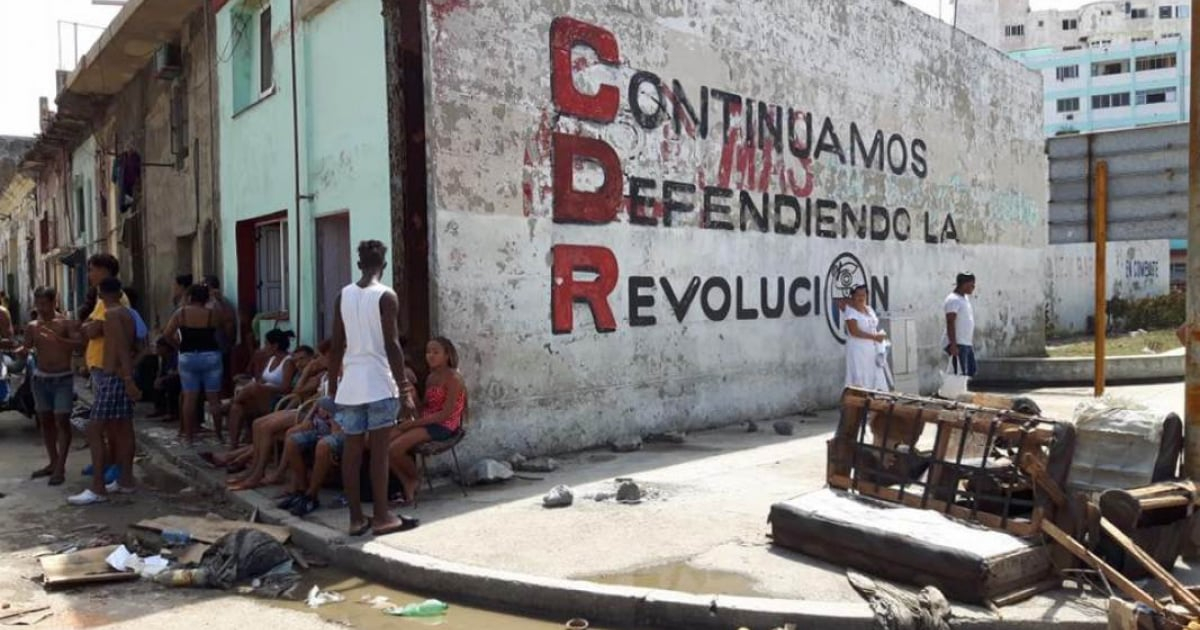
This past Friday, the Cuban regime unveiled a series of strategies aimed at addressing the ongoing fuel shortages. These initiatives, announced during the government-controlled Mesa Redonda program, range from prioritizing fuel for critical services to implementing cuts and reorganizations across transportation, education, labor, and tourism sectors.
Among the measures, the administration plans to allocate the limited fuel primarily to "essential services," which include public health, water supply, food production, defense, and revenue-generating activities.
Additionally, there is an emphasis on accelerating the development of solar photovoltaic parks and home solar modules, expanding incentives for renewable energy use in businesses and residences, and concentrating administrative activities from Monday to Thursday.
However, these measures also anticipate direct restrictions on the populace, such as the reduction of public fuel sales "until the situation stabilizes."
Transportation: Diminished Services and Reduced Frequency
In the transportation arena, efforts will be made to ensure fuel availability for port and airport operations related to imports and exports, as well as for the transport of vital goods like food, fuel, and medical supplies.
Nevertheless, the plan includes significant reductions in mobility services: the Nueva Gerona–Batabanó ferry will operate only twice weekly (Tuesdays and Saturdays), and national passenger trains will run every eight days starting February 8, with some rail services temporarily suspended.
Furthermore, there will be a decrease in the number of national bus departures, maintaining "a basic daily service from Havana," and the suspension of the waiting list service.
The policy notes that full refunds for canceled train or maritime tickets will be provided within 30 days, and essential services like Medibus for patients, and transportation for students and educators, will continue to be supported.
A specific transport service for healthcare personnel is also planned for Havana.
Education: Adjustments and Hybrid Models
For general education, priority will be given to early childhood, with daycare centers continuing to operate, albeit possibly with shorter hours.
Elementary schools will maintain in-person classes but with flexible scheduling.
In middle and high schools, as well as technical education, hybrid or compacted schedules will be implemented, with local authorities making decisions and special attention given to key grades (such as 7th, 9th, and 12th).
Students from some specialized high schools may temporarily transfer to urban schools, and final-year technical and pedagogical students will transition to a more home-based model.
Higher education will see a general shift to hybrid learning, with students returning to their home provinces and the academic process reorganized locally. Distance learning will become the primary mode, though limited by energy constraints.
Measures will ensure the completion of studies for students nearing graduation, and the "University 2026" event will be postponed.
Work: Telecommuting and Labor Reallocation
In the labor and social security sectors, no new regulations will be issued; instead, existing measures will be applied to the current crisis, promoting telecommuting and remote work.
Work schedules may be adjusted based on each group, and labor reallocation toward economically or socially important activities is planned.
If necessary, work interruptions may occur, with compensation equivalent to the basic salary provided for the first month.
Food and Water: Declared Priorities with Energy Constraints
The plan outlines efforts to boost food production at a local level, encourage partnerships between state and non-state entities for marketing and pricing, and use renewable energy in production.
Fuel will also be allocated to ensure essential water pumping and focus on chemical production for water treatment.
In tourism, a strategy to reduce energy consumption and consolidate facilities is being devised, "taking advantage of the peak season."
Cultural and sports programs will undergo adjustments; science, technology, and the environment will ensure resources for early warning systems; and special education will continue with a specific framework due to its "high sensitivity."
Impact on Cuban Citizens
The severe reduction in train, bus, and ferry services translates into more walking, less access to jobs, difficulty reaching hospitals, and isolation of entire provinces.
As public transportation is cut back, the informal market surges, making travel costs prohibitive for most.
The hybrid education model and the return of university students to their home provinces occur under unequal conditions. Many households lack stable electricity, and internet access is limited or non-existent, making "distance learning" effectively non-learning for thousands, thus widening the gap between those with resources and those without.
While the government continues to stress local production as a priority, without fuel, electricity, or supplies, this priority remains unfulfilled.
For ordinary Cubans, this means fewer options, longer lines, and even higher prices.
FAQs on Cuba's Current Crisis
What measures is the Cuban government taking to address fuel shortages?
The government plans to prioritize fuel for essential services, accelerate solar energy programs, and reduce public fuel sales until the situation improves. Transportation and educational sectors will see significant adjustments as part of these measures.
How will the transportation sector be affected by these new measures?
Transportation services will see reduced frequencies and services. For example, ferries and trains will operate less frequently, and some services will be temporarily suspended. National bus services will also be cut back, maintaining only basic routes from Havana.
What changes are being made to the education system in Cuba?
The education system will shift towards hybrid models, with flexible scheduling in elementary schools and hybrid or compacted schedules in higher grades. Higher education will see a transition to hybrid learning, with students returning to their home provinces.
How are these measures expected to impact everyday life for Cubans?
These measures will likely result in increased walking, difficulty accessing jobs and healthcare, and a rise in informal market prices. Education will be challenging for many due to inadequate electricity and internet access, widening the gap between those with resources and those without.