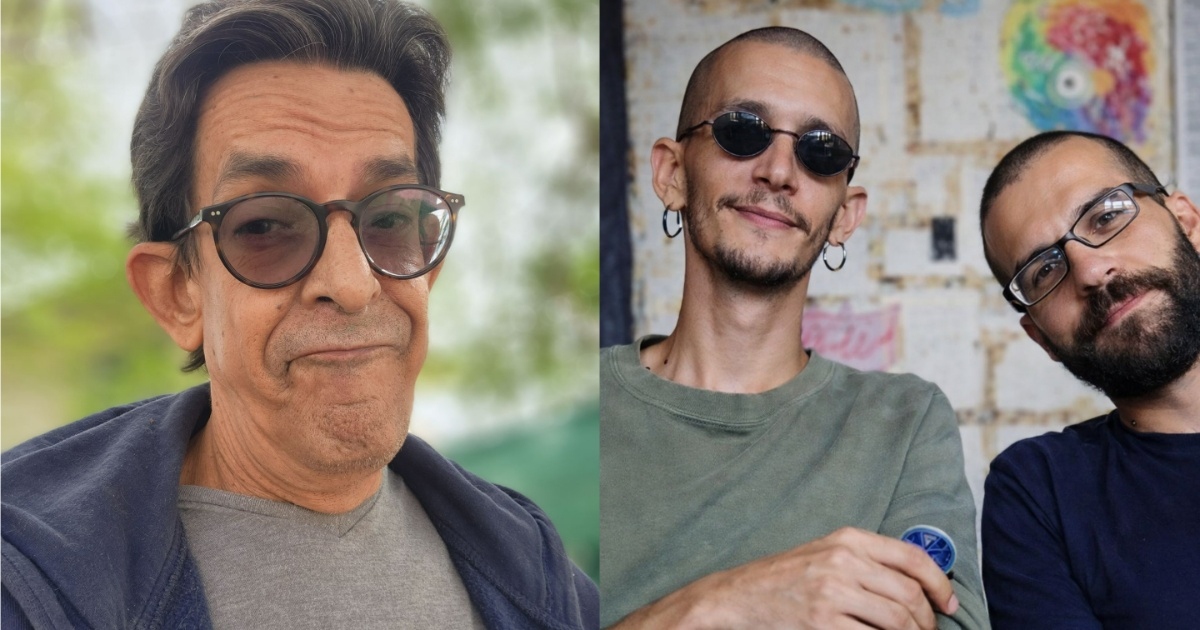
Comedian Ulises Toirac has voiced his concern over the arrest of young creators from El4tico, stating it exemplifies how freedom of expression is "feared and suppressed" in Cuba.
Toirac, known for his sharp insights into the island's reality, remarked, "Freedom of expression is merely the starting point; it allows you to vocalize your thoughts. True freedom occurs only when democracy is present, where your voice is not only heard but also acknowledged. That's where freedom of expression truly gains its significance, and exclusions cease."
According to Toirac, democracy cannot exist without freedom of expression. "The situation with El4tico is a clear indication of the fear and suppression of the former, which suggests a lack of desire for the latter. Any project involving people must leverage the individual strengths of each person to achieve harmonious progress that considers everyone. The least flawed decisions are those that reflect the consensus of the majority, not the beliefs of a few," he elaborated.
Alongside Toirac, other artists, including Luis Alberto García and Haydée Milanés, have condemned the recent detention of El4tico members.
Milanés described the arrest of these young content creators as "another testament to the horror" of the Cuban regime. She wrote on Facebook, "These two young Cubans were detained yesterday just for expressing their thoughts. Let the world know that in #Cuba, differing opinions are cruelly punished. This isn't new; it's yet another example of the horror we Cubans endure. Below is the message left by Kamil, anticipating this detention."
The artist referred to a letter by activist Kamil Zayas Pérez, a member of the independent project, who was detained in Holguín alongside Ernesto Ricardo Medina during a police operation. In a statement dated January 2026, Kamil predicted with calm foresight, "If you're seeing or reading this, it's because they've finally found a way to silence me temporarily."
The activist clarified that his arrest wasn't due to any common crime but because he committed "the only crime a dictatorship can't tolerate: daring to speak out and highlight their blatant failures, chronic inefficiencies, systematic injustices, and the oppression that crushes an entire people's dignity."
Zayas, noted for his reflective tone and analytical skills, emphasized that his work with El4tico aimed to promote critical thinking "without hatred or polarization." He stated, "I've only pointed out what's wrong, humiliating, and degrading to humanity. Apparently, that's unforgivable."
In his letter, the young man accused the Cuban state of choosing to tighten its grip, restrict narratives to the point of suffocation, and increase repression during its deepest crisis. He highlighted the fear of power as its main driving force, saying, "They fear taking responsibility for their own mistakes more than dragging an entire nation into the abyss out of pride and arrogance."
Zayas also pondered on the hypocrisy of the official rhetoric, which celebrates rebellion in history books while persecuting those who practice it today: "They silence those of us who do exactly what they teach: raising our voices against injustice. These are their heroes until someone genuinely follows their example."
In one of the most moving segments, the young man humbly defined himself: "I'm no one special, neither a leader nor indispensable. I'm just another Cuban, a small part of a vast cause: the desire to live with dignity and speak the truth without fear."
The letter ended with a message of hope and defiance: "Silencing me doesn’t silence the tide. A cell can't extinguish a collective consciousness that has already awakened. Forced silence solves nothing; it only deepens the wound. The Cuban people no longer settle for crumbs or stories. They deserve — they demand — something much better."
The message has gone viral under the hashtag #TodosSomosEl4tico, sparking solidarity reactions both within and outside of Cuba.
Amidst blackouts, censorship, and a growing wave of uncertainty and outrage, Kamil Zayas's letter encapsulates the spirit of a generation challenging fear through words. Although written in anticipation of captivity, it now belongs to the collective memory of a nation that, as he penned, "demands something much better."
Key Questions on Freedom of Expression in Cuba
Why is freedom of expression important in a democracy?
Freedom of expression is crucial in a democracy as it allows individuals to voice their opinions and ideas, contributing to informed decision-making and the protection of individual rights. It ensures that diverse perspectives are considered in public discourse and governance.
What are the consequences of suppressing freedom of expression in Cuba?
Suppressing freedom of expression in Cuba leads to a lack of public discourse, stifles innovation and creativity, and perpetuates a cycle of fear and control, preventing citizens from holding the government accountable and advocating for change.