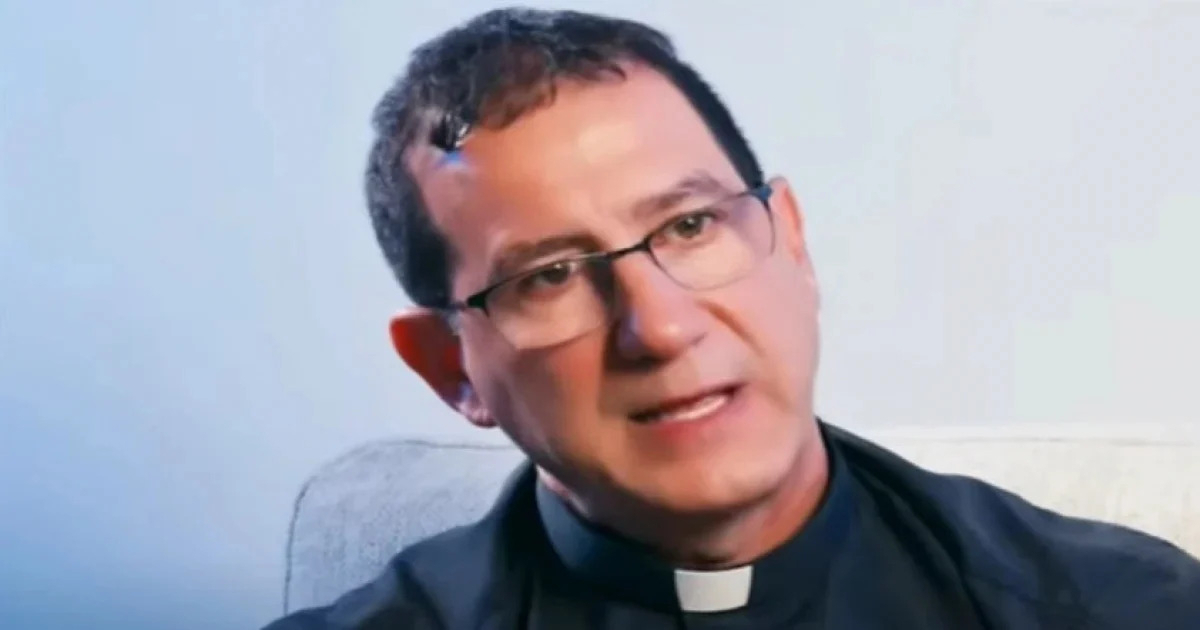
Alberto Reyes, a priest from Camagüey currently residing in Miami, remains unwavering in his support for Cubans and his outspoken criticism of a regime that has pushed the nation to its brink.
In his latest Facebook post, the priest elucidated how a dictatorship dismantles the very essence of individuals and society. "Personality is structured around three core needs: affection, survival security, and a sense of control over our lives," he explained.
He further emphasized, "Feeling loved, secure, and having a healthy control over our lives ensures that fear does not dominate us." This, he warns, is precisely what an authoritarian regime deprives its people of.
Father Reyes does not mince words when discussing Cuba's ruling power: "A dictatorship does not love its people. It manipulates and uses them for its purposes but does not care for their lives, dreams, or desires."
The Pervasive Fear Under Dictatorship
He highlighted that a dictatorship fails to provide genuine security; instead, everyone lives in perpetual fear. Dissenters risk punishment at any moment, and even loyalists are aware that a single misstep can lead to their downfall.
The priest noted that under this regime, individuals lose control over their own lives as the government dictates everything—from education to basic needs. Consequently, people learn to live through deception: obeying, parroting slogans, and attacking designated targets despite internal contradictions.
"We realize this isn't our true self… and when we allow ourselves a moment of honesty, we see that our lives are built on falsehood, fear, and pretense," Reyes wrote.
A Call to Awaken
Reyes offers an alternative: awakening. "Everything changes when we decide to awaken from the amnesia induced by dictatorships and recognize our rights," he asserted. Rights to a fair system, to laws protecting from injustice, and most importantly, "the right to chart the course of our own lives."
He concluded with a powerful statement: "Because we have the right to live without fear ruling us."
His message is far from abstract. In a nation where material crises are compounded by political persecution, Reyes's voice has become an ethical beacon.
This is why the regime views him as a threat: he does not incite hatred or violence, but rather calls for awareness, truth, and dignity. His pastoral work extends beyond church walls, supporting a weary populace burdened by enforced silence and poverty.
Reyes will conduct two masses this Sunday in Hialeah: one at 8:00 am at St. Michael and another at 12:00 pm at Santa Bárbara. This is no ordinary visit. Reyes arrives with a clear message of solidarity with Cubans and a bold denunciation of a system that has driven the country into collapse: a crumbling economy, relentless blackouts, food shortages, and ongoing repression against any voice calling for change, even within the Church.
Over the years, Father Alberto has emerged as one of the strongest moral voices against Cuba's power structure. Through his sermons and Facebook posts, he has created a space for reflection, support, and denouncement.
His writings are not mere slogans; they are profound analyses of human dignity, fear, and freedom, unsettling to the regime because they resonate deeply with millions of Cubans who cannot express these thoughts without repercussion.
Now, from Miami, Father Alberto continues his mission. The masses on Sunday in Hialeah will be more than religious gatherings; they will also serve as a meeting point for an exiled community sharing the pain for Cuba and the hope for a different future.
Understanding the Impact of Father Alberto Reyes's Message
What are the core needs that Father Alberto Reyes believes are undermined by a dictatorship?
Father Reyes identifies three core needs: affection, security for survival, and a sense of control over one's life. He believes a dictatorship systematically destroys these foundations.
How does Father Alberto Reyes suggest people should respond to the oppression of a dictatorship?
Reyes encourages awakening from the amnesia caused by dictatorships, recognizing one's rights, and overcoming fear to reclaim control over one's life and future.
Why does the Cuban regime perceive Father Alberto Reyes as a threat?
The regime sees him as a threat because his messages of truth, dignity, and awareness resonate with many Cubans, challenging the imposed silence and control of the dictatorship.