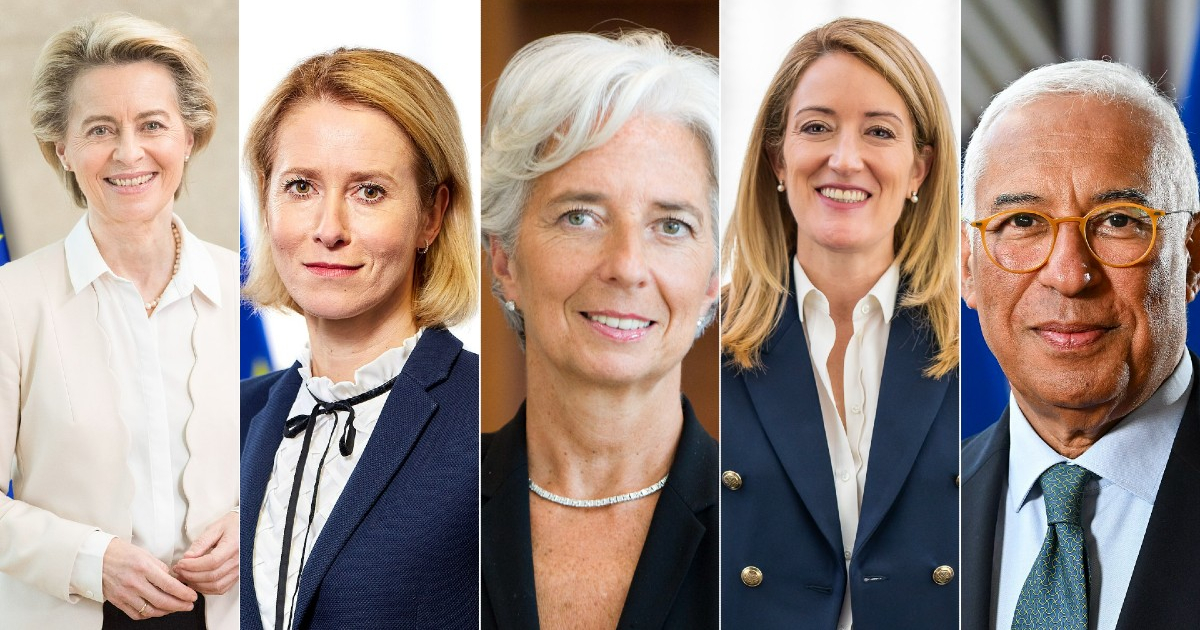
As Cubans endure blackouts, hunger, and repression, Brussels remains entangled in its own maze of "critical dialogue," unimplemented resolutions, and gestures against the U.S. embargo. The European Union, led by European Commission President Ursula von der Leyen, condemns Miguel Díaz-Canel's dictatorship on paper, yet resists breaking ties in practice. The European Council, chaired by António Costa, even requests Washington to remove Havana from its list of state sponsors of terrorism. This is not neutrality; it's inconsistency.
European institutions have long acknowledged the severe decline in democracy and human rights in Cuba: there are no free elections, no pluralism, no judicial independence, and dissent is met with imprisonment, exile, or forced silence. Political prisoners, a massive exodus, and a church warning of "social chaos" without structural changes coexist with a populace surviving amidst blackouts, queues, and unbelievable televised speeches. Yet the question remains: what more does the European Union need to see to treat Cuba as it is, rather than as it was in the mythical eyes of some 1970s European leftists? While High Representative for Foreign Affairs Kaja Kallas speaks of "European values" and "human rights," these principles remain confined to speeches and statements.
European Parliament's Resolutions and Their Stagnation
The European Parliament, currently presided over by Roberta Metsola, has passed resolutions demanding the suspension of the Political Dialogue and Cooperation Agreement with Cuba, activation of clauses to freeze it, halting funding that ends up with the state, and considering personal sanctions against those responsible for repression, starting with the regime's top officials. However, the Council and Commission maintain the agreement, continue discussing "constructive engagement," and refuse to take the political steps described in their own texts as a logical consequence of Havana's systematic non-compliance. A comfortable hypocrisy has set in Brussels: resolutions are approved to soothe consciences, but decisions with genuine costs are blocked. In this European ecosystem, where even the European Central Bank led by Christine Lagarde holds more weight than many foreign ministries, the EU prefers the solace of a PDF over the responsibility of action.
Contradictions in EU's Foreign Policy Approach
In theory, European foreign policy is driven by a commitment to human rights and democracy; in practice, the protection of European banks and companies against the extraterritorial reach of U.S. sanctions and the obsession with maintaining "channels of dialogue" at any price hold greater sway regarding Cuba. Official lines repeat that the embargo and Cuba's inclusion on the "state sponsors of terrorism" list are unilateral measures harming the population and European interests, necessitating their removal. European Parliament discussions consistently highlight the impact of this list on credit, insurance, and the financial operations of European companies, while the victims of Cuban repression remain footnotes. The real priority is not to support Cubans facing the dictatorship but to safeguard Brussels' geopolitical and economic comfort.
The EU is not defending Cubans by advocating for Cuba’s removal from the terrorism list; it is defending its banks and operational flexibility. Human rights are mentioned in speeches; corporate balance sheets influence decisions. Meanwhile, an uncomfortable fact is hushed: the Cuban state's history with armed groups and oppressive regimes. For decades, Havana was a haven and training ground for Latin American guerrillas, sheltering members of organizations like ETA, FARC, or ELN, and still today, it refuses to extradite those responsible for heinous attacks, citing diplomatic technicalities. Cuban intelligence has been pivotal in shaping Nicolás Maduro's repressive system in Venezuela, from restructuring counterintelligence services to implementing surveillance and torture methods. Cuba is linked to Russia's invasion of Ukraine by sending recruited Cubans as mercenaries to fight alongside Russia. To the EU, the same regime exporting repressive know-how to Caracas and sheltering fugitives in Havana deserves "critical dialogue," while the sanctioning regime merits lectures on international law. It’s hard to find a more obscene inconsistency.
The Double Standard Exposed
The terrorism list taboo lays this contradiction bare. European documents and speeches refer to the "so-called list of state sponsors of terrorism," as if the adjective "so-called" suffices to downplay decades of evidence regarding the Cuban state's behavior. MEPs urge the Commission and European diplomatic service to lobby Washington to remove Cuba from this list "in defense of the Cuban people," without explaining why this people deserves less scrutiny than the victims of the ELN, FARC, or the Cuban and Venezuelan repression. If Cuba doesn’t fit the category of a state sponsoring, protecting, or facilitating terrorism, who does?
The double standard is glaring. The EU supports strong sanctions against other regimes for backing armed groups or oppressing their people, yet invokes a sentimental exception for Cuba: the history of the Revolution, the embargo, the "sovereignty" of a one-party regime. This exception reveals more about Europe than Cuba, showing how much Brussels remains captive to a romantic narrative, fueled by outdated ideological reflexes, entirely detached from the real Cuba of 2026: an exhausted country, devoid of freedoms, with a collapsed economy and an overgrown police state.
The contradiction becomes grotesque when read together. On one page, the EU denounces systematic human rights violations in Cuba, the absence of free elections or legal opposition, and the non-compliance with the dialogue agreement. On the next, it expresses concern that U.S. sanctions and the terrorism list "harm the Cuban people and European businesses," offering to mediate to ease pressure on the regime without demanding verifiable political reforms in return. This aligns with Europe's obsession with "conflict management," yet contradicts the facts and the victims.
So, what would standing on the right side of history with Cuba entail? It's insufficient to tweet concerns or lament the "deteriorated human rights situation" in a plenary session. If the EU genuinely wanted to align with Cuban democratic demands, the path is clear: implement what its own Parliament has voted on, activate the agreement's clauses to suspend it, freeze cooperation that funnels through the state, and redirect funds directly to independent civil society, families of political prisoners, exiles, and the genuine private sector. Enforce individual sanctions against judges, prosecutors, military chiefs, and high officials responsible for torture, rigged sentences, and disappearances. Maintain criticism of the embargo's extraterritoriality, if desired, but without turning that argument into a political lifeline for Havana. The instrument can be questioned without whitewashing the regime's record.
The question is no longer what the European Union plans to do with Cuba, but how much longer it is willing to betray its own principles. There is no honorable middle ground between a dictatorship that represses, harbors terrorists, and exports repression, and a people demanding freedom. Europe must either side with the regime and openly accept the ensuing disgrace or align with the victims and act accordingly: suspend agreements, cut political oxygen, and sanction the perpetrators. There are no decent alternatives. At this point, continuing to "talk" is no longer diplomatic prudence; it's complicity.
Understanding the EU's Stance on Cuba
Why is the European Union reluctant to break ties with Cuba?
The European Union remains hesitant due to its focus on maintaining "critical dialogue" and protecting European economic interests, prioritizing these over addressing Cuba's human rights violations.
What actions has the European Parliament proposed regarding Cuba?
The European Parliament has called for suspending the Political Dialogue and Cooperation Agreement with Cuba, freezing related cooperation, and considering personal sanctions against the regime's officials responsible for repression.
How does the EU justify its stance on Cuba?
The EU justifies its position by criticizing U.S. sanctions and arguing that removing Cuba from the terrorism list is necessary to protect the Cuban people and European businesses, despite evidence of the regime's oppressive actions.