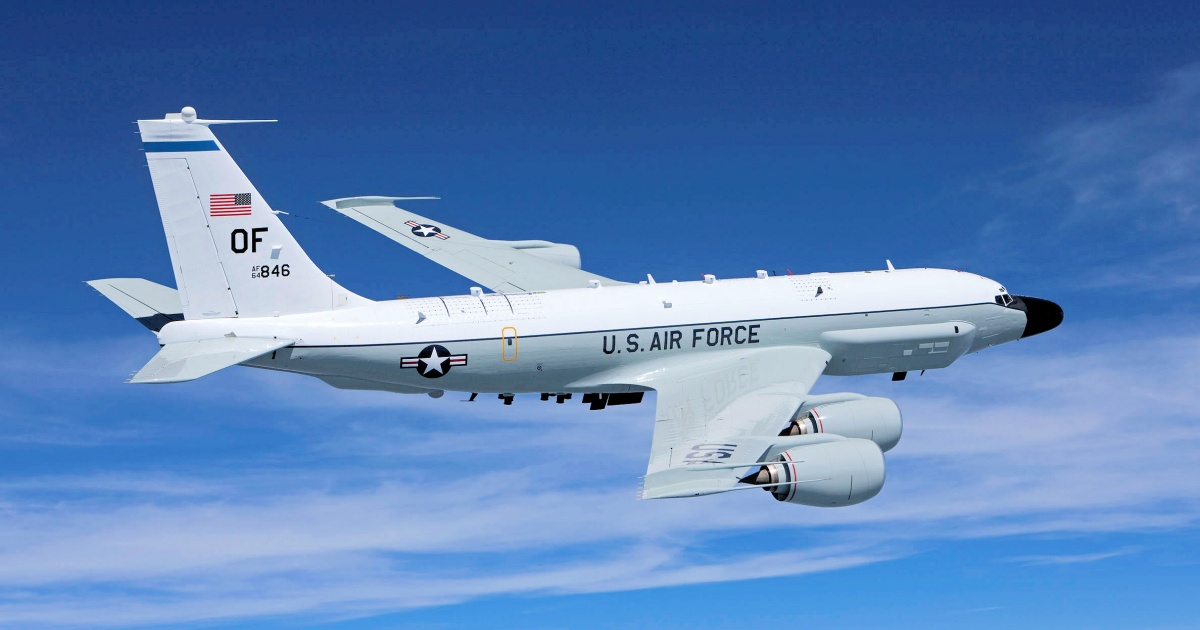
A sophisticated RC-135V/W Rivet Joint reconnaissance aircraft, operated by the U.S. Air Force, conducted a surveillance mission along the northern coast of Cuba on Wednesday, February 4. The aircraft's route extended from eastern to western Cuba, showcasing its intelligence-gathering prowess.
The flight, which was trackable via FlightRadar24, commenced around 6:33 p.m. local time. It maintained a path over international waters, running parallel to the Cuban shoreline, until it shifted north near Pinar del Río to return to its base in Florida. The mission was not only visible to civilian air tracking but also observable by satellites, implying a clear and deliberate message to the Cuban government.
Coordinated Aerial Surveillance
On the same day, in addition to the Rivet Joint, two P-8 Poseidon aircraft, which specialize in maritime surveillance, anti-submarine warfare, and intelligence gathering, flew over areas to the west and east of Cuba. This reinforced the impression of a coordinated operation.
The X Falcon Eyes profile, which monitors military air traffic, described the mission as an ISR/ELINT flight over Cuba and the Caribbean. It focused on signal collection, communication analysis, and high-altitude strategic surveillance. A pointed remark was made about ongoing negotiations, suggesting a constant watch over Cuba's actions.
Advanced Intelligence Technology
The RC-135 Rivet Joint, identifiable by its tail number 64-14841, is a Boeing-based aircraft outfitted with state-of-the-art SIGINT equipment. It has the capability to intercept, analyze, and geolocate electromagnetic emissions in real-time, ranging from personal communications to military radar signals.
The intelligence gathered allows U.S. agencies to prepare both preventive and reactive operational scenarios. Its missions aim to map enemy military assets and understand their tactical dispositions, thereby defining the "order of battle."
Global Deployment and Operational Capacity
Accommodating over 30 personnel, including intelligence operators and electronic warfare officers, the Rivet Joint has been a cornerstone of U.S. aerial espionage since the Vietnam War. With a flight range of 5,500 kilometers and in-flight refueling capabilities, it can undertake extended missions.
While many internal systems remain classified, they are known to include intricate networks of antennas and sensors, capable of processing and storing vast amounts of digital and electromagnetic data.
Strategic Pressure and Symbolism
This is not the first instance of such flights near Cuban airspace. On January 30, another RC-135V was tracked departing from Homestead Air Reserve Base in Florida. Unlike the recent visible mission, that flight had its transponder turned off, limiting civilian tracking.
The deliberate visibility of the February 4 mission emphasizes its deterrent or intimidatory nature, conveying a strong message to Cuba's leadership.
Geopolitical Context and Implications
The intensity of these intelligence flights correlates with rising tensions in the region and the U.S.'s assertive stance towards regimes aligned with Russia and China. Recent Pentagon statements about Russian military presence in Cuba and potential military ties with Beijing underscore this focus.
The overt presence of U.S. spy planes over waters near Cuba serves as a symbolic and strategic maneuver, reminding the Cuban regime of America's surveillance capabilities amidst a shifting geopolitical landscape.
Understanding U.S. Aerial Surveillance Over Cuba
What is the purpose of the U.S. Air Force's Rivet Joint flights over Cuba?
The Rivet Joint flights aim to gather intelligence on Cuba's military capabilities, monitor communications, and map strategic assets to prepare operational scenarios.
Why was the recent surveillance mission deliberately visible?
The mission's visibility was likely intended to send a clear message to the Cuban government, demonstrating the U.S.'s surveillance capabilities and strategic intentions.
How do geopolitical tensions influence U.S. surveillance activities?
Rising geopolitical tensions, particularly with regimes allied to Russia and China, increase the frequency and intensity of U.S. intelligence flights to monitor and counter potential threats.