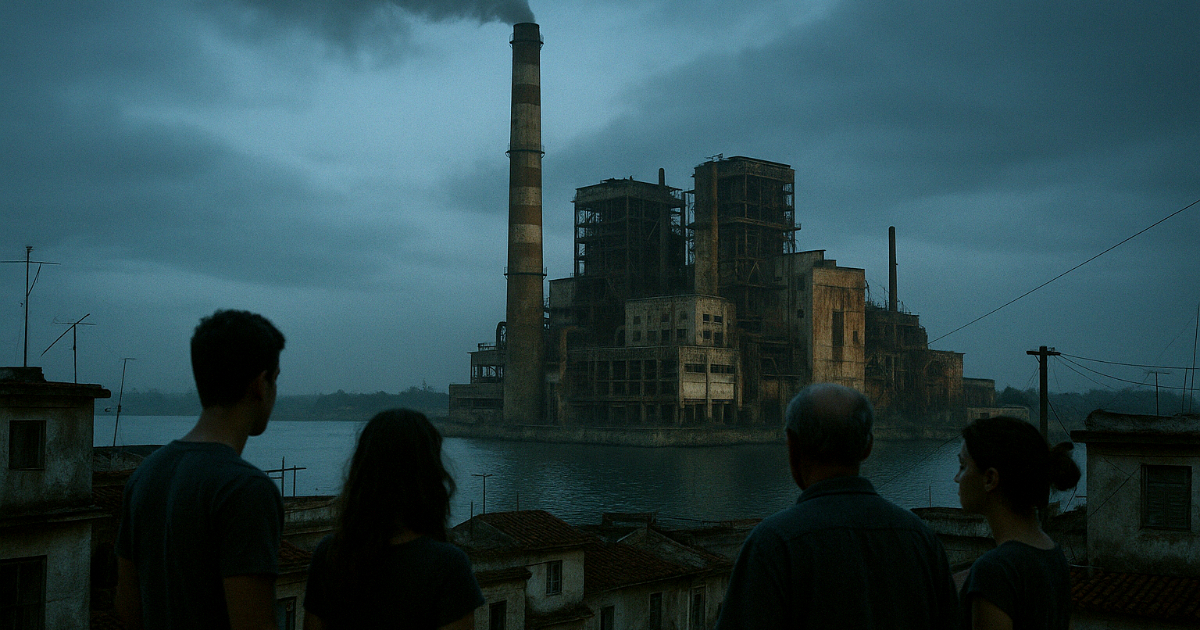
The energy crisis in Cuba underscores the extensive collapse of the national electrical system, a direct consequence of decades of inefficiency, lack of investment, and poor maintenance by the government.
According to the Electric Union (UNE), power supply was disrupted throughout the day yesterday due to capacity shortages, with the most significant impact recorded at 6:20 pm when 1,844 MW were out of service.
At the start of the day, the total availability of the National Electroenergetic System (SEN) was merely 1,255 MW, against a demand of 1,745 MW, leaving 519 MW affected. Midday estimates projected a shortfall of 950 MW.
Among the thermal units that were offline are four thermoelectric units from CTE Mariel, Santa Cruz, Felton, and Renté. Additionally, maintenance work is ongoing at two blocks of CTE Cienfuegos and Diez de Octubre.
General limitations in thermal generation have reached 525 MW.
During peak hours, it was anticipated that five engines from Fuel Moa providing 75 MW and five engines from Regla's power barge contributing 64 MW would come online. This would result in a total of only 1,394 MW available against a demand of 3,100 MW, leading to a deficit of 1,730 MW and an estimated shortfall of 1,760 MW.
Despite the launch of 49 new solar parks, renewable energy production added just 2,091 MWh, with a maximum output of 393 MW during mid-demand periods, insufficient to offset the drop in thermal generation and ensure an adequate power supply for the population.
In Havana, the Electric Company reported that service was disrupted on Thursday for 14 hours and 55 minutes.
"The peak sufficiency was 387MW at 6:20 pm, with an emergency supply of 75 MW," the note on Facebook detailed.
Full restoration occurred at 8:20 pm, with the institution warning that if SEN's availability conditions do not improve, additional energy contingency impacts without scheduled times are expected.
The electrical collapse affects not just households but also industries, agriculture, food production, and the delivery of basic services.
The accumulation of breakdowns, delayed maintenance, and reliance on emergency engines highlight the government's inability to ensure energy for the Cuban people.
Massive blackouts, some lasting over 20 hours, are the direct result of years of neglect, poor planning, and outdated thermoelectric facilities.
The situation highlights once again that, despite the introduction of solar sources, the country remains trapped in a cycle of chronic energy insufficiency, where the population endures continuous power cuts and severe restrictions while state authorities persist with temporary measures and advocate for "savings" as if it were a viable solution to a structural problem.
Understanding Cuba's Energy Challenges
What are the main causes of Cuba's energy crisis?
Cuba's energy crisis is primarily due to decades of inefficiency, inadequate investment, and poor maintenance of its electrical infrastructure, along with reliance on outdated thermoelectric plants.
How long did the power outage last in Havana?
In Havana, the power outage lasted for 14 hours and 55 minutes on Thursday.
What measures are being taken to address the power deficit?
Efforts include bringing additional engines online and launching solar parks, although these measures have been insufficient to meet the current power demand.