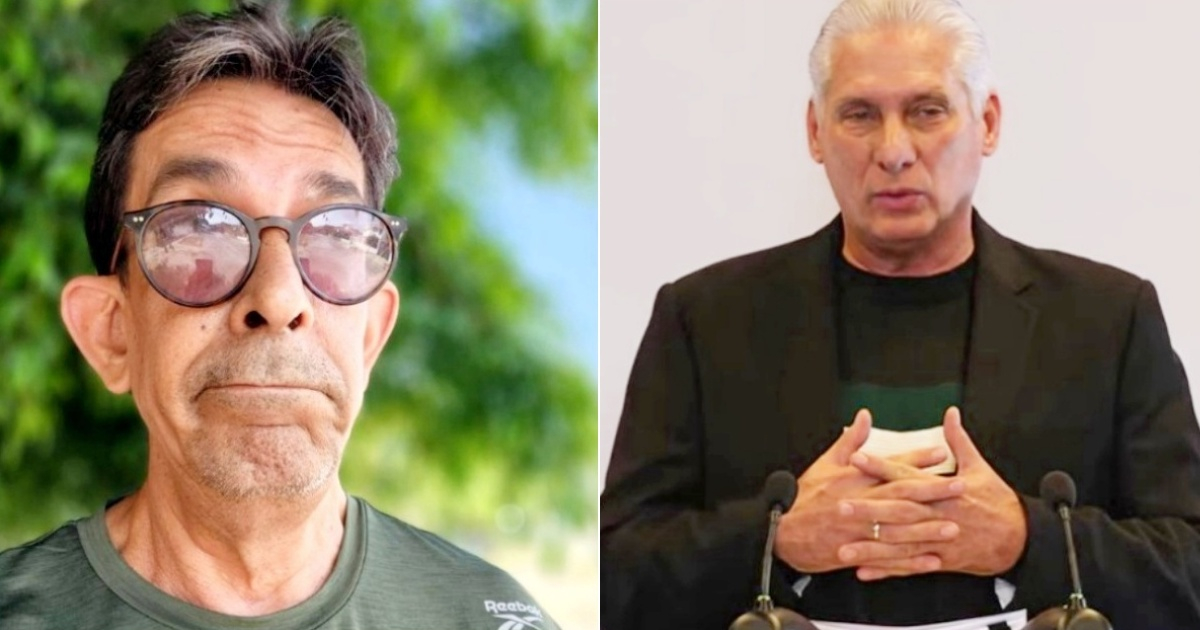
Within just 24 hours, Cuban comedian Ulises Toirac has once again dissected the government's official narrative about the ongoing crisis, using his trademark irony and sharp insight.
In a detailed post on Facebook, Toirac, who is also an actor and scriptwriter, criticized the call for more sacrifices in a nation where, as he puts it, life has turned into mere survival.
Toirac goes beyond superficial sarcasm, delivering a pointed critique of the government's triumphalism. He questions the legitimacy of demanding further efforts from those who have already given everything, while others live in a bubble of privilege.
The comedian highlights the painful truth: it is unacceptable to continue asking for sacrifices in a country where millions endure hunger, blackouts, and inflation, while a select few enjoy luxury.
"Personal circumstances matter, of course," he writes, encapsulating the plight of many Cubans: "They are barely eating once a day, experiencing more blackouts than a dyslexic firefly, and facing inflation that makes commuting to work cost more than their earnings."
But Toirac doesn't stop at complaints. He encourages a moment of abstract thought to reflect on the country's situation, although distance offers no improvement.
The phrase by Díaz-Canel, "tough times are coming," is not a starting point for Toirac, but a confirmation that the country has long been in crisis and is now preparing to descend further.
"For two years now, the fuel shortage has been limping along," he notes, describing how it paralyzes the nation: "No one can work where fuel doesn't allow for movement, connectivity, or even turning on a computer... Economic activity is crippled."
The Sacrifice Fallacy: Inequality Disguised as Heroism
Toirac's most devastating critique is not technical but moral. He challenges the legitimacy of the official rhetoric that continuously calls for national sacrifice when the majority has nothing more to offer.
He sums it up with a stark phrase: "Sacrifice (it's time to say it) is about sacrificing life itself."
This exposes the immorality of inequality, not as a result, but as an inherent condition of a system that fails to distribute both pain and responsibility equally.
"When some people are in utter destitution while others live in such opulence that they disconnect from the rest," he warns, the epic narrative loses all credibility.
The Ignored Economy and Disconnected Politics
Toirac also points out how the country's leadership has consistently ignored alternative voices, proposals, and ideas that deviated from the script.
"Dissenting opinions were never heard, and those who warned were labeled as 'servants of the enemy,'" he notes, illustrating the disregard for economic knowledge.
Toirac counters this with a simple truth: "Economics is neither capitalist nor socialist; it's just economics."
He humorously cites songwriter Carlos Varela, referring to him as an "academic": "Politics doesn't fit in the sugar bowl."
The result, he says, is plans that are not designed to rescue the nation from the abyss but to buy time, thereby worsening the damage, "because otherwise... it's just prolonging the agony and continuing the destruction."
A Dire Warning: The Limits of Endurance
Ulises Toirac's message is not comedic relief; it is a call for collective awareness.
Today's Cuba is not enduring; it is depleting. Persisting in demanding more from the people while shielding the privileged is not governance; it is abandonment.
He delivers his harshest warning: demanding more from those who have nothing left is not resilience; it is a form of social extermination.
It is prolonging the agony of a nation on the brink of collapse, pretending that a new ending can emerge from a script that concluded long ago.
Ulises Toirac's Critique of Cuba's Crisis
What is Ulises Toirac's criticism about the Cuban government's response to the crisis?
Ulises Toirac criticizes the Cuban government's call for further sacrifices from the populace, highlighting the futility of such demands in a country where the majority are already struggling to survive while a privileged few live in luxury.
How does Toirac describe the current state of life in Cuba?
Toirac describes life in Cuba as reduced to mere survival, with many people barely managing to eat once a day, enduring frequent blackouts, and suffering from high inflation that makes daily life increasingly difficult.
What does Toirac suggest about the Cuban economy and political leadership?
Toirac suggests that the Cuban leadership has ignored valuable economic insights and dissenting voices, leading to plans that fail to address the country's economic struggles effectively, thus exacerbating the crisis.