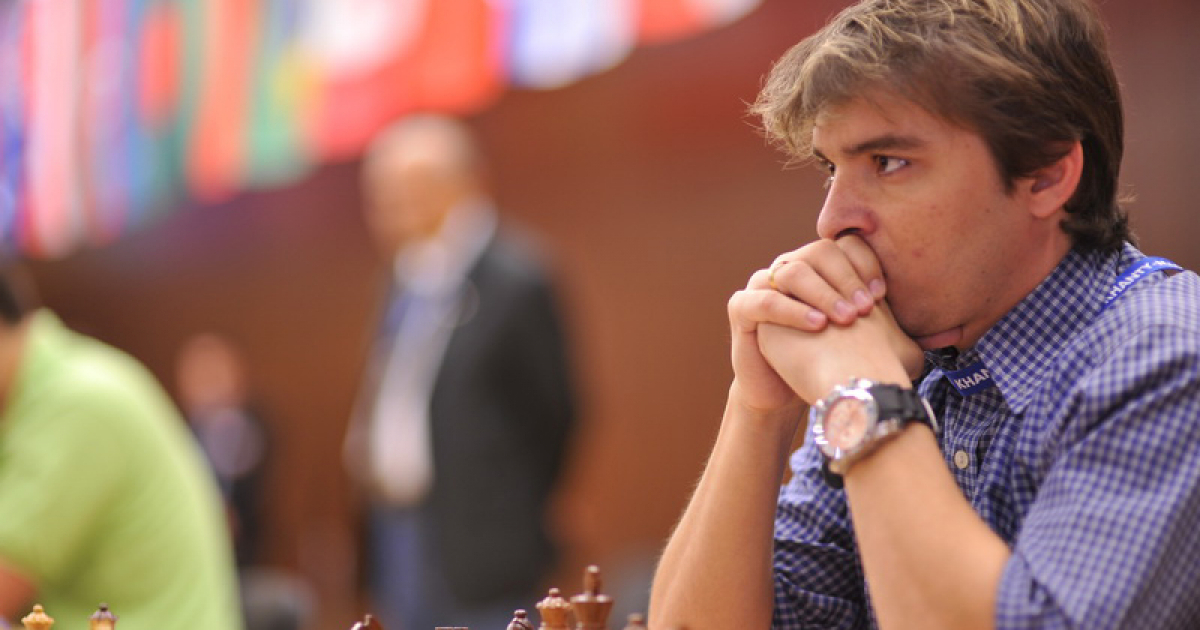
Lázaro Bruzón, a distinguished grandmaster and one of the most celebrated Cuban and Latin American chess players of recent decades, recently took to social media to disclose the motivations behind his departure from Cuba in 2018 and his decision not to return since.
Now residing in the United States, Bruzón is also known for his historic rivalry with Leinier Domínguez. On Facebook, he shared a personal reflection, admitting that, unlike many Cubans, his exit from the island was not driven by dire poverty or direct persecution, but rather by disillusionment and a political awakening.
"It's been many years since I left Cuba, and I haven't gone back. The strange thing is, I didn't leave for the same reasons most do," he wrote.
A Privileged Athlete's Life Amidst a Challenging Childhood
Bruzón reminisced about growing up in difficult circumstances, experiencing poverty and scarcity even before the Special Period. However, his chess talent dramatically altered his life trajectory at a young age.
By the age of 14, he was traveling internationally due to his sporting achievements, which also improved his family's economic situation.
For nearly twenty years, he was part of the Cuban national team, representing the island at numerous international events. He also acknowledged his involvement within the official structures of the system.
"I was a member of the UJC and the Assembly of the Popular Power in Las Tunas," he noted, explaining how chess players were often given these roles due to being considered "thinkers."
From Belief to Disillusionment
Bruzón admitted that for years he lived without questioning the regime. He even went so far as to tattoo Che Guevara on his arm, a symbol of the indoctrination he, like many Cubans, received.
"My knowledge of politics and history was virtually nonexistent. My life revolved around chess, my sports training, and my family," he stated.
He insisted that he never had personal experiences that pushed him to criticize the system: no imprisoned relatives, no losses at sea, no direct traumas.
The Real Reason for Leaving: "The Ceiling Was Too Low"
So, why did he leave? Bruzón explained that although he lived better than most Cubans, he felt he had reached the ceiling of what was possible in a country where everything was limited.
"I felt I had achieved all there was to achieve there. I wanted to grow in other areas, and that was impossible in Cuba," he wrote.
He left with the hope of continuing to represent the national team but soon discovered what he describes as the true nature of the system.
Political Awakening and Advocacy for Change
After leaving the island, Bruzón recounted being vilified and slandered by authorities, marking the beginning of his political awakening.
"They use you while you serve their purposes, but you're just a disposable number," he claimed.
He began reading about the history of communism and Cuba, concluding that the root of the problem was the system established in 1959. "I felt betrayed," he expressed.
The grandmaster asserted his commitment to speaking out against injustices and couldn't remain silent as the country deteriorated.
"What little I've done, I've done for myself, for my conscience," he said.
He also acknowledged that his stance has led to familial estrangements and personal attacks, yet he remains hopeful. "I will only return when Cuba is free and democratic. Today, Cuba is a priority."
Understanding Lázaro Bruzón's Departure from Cuba
What motivated Lázaro Bruzón to leave Cuba?
Lázaro Bruzón left Cuba not because of extreme poverty or direct persecution, but due to a process of political disillusionment and the realization that he could not grow further in a country with many limitations.
How did Bruzón's chess career impact his life?
Bruzón's talent in chess allowed him to travel internationally from a young age, improving his family's economic situation and providing him with opportunities that were exceptional in Cuba.
What were Bruzón's views on the Cuban regime?
Initially, Bruzón did not question the Cuban regime and even embraced its symbols. However, over time, he became disillusioned, realizing the systemic issues rooted in the communist government.