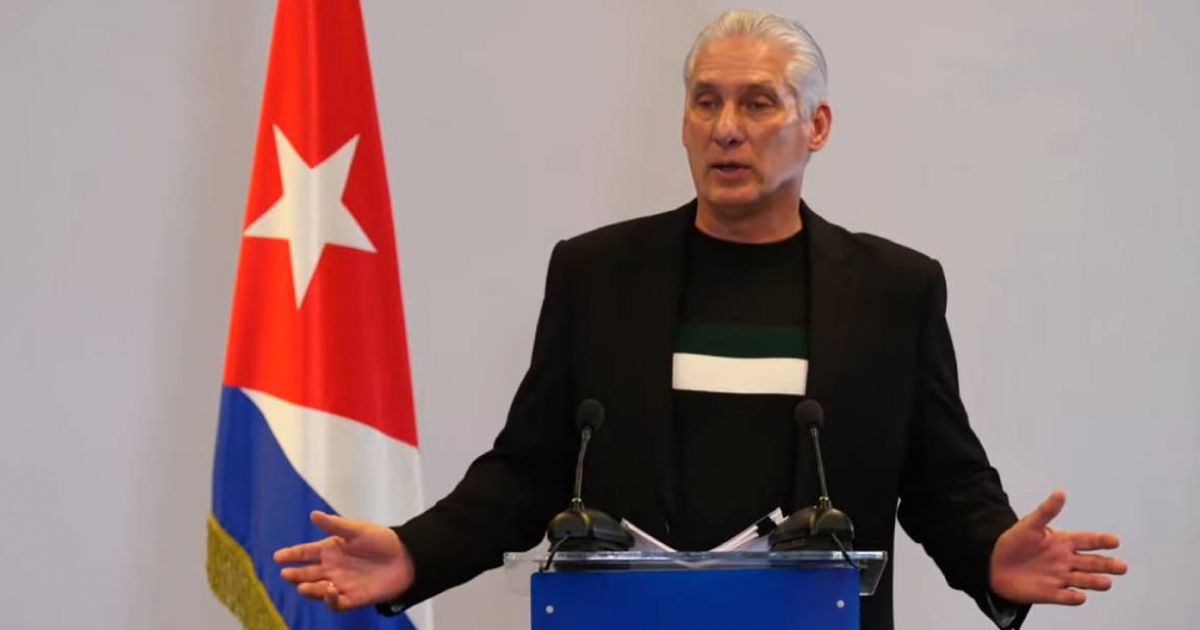
On Thursday, Cuban leader Miguel Díaz-Canel acknowledged that the nation is bracing for "even tougher times" as the country's economic, energy, and social crises continue to worsen.
During a broadcast on the Cuban Presidency's YouTube channel, Díaz-Canel addressed what was framed as both national and international press. However, the so-called international media included Cuban journalists aligned with the regime, who collaborate with the Russian network RT, China's Xinhua agency in Spanish, and Prensa Latina.
In his remarks, Díaz-Canel admitted to a scenario of "acute fuel shortages" and mentioned that the government has already established "directives to tackle it."
He emphasized the need for Cuba to "rely on its own energy sources," expressing pride that the new plan incorporates measures originally developed by Fidel Castro for energy contingencies.
While he did not provide specific details on achieving these goals in the short term, he urged the public for "more trust in the government." "We are working to minimize the impact on the population," he stated.
"To avoid being stifled, there is a strategy, a program, and there will be new measures. Some are restrictive, but there are things we will have to stop or postpone," he added, urging Cubans to "conserve much more."
Díaz-Canel acknowledged that the previous year was "bad" for the national economy but assured that the government made a "significant investment in photovoltaic parks," touted as a main official effort to mitigate the energy crisis despite the ongoing blackouts.
The leader also addressed the deteriorating relationship with the United States, once again blaming Washington for Cuba's internal issues.
"The coercive measures by the U.S. mean we have to work very hard," he stated, while calling on leftist countries to mobilize in support of Cuba in its political standoff with the U.S. government.
Despite the official rhetoric focusing on external factors, Cubans continue to endure shortages, prolonged blackouts, and a noticeable decline in their quality of life.
"Surrender is not an option. We have a lot to defend," Díaz-Canel declared. He suggested that Cubans should view this period of fuel scarcity as "an opportunity for the country to become more sustainable."
Understanding Cuba's Current Challenges
What challenges is Cuba currently facing?
Cuba is currently facing a worsening economic, energy, and social crisis, marked by acute fuel shortages, prolonged blackouts, and a declining quality of life.
How is the Cuban government addressing the energy crisis?
The Cuban government is emphasizing the need to rely on its own energy sources and has made investments in photovoltaic parks as part of its strategy to tackle the energy crisis.
What is Díaz-Canel's message to the Cuban people?
Díaz-Canel urged the Cuban people to have more trust in the government and to conserve resources as the nation implements new strategies to cope with the crisis.