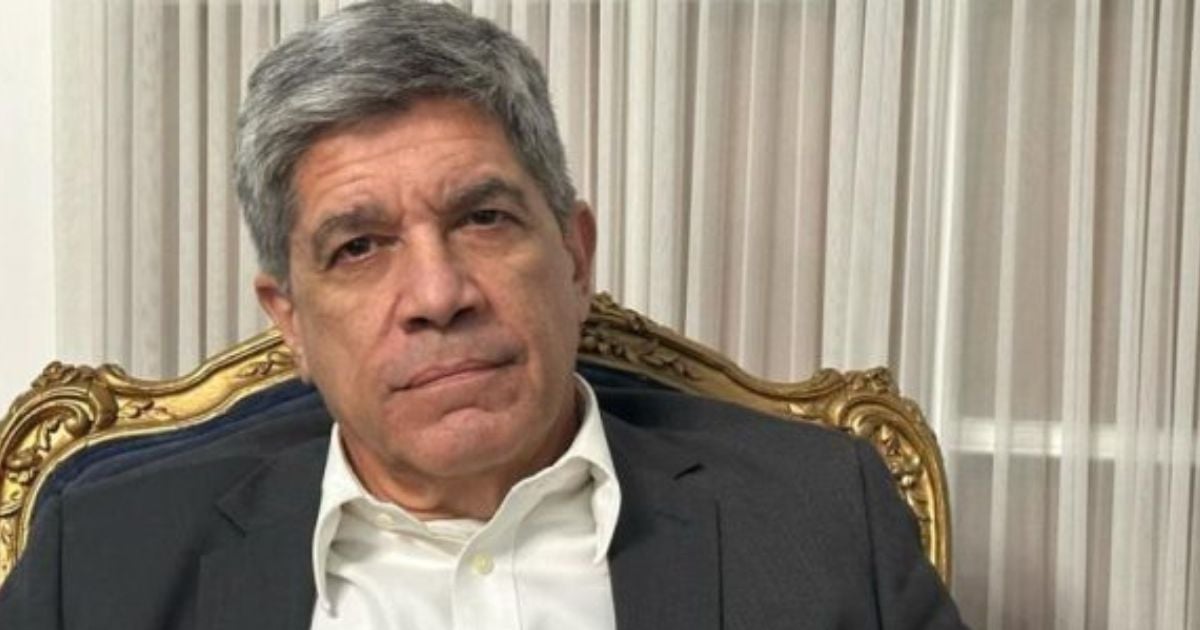
This Wednesday, the government in Havana acknowledged maintaining high-level communications with the United States, marking an official acknowledgment of direct exchanges between the two nations since Donald Trump ramped up pressure on the island.
In an interview with CNN, Carlos Fernández de Cossío, Cuba's Deputy Minister of Foreign Affairs, stated that a formal bilateral dialogue has not yet been established. However, he did confirm that there have been some exchanges of messages involving top levels of the Cuban government.
He emphasized that Cuba is prepared to engage in a "meaningful" dialogue with the United States but made it clear that the regime is not open to discussing its governing system or political model.
"We are not ready to debate our constitutional system, just as we assume the United States is not ready to discuss its constitutional framework, political system, or economic realities," Fernández de Cossío remarked.
His comments come as the Trump administration steps up economic and diplomatic pressure on the Cuban regime. Washington has tightened sanctions and threatened tariffs on countries exporting oil to Cuba, labeling the island an "extraordinary threat" due to its ties with "hostile actors" and "intelligence capabilities."
The Cuban deputy minister dismissed the notion that his country poses any risk to the United States, stating, "Cuba is not a threat. It is not aggressive towards the United States. It does not harbor or sponsor terrorism."
He cautioned that Washington's actions have exacerbated Cuba's energy crisis, characterized by prolonged blackouts, fuel shortages, and long lines at gas stations. He attributed these issues to U.S. economic sanctions.
The diplomat acknowledged that the Cuban government might be forced to implement austerity measures to preserve its fuel reserves, advocating that dialogue would be a more productive route for both nations.
"If the United States is interested in cooperation against drug trafficking, Cuba can be of assistance," he added.
The Cuban regime's statements came shortly after Secretary of State Marco Rubio reiterated that the United States would welcome a regime change in Cuba, yet without direct intervention.
The acknowledgment of high-level contacts signifies Havana's attempt to ease the mounting pressure from the Trump administration without yielding on internal political matters.
Key Insights on U.S.-Cuba Relations
What are the recent developments in U.S.-Cuba communications?
Recently, Cuba confirmed the existence of high-level communications with the United States, although no formal dialogue has been established. These exchanges come amid increased U.S. pressure on Cuba.
How has the Trump administration affected Cuba?
The Trump administration has intensified economic and diplomatic pressure on Cuba, including tightening sanctions and threatening tariffs on oil exports to the island. This has worsened Cuba's energy crisis.
How has Cuba responded to U.S. sanctions?
Cuba has criticized U.S. sanctions for exacerbating its energy crisis and indicated a willingness to implement austerity measures. Cuban officials argue that dialogue would be more beneficial for both countries.