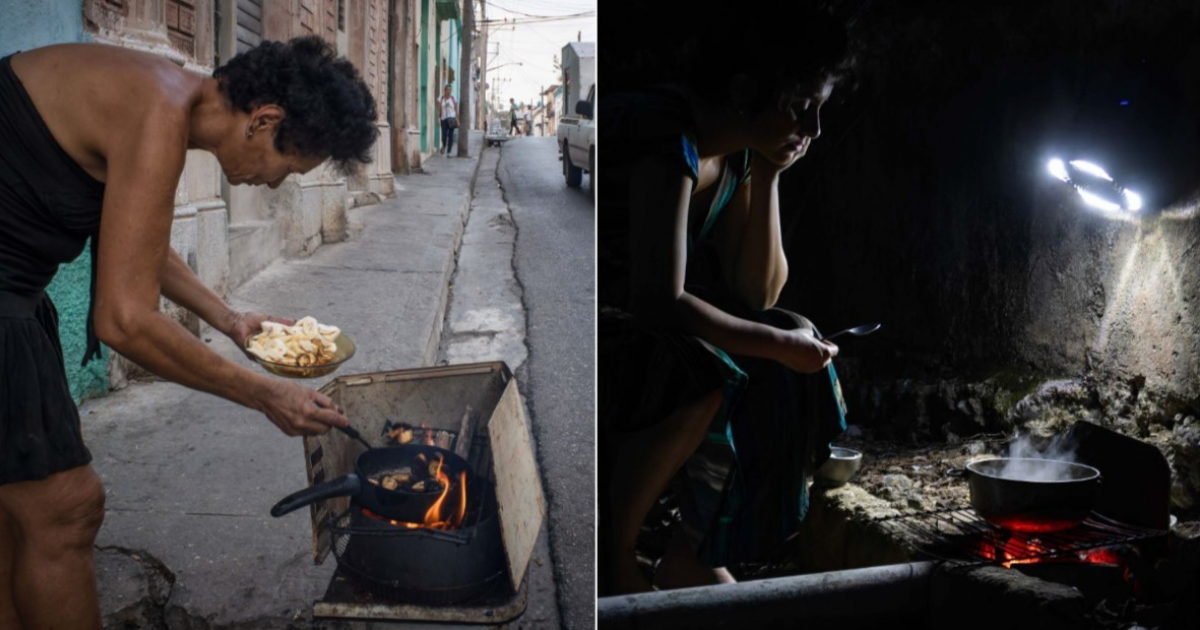
In a nation plagued by power outages lasting over 24 hours and an electrical grid teetering on the brink of collapse, cooking in Cuba has become a matter of survival.
With gas and electricity in short supply, families turn to community meals prepared with wood or charcoal to fend off hunger. However, this so-called "solution" brings its own set of dangers.
The Food Monitor Program (FMP), an organization focused on monitoring Cuba's food security, highlighted on their X profile that community meals are no longer seen as recreational or even acts of resistance. Instead, they have become a desperate and essential response to the island's energy and food crises.
In their latest piece titled “Community Meals: Resilience or Necessity?”, FMP elaborated on how prolonged blackouts and the scarcity of domestic gas force thousands of Cubans to cook in public spaces using wood, charcoal, or even plastics. This exposes them to pollution and respiratory hazards.
Challenges of Cooking in a Failing System
The National Electric System's deterioration and the Cuban regime's inability to provide basic services have compelled vulnerable—and some not-so-vulnerable—neighborhoods to adopt precarious survival strategies.
"Community meals aren't always about resilience; they are often the only option available in times of need," the organization emphasized.
Moreover, cooking has become a luxury: a sack of charcoal exceeds 1,500 CUP, while the average salary hovers around 5,000 CUP.
Economic Strain on Cuban Households
In impoverished districts, a modest portion of rice, root vegetables, and shared bones often constitutes the sole nourishment for the day, the article noted.
"These networks mitigate the hardship but do not solve it," warns FMP, cautioning against romanticizing solidarity and normalizing the degradation of essential services.
The lack of electricity, which leads to the spoilage of perishable foods, exacerbates food insecurity and strengthens informal networks of barter and survival.
"How long can a society sustain itself through informal mechanisms?" the report questions.
In today's Cuba, cooking in the streets is neither a political statement nor a metaphor for resistance; it is quite literally the last means of staying alive.
Understanding Cuba's Energy Crisis and Its Impact
What are the primary causes of Cuba's energy crisis?
Cuba's energy crisis is primarily due to the deteriorating National Electric System and the regime's inability to provide consistent basic services. Frequent power outages and a lack of domestic gas exacerbate the situation.
How are community meals impacting Cuban society?
Community meals have become a crucial survival mechanism in Cuba, allowing families to combat hunger amid the ongoing crises. However, they also pose health risks due to exposure to pollution and respiratory hazards.