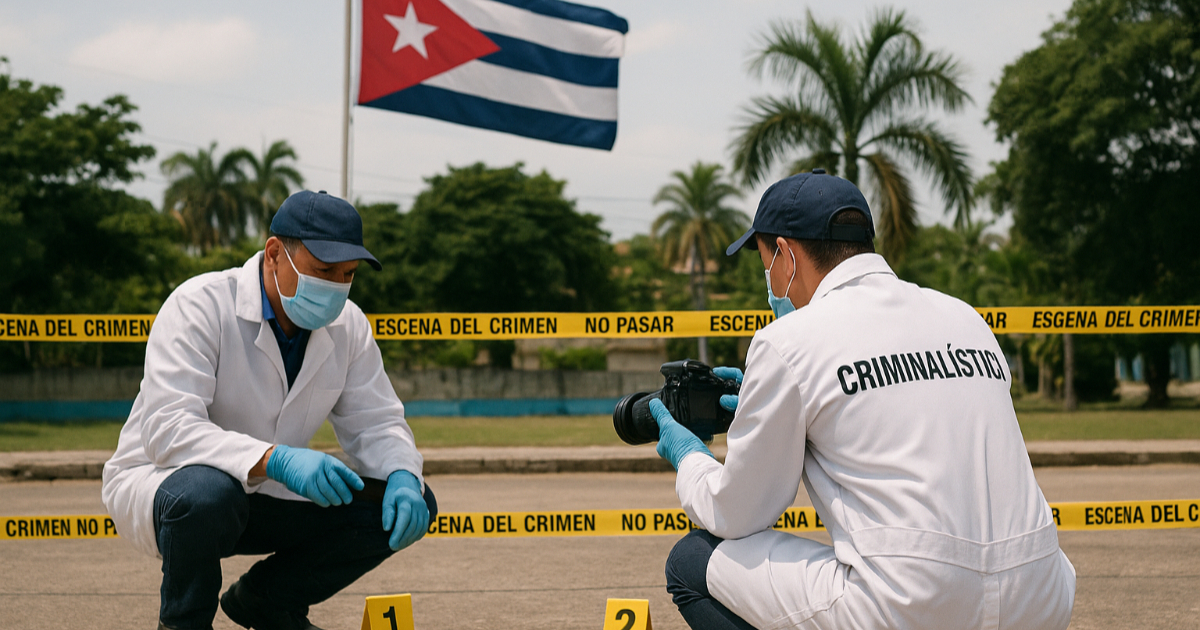
Alas Tensas Gender Observatory (OGAT) has reported the tragic deaths of two women in Cuba, victims of femicide at the hands of their partners in the provinces of Granma and Guantánamo.
In a detailed post on Facebook, OGAT revealed that the first incident involved Yaniuska Barrero Machado, aged 38, who was fatally attacked by her partner on January 19 in the Alto del Moro neighborhood of Las Mercedes, Bartolomé Masó municipality, Granma.
"Barrero, who held the position of director at the local museum, was on her way to work when the attack occurred," the post detailed.
The victim leaves behind a young daughter, and the feminist organization has called for public assistance in confirming the exact number of Yaniuska's children and their ages.
The second victim, Yaneisi Quiala Miranda, also 38, was an entrepreneur who was killed by her partner around January 28 in Santa Catalina, Manuel Tames municipality, Guantánamo. According to the observatory's report, the perpetrator took his own life following the murder.
OGAT extended condolences to both families, with a special note of sympathy for Yaneisi's surviving children.
Disturbing Statistics and Trends in 2026
OGAT, along with the organization YoSíTeCreo in Cuba (YSTCC), have reported that as of Tuesday, February 3, the official tally stands at six femicides, two attempted femicides, and one murder of a man due to gender-based motives.
Furthermore, they announced ongoing investigations into 12 potential femicides, four attempted femicides, and one gender-related murder of a man reported in 2025. "Additionally, there are alerts regarding three attempted femicides in 2026," the statement adds.
Recurring Violence Patterns
These heinous acts contribute to an alarming trend of increasing gender-based violence in Cuba. In 2025 alone, feminist observatories documented at least 48 femicides. This occurs in a nation lacking public official statistics and comprehensive gender violence legislation.
Although the Penal Code mentions gender violence, Cuba does not have a standalone classification for femicide, nor does it provide shelters for at-risk women or effective immediate response protocols. Consequently, numerous victims remain unprotected, despite evident danger.
The cases of Yaniuska—a state museum director—and Yaneisi—an entrepreneur—demonstrate that gender-based violence transcends professional and social environments. Both women were murdered by their partners, underscoring the recurring pattern of intimate partner violence.
Civil Society's Role Amid Institutional Gaps
In the absence of effective state mechanisms, organizations like OGAT and YSTCC are compelled to assume state responsibilities: documenting crimes, conducting investigations, supporting families, and raising awareness about gender violence.
These groups emphasize that reporting is not a crime and urge citizens to report extreme violence cases. They caution that impunity, invisibility, and lack of legislation allow perpetrators to act without facing real consequences.
The onset of 2026 highlights a structural crisis of gender violence in Cuba, characterized by a void of comprehensive laws, shelters, prevention protocols, and institutional response.
The tragic deaths of Yaniuska and Yaneisi once again underscore the urgency for action, as the list of victims will inevitably continue to grow without immediate intervention.
Understanding Femicide and Gender Violence in Cuba
What is the current situation regarding femicide in Cuba?
As of early 2026, there have been six confirmed femicides, with ongoing investigations into additional cases. Cuba lacks comprehensive laws and official statistics to address this issue effectively.
How are civil organizations responding to gender violence in Cuba?
Organizations like OGAT and YSTCC are stepping in to document crimes, support families, and raise awareness, filling the gap left by the state's inadequate response to gender violence.