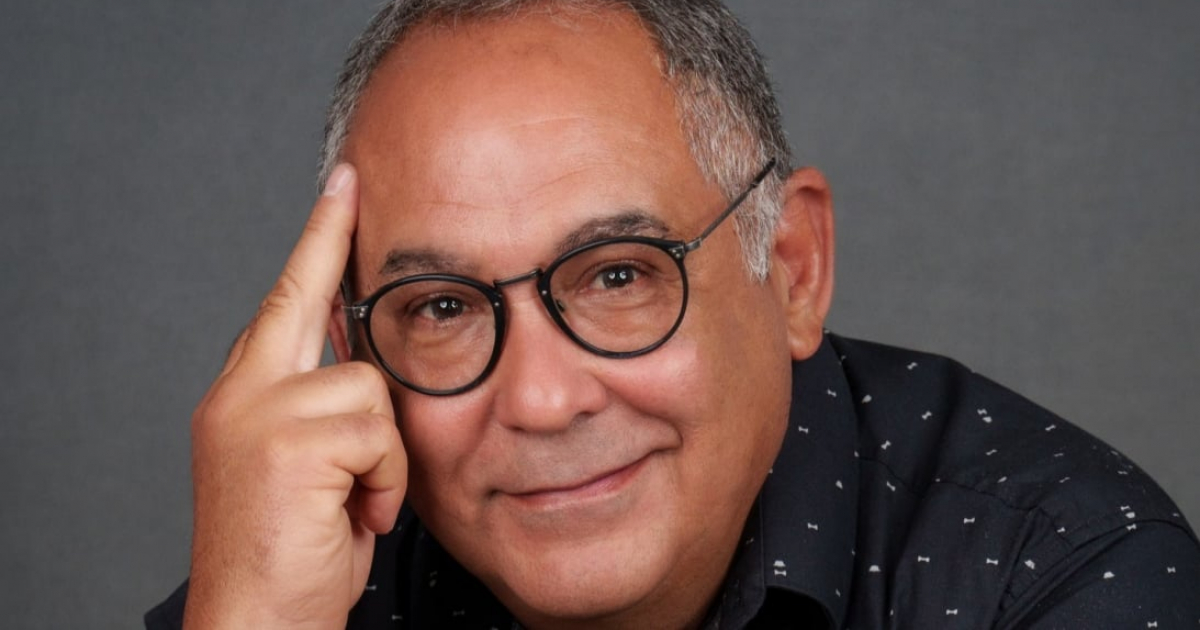
Cuban actor Albertico Pujol has fiercely criticized the Havana regime in a Facebook post, rejecting any notion of dialogue with the country's ruling elite.
In his statement, he labeled the Cuban government as a "misgovernment" and accused its leaders of being out of touch with the people's suffering.
"There are no arguments from the misgovernment of the Cuban dictatorship that can justify anything at all. The indifference of these tyrants is unforgivable," he wrote.
Pujol passionately defended the dignity and nobility of the Cuban people, asserting that they have grown weary of the relentless abuse and affronts to their dignity.
Highlighting the disconnect between the ruling class and everyday citizens, he stated, "None of the 'leaders' of this monstrosity experience the hardships faced by the people—none."
The most forceful point of his declaration was his outright rejection of any conversation with those currently in power on the Island: "There can be no dialogue at all with the group responsible for steering that country."
Pujol warned that continuing to push for dialogue with the regime is, in his view, a "dangerous mistake and an outright postponement of their convenience."
"The nearly century-long dialogue with this group is now an anachronism. Enough is enough," he concluded.
Negotiation or Dialogue?
The actor's statements come at a particularly sensitive time for Cuba and U.S. policy towards the Island.
Recently, President Donald Trump publicly stated that his administration is engaged in high-level talks with Cuba, suggesting that an agreement could be reached.
"Cuba is a failed nation... but now it doesn't have Venezuela to prop it up, so we are talking to the people of Cuba, the most important people in Cuba to see what happens," he commented from Mar-a-Lago.
He also expressed interest in allowing Cubans living in the U.S., who were "horribly treated" by the regime, to reunite with their families.
"We would like them to return home, as they haven't seen their family or country in decades. We will work to resolve that," he stated.
Trump emphasized that he seeks an understanding that benefits both Cubans on the Island and those in exile, noting that Cuba's current situation is unsustainable and that his administration is "watching closely what happens inside."
These statements contrast with Albertico Pujol's stance, as he believes that decades of conversations have not brought about real change and that continuing to bet on dialogue with the ruling elite only prolongs the people's suffering.
What is Havana's Response?
From Havana, Vice Minister Carlos Fernández de Cossío denied the existence of a formal negotiation table with Washington, although he clarified that Cuba is "open to dialogue" under certain terms.
The official made it clear that some issues, such as the Constitution and the socialist system, are not up for discussion.
All of this unfolds amid an unprecedented energy and economic crisis on the Island, exacerbated by the suspension of Venezuelan oil, halted shipments from Mexico, and an executive order from Trump aimed at cutting off Cuba's oil supply through sanctions on third countries.
Blackouts and the collapse of basic services have heightened social unrest.
In this context, Albertico Pujol's words reflect a position of complete break with the idea of negotiating with Cuba's current ruling elite, giving voice to a segment of the exile community that sees any path of understanding with the regime as exhausted.
Key Questions on Cuba's Political Climate
Why did Albertico Pujol criticize the Cuban regime?
Albertico Pujol criticized the Cuban regime for its disconnection from the people's suffering, labeling it as a "misgovernment" and rejecting any dialogue with the ruling elite.
What is the U.S. stance on negotiations with Cuba?
President Trump has indicated that his administration is engaged in high-level talks with Cuba, aiming for an agreement that benefits both Cubans on the Island and those in exile.
How has the Cuban government responded to claims of negotiations with the U.S.?
Cuba's Vice Minister Carlos Fernández de Cossío has denied formal negotiations with the U.S., although he stated that Cuba is open to dialogue under specific conditions.