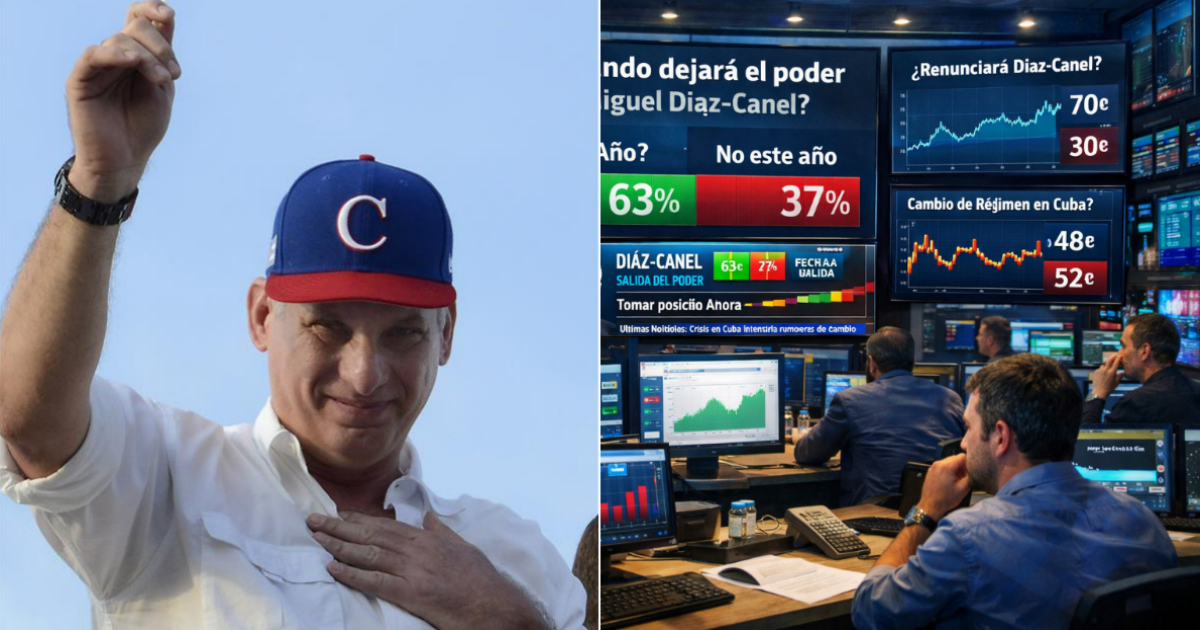
Speculation regarding the potential departure of Miguel Díaz-Canel from his position of power in Cuba by the end of 2026 has intensified within international prediction markets. This comes as the island's economic and energy crises deepen.
The U.S.-based platform Kalshi, regulated by the Commodity Futures Trading Commission (CFTC), increased the odds of the Cuban leader stepping down before the year's end by eight percentage points, elevating the chances from 45% to 53% between January 27 and February 2.
This rise aligns with deteriorating conditions within Cuba and the regime's growing isolation following the arrest of Nicolás Maduro in Caracas on January 3.
Analysts point to a critical situation in the country due to the collapse of oil supply from Venezuela, which threatens to deplete Cuba's crude reserves within weeks. The persistent power outages, food shortages, and social unrest are fueling expectations of an early political transition.
Simultaneously, U.S. President Donald Trump recently urged the Cuban regime to "negotiate an exit before it's too late," referencing preliminary contacts reportedly initiated between the two governments. However, Cuban authorities deny any negotiations and maintain a defiant stance against international pressure.
Alongside Kalshi, another U.S.-based platform, Polymarket, estimates a 40% chance of Díaz-Canel leaving office before June 1, with the probability rising to 65% if extended to December 31, 2026.
Both platforms employ financial systems to gauge investors' expectations concerning verifiable events, drawing from sources like The New York Times, Reuters, Bloomberg, and Politico. These indicators reflect a growing consensus among international observers that the Cuban regime is experiencing its most vulnerable period in decades.
Understanding the Implications of a Potential Leadership Change in Cuba
What are the main factors contributing to the speculation about Díaz-Canel's departure?
Speculation about Díaz-Canel's departure is driven by the worsening economic and energy crisis in Cuba, the collapse of oil supplies from Venezuela, and the subsequent social unrest and international isolation of the regime.
How do platforms like Kalshi and Polymarket assess political events?
Kalshi and Polymarket use financial systems to measure investors' expectations about political events, relying on data from reputable sources like The New York Times, Reuters, Bloomberg, and Politico to provide insight into possible outcomes.
What impact could a leadership change have on Cuba?
A leadership change in Cuba could potentially lead to shifts in domestic and international policies, affect economic recovery plans, and open doors for new diplomatic engagements, depending on the nature of the transition and the incoming leadership's stance.