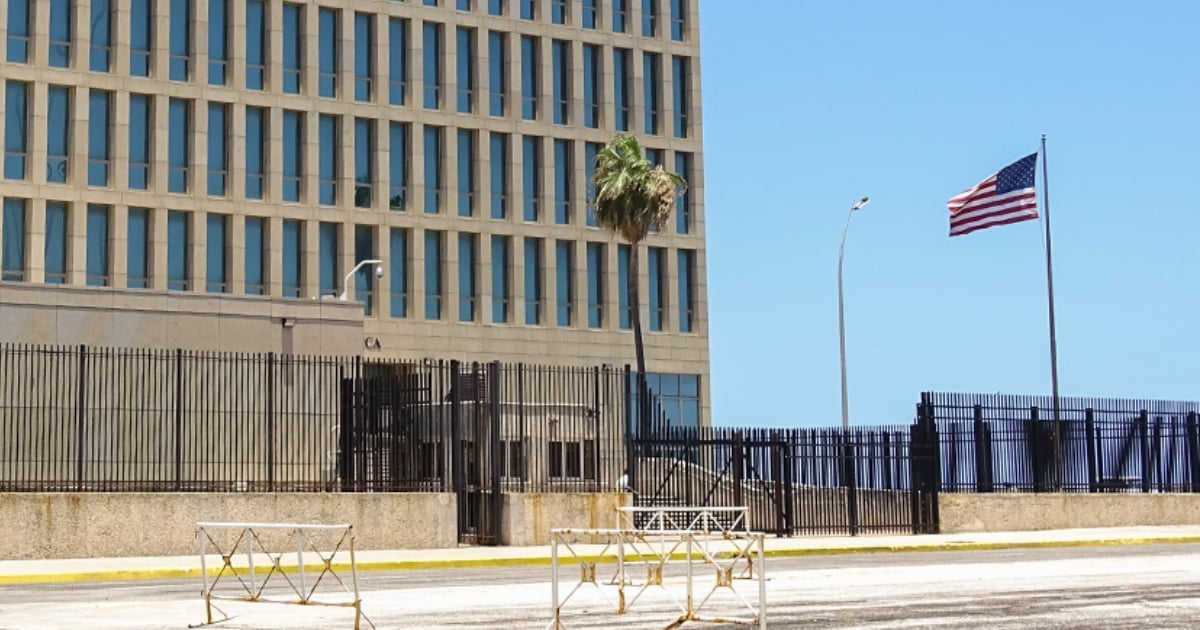
The United States Embassy in Havana has issued a security warning via its social media platforms this Tuesday, highlighting the deteriorating state of Cuba's electrical grid, the acute fuel shortages, and the disruptions to essential services across the island.
The statement emphasizes that the national power grid is becoming "increasingly unstable," with scheduled and unscheduled blackouts being "a daily occurrence" throughout the country, including in Havana.
These power outages, the statement elaborated, are impacting water supply, lighting, refrigeration, and communications.
The diplomatic mission also noted that the fuel scarcity is affecting transportation, leading to long lines at gas stations. While some hotels, businesses, and hospitals use generators during blackouts, they may not sustain services due to the fuel shortage.
Additionally, the Embassy warned about "incidents involving American citizens being denied entry into the country" and a rise in "regime-led protests against the United States," accompanied by anti-American rhetoric.
The advisory encourages U.S. citizens in Cuba or those planning to travel to the island to take precautions, conserve fuel, water, food, and mobile phone battery, and prepare for prolonged disruptions.
It further advises maintaining contact with loved ones, checking daily updates from the Unión Eléctrica (UNE), registering at step.state.gov for Embassy alerts, and following the Embassy's official social media accounts on Facebook, Instagram, and X.
This warning from the U.S. Embassy in Havana comes just days after escalating geopolitical tensions in the Caribbean and the rapid decline of Cuba's internal conditions led several embassies and international companies to discreetly update their evacuation protocols in anticipation of a potential major emergency on the island, according to the EFE agency.
Similarly, U.S. President Donald Trump stated on Monday that his administration is in discussions with Cuban leaders and that both parties are "very close" to reaching an agreement.
"It's a failed nation. They no longer receive money from Venezuela or anywhere else. Mexico is going to stop sending them oil," Trump said, referring to the dire situation of the Cuban regime.
However, Cuban Deputy Foreign Minister Carlos Fernández de Cossío assured that the island's government is not currently engaged in dialogue with the United States, though he expressed willingness to enter discussions if certain criteria are met.
These developments have heightened tensions between the two nations, compounded by the recent warning from the U.S. Embassy in Havana.
Key Questions About the U.S. Embassy Alert in Cuba
What are the main concerns highlighted in the U.S. Embassy's alert?
The alert focuses on the instability of Cuba's electrical grid, fuel shortages, disruptions to essential services, and incidents involving American citizens.
What advice has the U.S. Embassy given to Americans in Cuba?
The Embassy advises conserving resources like fuel, water, and food, preparing for long disruptions, keeping contact with family, and registering for alerts.
How are current U.S.-Cuba relations described in the article?
Relations are tense, with conflicting statements from U.S. and Cuban officials about ongoing communications and potential agreements.