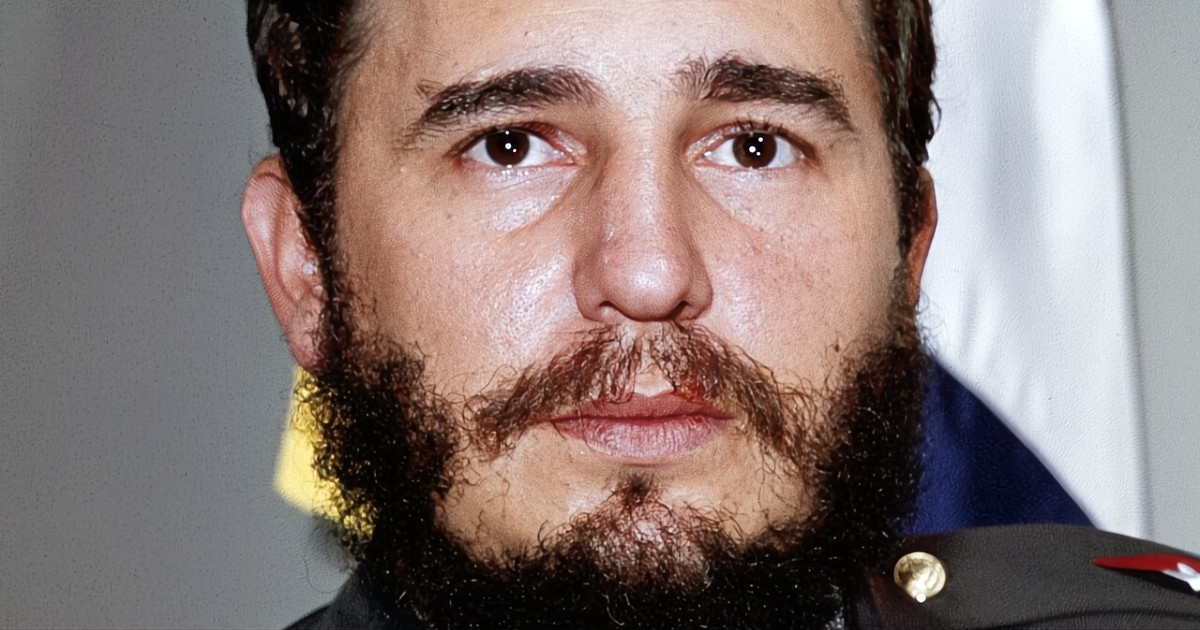
The number 26 has been closely tied to Fidel Castro and the Castro regime since its inception. Some see it as mere coincidence, while others believe it's a "numerological" pattern that could culminate in the year 2026, a time when the government he established seems more unstable than ever before.
Born on August 13, 1926, Fidel Castro's birth year has intrigued many, noting that 13, when doubled, results in 26—a number that would come to signify numerous milestones in his political journey. At the age of 26, in 1953, he led the attack on the Moncada Barracks, an event that gave rise to the July 26 Movement, an eternal emblem of his revolution.
Decades later, Fidel himself fell ill and temporarily relinquished power in 2006. A decade after that, in 2016, he passed away, seemingly closing a historical chapter. If the Castro regime were to collapse in 2026, it would complete a numerical sequence that many see as almost prophetic.
However, this is not merely about superstition. The current state of Cuba reveals a system in decline. Inflation is eroding wages, the Cuban peso loses value daily, blackouts are increasing, and shortages are affecting even the provinces that were once regime strongholds. More Cubans are emigrating or braving the sea, desperate to escape an unsustainable reality.
Social unrest has been steadily rising since the protests on July 11, 2021. Although the regime has tried to maintain control through heightened repression, discontent can no longer be concealed. Political prisoners, arbitrary arrests, and informational control have only intensified the frustration of a population that senses the end of the socialist model.
On the international stage, the regime's isolation has deepened. With the fall of Nicolás Maduro in Venezuela and the political shift driven by Washington under the leadership of Donald Trump and Secretary of State Marco Rubio, Havana has lost its main ally and oil supplier. Sanctions and financial constraints on GAESA's structures have tightened, and numerous high-ranking Cuban officials are facing investigations for corruption and human rights abuses.
Meanwhile, the figure of Miguel Díaz-Canel is increasingly weakened. Without his own leadership and reliant on the military apparatus still controlled by Raúl Castro, the president has become a symbol of stagnation and decay. In neighborhoods of Havana and Santiago, chants for "freedom" and "change" are now audible—something unthinkable not long ago.
If the Castro regime finally collapses in 2026, it would not only mark the end of a political cycle but also the end of a history defined by the number that haunted its founder: 26. A number that, for many Cubans, has ceased to represent the beginning of a revolution and has become a symbol of a regime seemingly fated to conclude.
Is it coincidence or destiny? In today's Cuba, characterized by scarcity, despair, and international pressure, the number 26 echoes strongly once more. Perhaps this will indeed be the year that closes the chapter of the revolution and heralds a new beginning for Cuba.
The Significance of Number 26 in Cuban History
Why is the number 26 significant in the history of Cuba's revolution?
The number 26 is significant because it is tied to several key events in Fidel Castro's life and the Cuban revolution, including his birth year (1926), the age at which he led the Moncada Barracks attack (26), and the name of the revolutionary movement he founded, the July 26 Movement.
What challenges is the Cuban regime currently facing?
The Cuban regime is grappling with severe inflation, a declining peso, frequent blackouts, widespread shortages, increasing emigration, and growing social unrest. International isolation and stronger sanctions have further weakened the government.
How has international politics affected Cuba recently?
International politics have negatively impacted Cuba, especially after the fall of Nicolás Maduro in Venezuela and tougher policies from Washington, leading to a loss of key allies and increased sanctions on Cuban government structures.