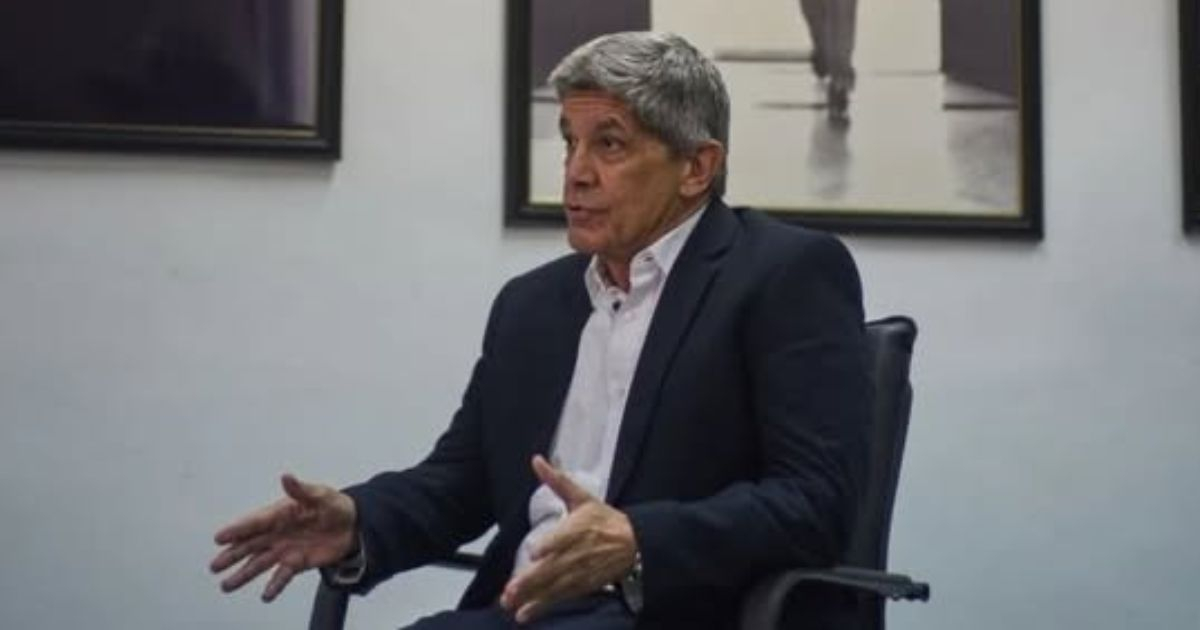
Cuban Deputy Foreign Minister Carlos Fernández de Cossío has stated that the island's government is not currently engaged in discussions with the United States. However, he expressed a willingness to initiate talks if specific conditions are met.
The comments were made on Monday to AP amid escalating tensions between the two nations, following Donald Trump's assertion of being close to reaching an agreement with the Cuban regime.
Fernández de Cossío clarified that there is no "dialogue table" with Washington at present, emphasizing that no formal negotiations are underway.
"We are open to dialogue. If we can have a dialogue, perhaps that could lead to negotiations," the official remarked.
He explained that Cuba is prepared for "informal dialogue" aimed at ensuring a respectful and serious coexistence, despite the differences between the governments.
However, he highlighted that certain topics are non-negotiable for Havana, such as the Constitution, the economy, and the socialist system. "But there are many other issues we can discuss," he added.
The deputy minister's statements came just days after U.S. President Donald Trump claimed that his administration had begun talks with Cuban leaders, following threats to impose tariffs on countries supplying oil to the island.
Trump labeled Cuba as a "failed nation," asserting that the country "no longer receives funds from Venezuela or anywhere else."
Cuba is currently enduring a severe economic crisis marked by prolonged blackouts, disruptions in oil shipments from Venezuela, and U.S. sanctions, which Cuban officials claim caused losses exceeding $7.5 billion between March 2024 and February 2025.
This week, the Russian government expressed its support for Havana, AP noted. In a phone call, Russian Foreign Minister Sergey Lavrov promised both political and material support to his Cuban counterpart, Bruno Rodríguez, condemning the economic and military pressure on the island, particularly the hindrance of energy supplies.
Meanwhile, the head of the U.S. mission in Cuba, Mike Hammer, continues to travel across the island, sharing videos of his interactions with Cuban citizens. Some have welcomed him warmly, while others have publicly criticized him.
The State Department has urged the Cuban regime to stop its harassment of American diplomats, stating that "our diplomats will continue to meet with the Cuban people despite unsuccessful attempts at intimidation."
In his interview with the U.S. agency, Fernández de Cossío emphasized that Cuba poses no threat to the United States. "Cuba is a peaceful country. We only wish to engage with the United States in the same manner as with the rest of the world. Today, the United States is the exception," he concluded.
Understanding the Current U.S.-Cuba Relations
What is the current stance of Cuba on dialogue with the United States?
Cuba has expressed openness to dialogue with the United States but insists that certain conditions must be met and some topics, like the Constitution and socialist system, are non-negotiable.
Why does the U.S. continue to pressure Cuba economically?
The United States exerts economic pressure on Cuba as part of its policy to encourage reforms in Cuba's political and economic system, and to address issues such as human rights and democracy.
How has Russia responded to the U.S. actions against Cuba?
Russia has pledged political and material support to Cuba while condemning the economic and military pressures imposed by the United States.