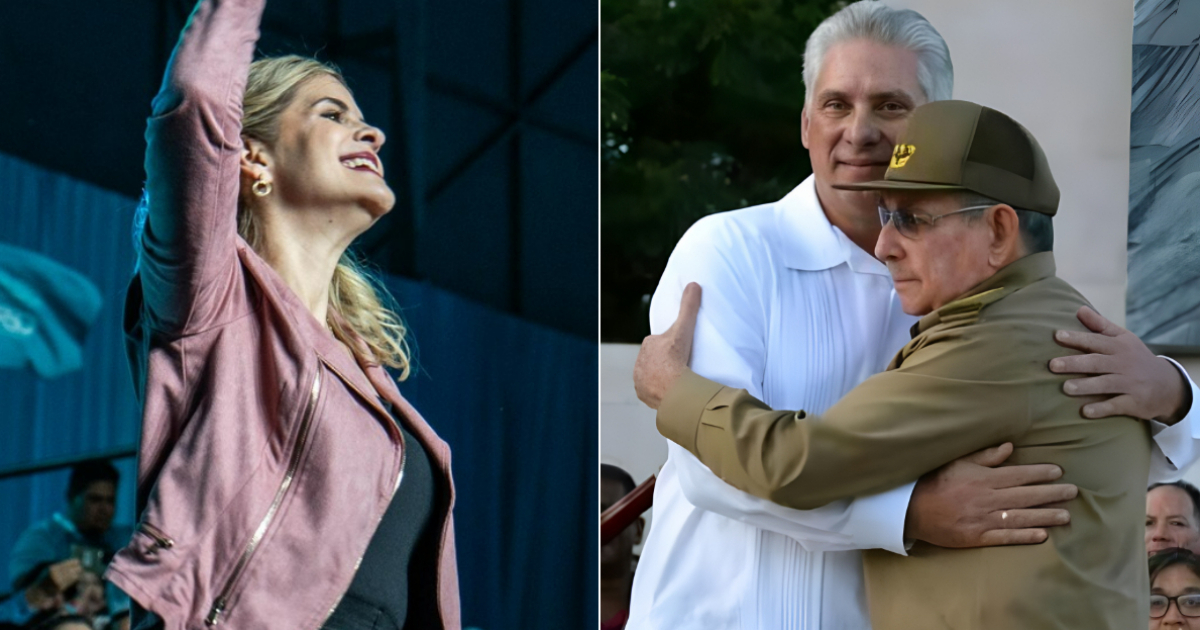
The election victory of Laura Fernández Delgado in Costa Rica comes during a period of significant political restructuring across the Americas, driven by President Donald Trump's second term and the expansion of the "Donroe Doctrine," a new regional security strategy advocated by Marco Rubio from the State Department.
The dramatic capture of Nicolás Maduro by U.S. forces in early 2026 marked a turning point, as Washington reoriented its focus on eradicating authoritarian regimes and combatting transnational crime.
Moderate Center-Right Governments as Key Allies
In this evolving landscape, moderate center-right governments like Costa Rica's play a crucial role as political and diplomatic allies to the United States. Former President Rodrigo Chaves had already signaled this alignment by terminating the educational agreement with Cuba's Ministry of Education in 2022—a subtle yet symbolic gesture—and supporting allegations of human rights violations in Cuba at the UN in 2025 through his foreign minister.
Chaves, while avoiding an overtly ideological stance, positioned Costa Rica within the bloc of Latin American democracies critical of Havana, alongside countries like Uruguay and the Dominican Republic.
Laura Fernández's Diplomatic Balancing Act
As the new president, Laura Fernández, who views herself as Chaves's successor, inherits this diplomatic framework in an increasingly polarized environment. Her administration takes over as the U.S. intensifies its economic and informational pressure on Cuba, coupled with intelligence and regional cooperation strategies under the new hemispheric security initiative.
Despite Costa Rica's historical neutrality, the country has stepped up its cooperation in intelligence and border control, particularly regarding human trafficking and illicit financial flows linked to the Caribbean and Venezuela.
Navigating a Fragmented Regional Landscape
Fernández faces the challenge of balancing the promise of continuity with the need to craft an independent foreign policy. Her task is to maintain diplomatic prudence without isolating Costa Rica from the U.S.-led coalition of democracies in the region. So far, she has shown no signs of departing from Chaves's policies, suggesting her administration will maintain an institutional distance from the Cuban regime without abandoning diplomatic channels.
Under the Donroe Doctrine, pressure on Havana now extends beyond sanctions and human rights rhetoric. Cuba is perceived as a regional risk hub due to its involvement in opaque financial networks and technical support to allied regimes.
In this scenario, Fernández could become a significant player in the network of governments working to isolate the Castro regime through hemispheric cooperation and regional security.
A Changing Political Map in Latin America
Costa Rica's new positioning occurs amidst a regional shift marked by the rise of pragmatic center-right or right-wing governments in countries like Argentina under Javier Milei, Ecuador with Daniel Noboa, Paraguay led by Santiago Peña, the Dominican Republic with Luis Abinader, Panama under José Raúl Mulino, El Salvador with Nayib Bukele, and Bolivia under Rodrigo Paz following the 2025 elections.
Joining this bloc, Costa Rica under Laura Fernández continues the trajectory of Rodrigo Chaves. Although these governments differ in style and agenda, they share priorities such as security, macroeconomic stability, and functional relations with the U.S., diminishing the presence of political forces aligned with traditional leftist projects.
Meanwhile, the bloc associated with "21st-century socialism" and the Bolivarian axis is experiencing a decline in hemispheric influence. Beyond Cuba, Venezuela, and Nicaragua, increasingly isolated and with limited integration mechanisms like ALBA-TCP or Petrocaribe, the organized left has failed to establish cohesive regional leadership.
Even center-left governments in Brazil, Colombia, and Mexico have taken cautious, low-profile stances on ideological alliances: Lula da Silva, Gustavo Petro, and Claudia Sheinbaum have prioritized domestic agendas and diplomatic balances, avoiding spearheading a consolidated leftist front.
The result is a fragmented regional scenario where traditional left-wing movements lack an effective coordinating axis. In this context of hemispheric reorganization and the weakening of ideological projects that shaped regional politics for two decades, Costa Rica emerges as a discreet yet functional actor within Washington's new architecture.
Laura Fernández's government is not poised to lead blocs or initiate ruptures but to solidify a stance of cautious alignment, emphasizing security cooperation, institutional defense of democracy, and an increasingly distant relationship with authoritarian Caribbean regimes.
In the new hemispheric doctrine, such a profile—moderate, predictable, and operative—can be as significant as the more visible players on the regional stage.
Understanding Costa Rica's New Political Role
What is the Donroe Doctrine?
The Donroe Doctrine is a new regional security strategy promoted by Marco Rubio, focusing on eradicating authoritarian regimes and combating transnational crime in the Americas.
How has Costa Rica's foreign policy shifted under Laura Fernández?
Under Laura Fernández, Costa Rica's foreign policy continues to align with the U.S., focusing on diplomatic prudence while maintaining a critical stance towards authoritarian Caribbean regimes, particularly Cuba.
How does Costa Rica's government cooperate with the U.S.?
Costa Rica collaborates with the U.S. in intelligence sharing and border control, especially regarding human trafficking and illicit financial flows related to the Caribbean and Venezuela.