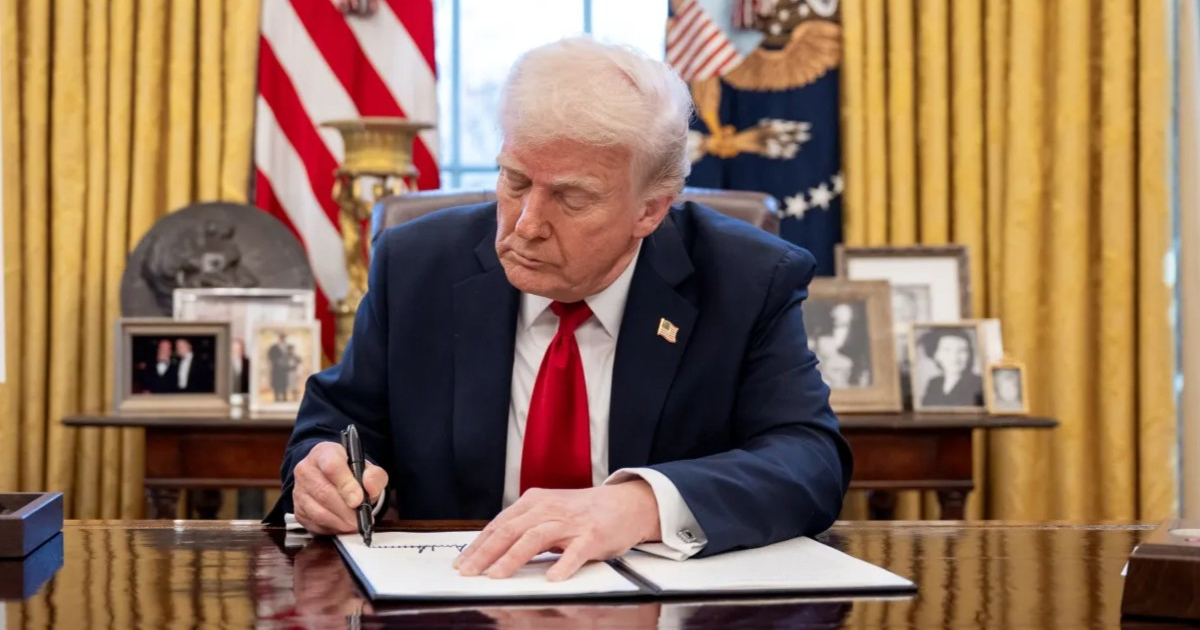
The notion of freedom arises following the recent U.S. declaration of a national emergency against Cuba. Those of us yearning for liberty and a dignified life for our people find ourselves hopeful once again. This development has stirred excitement on social media, fueling expectations of immediate change.
Such reactions are understandable. After enduring a regime that stifles rights, opportunities, and prospects for so long, any external gesture is often seen as a potential beacon of hope. Clinging to something in such circumstances is almost an instinctive response. However, it's crucial to pause and reflect calmly.
It is essential to understand the nuances to avoid falling into euphoria that eventually leads to disillusionment and despair. National emergency declarations are not liberation plans nor strategies for democratizing countries. They are primarily legal tools of U.S. foreign policy used to impose sanctions, financial blockades, and trade restrictions. These measures are not designed to alter political systems or directly improve citizens' lives.
The historical record shows this clearly. The United States has maintained similar legal measures against nations like Iran, North Korea, Venezuela, Russia, and Syria for years, yet none have transitioned to genuine freedom. Governments persist, systems adapt, and those who suffer the most are the ordinary people. In reality, the outcome is consistently the same: increased scarcity, heightened control, greater state dependency, and less autonomy over one's life.
On the other hand, these measures do complicate some of the Cuban government's practices: the discretionary use of donations meant for the people, the opaque handling of resources like oil, and other mechanisms often justified by the term "blockade." In this regard, external pressure also exposes internal responsibilities that have been obscured for years.
There's a significant distinction to note here. Unlike other measures, such as the ban on remittances, which I have discussed previously and which primarily impacts the population, blocking oil imports can directly affect the power structure. Energy is a foundational aspect of the system: without fuel, the state economy cannot function, internal control cannot be maintained, and all balances become strained.
This is likely why this particular measure, more than others, has elicited a swift reaction from the government—not out of concern for the populace, but because it targets a critical component of the regime's infrastructure. In this respect, it may be one of the few sanctions that genuinely puts them on the defensive.
Yet, none of this ensures freedom.
The greatest risk isn't solely economic but also psychological: the belief that salvation will come from outside. When hope is placed in external factors, internal responsibility weakens, leading to a cycle of hope and frustration. History is unequivocal: no nation has achieved authentic and lasting freedom because of another country's decision. Genuine change always originates internally, with individuals who are aware, organized, and willing to shape their own destiny.
Therefore, while a national emergency against Cuba might bring more tension, difficulties, and conflict, and some actions could significantly challenge the regime, it does not inherently equate to freedom, transition, or the automatic collapse of the system.
If real change ever comes, it won’t be signed from Washington. It will arise from within, from ordinary people, when we are ready to build something new.
External pressure may weaken governments, but only the people can change their history.
Understanding the Impact of U.S. Sanctions on Cuba
What is the primary purpose of a U.S. national emergency declaration?
A U.S. national emergency declaration primarily serves as a legal tool for imposing sanctions, financial blockades, and trade restrictions against countries, rather than initiating plans for liberation or democratization.
Can external pressure lead to significant change in Cuba?
While external pressure can expose internal issues and challenge government practices, genuine and lasting change in Cuba is more likely to originate from within its own people, who must organize and advocate for their own destiny.