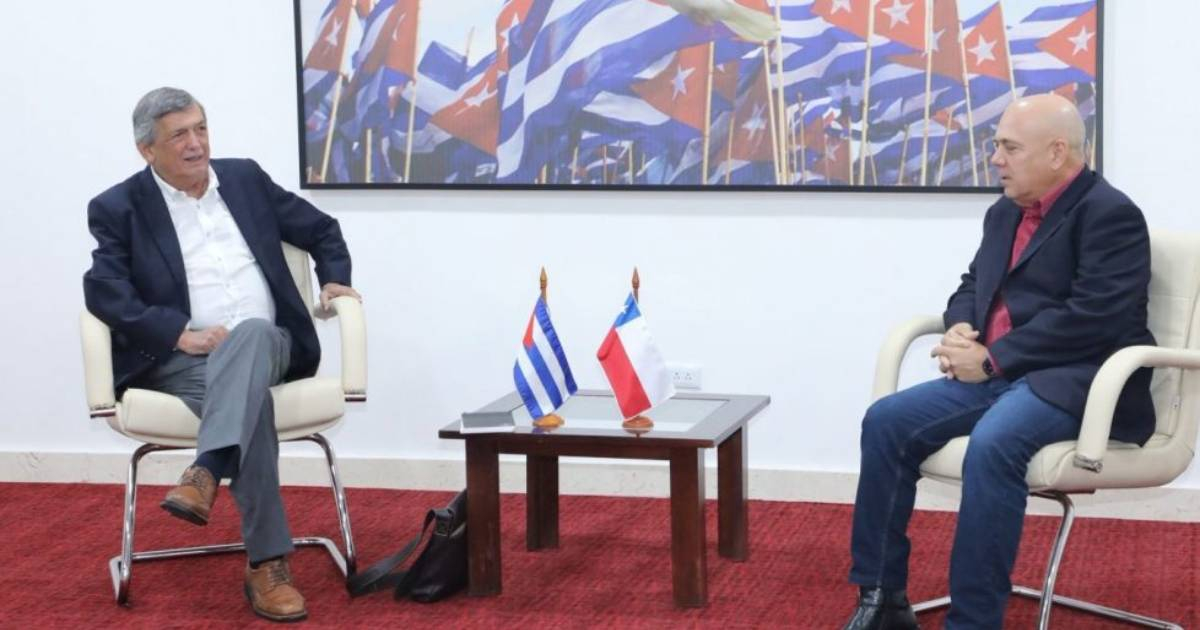
High-ranking officials of the Cuban regime have admitted that the island is experiencing its most critical moment since 1959, a situation deemed even more severe than the Bay of Pigs invasion. This revelation comes from Lautaro Carmona, president of the Communist Party of Chile, following his official visit to Havana. During his trip, he held discussions with Miguel Díaz-Canel and other top leaders amidst escalating regional tensions and an unprecedented economic and social crisis.
In a report presented to his party's members, Carmona recounted that during meetings with Cuban authorities, he heard a unanimous and alarming assessment: Cuba is facing "the most complex moment of the entire revolutionary process," a scenario surpassing even the threat encountered during the Bay of Pigs.
The Chilean leader attributed this dire situation to what he described as a full-scale offensive by the United States, particularly after the capture of Venezuelan leader Nicolás Maduro in an operation authorized by President Donald Trump.
One of the primary objectives of his visit was to discuss with Cuban officials the political, economic, and strategic impacts of this event, which had immediate repercussions for Havana, such as the halt of Venezuelan oil supplies and the tightening of the economic blockade.
Amidst these challenges, Carmona depicted Cuba as enduring a "war economy," grappling with severe energy, food, and basic service shortages.
During his stay, the Chilean communist leader met with Miguel Díaz-Canel; Vice Minister Josefina Vidal; Roberto Morales, a member of the Political Bureau of the Communist Party of Cuba; Emilio Lozada, head of the party's international relations; and the president of the National Assembly, Esteban Lazo.
He also held a meeting with Katiuska Blanco, the only authorized biographer of Fidel Castro. Following these exchanges, he assured that the Cuban leadership is preparing for "the worst-case scenario," although they remain committed to avoiding direct confrontation.
Part of the visit included participating in a tribute at Havana's Colón Cemetery for 32 Cuban soldiers who died during clashes in Venezuela prior to Maduro's capture.
Carmona emphasized that the Cuban issue should be a priority on the political and media agenda in Chile and Latin America. His call comes at a critical time in Chilean politics, marked by the recent shift to the right following the victory of the ultra-conservative José Antonio Kast, who will assume the presidency on March 11, 2026, positioning the Communist Party in the opposition.
From this challenging backdrop, Carmona urged that the deterioration in Cuba not be normalized nor ignored as he described it as an existential threat to the island's political project. "Imperialism believes the time has come to hold back on nothing," he declared, underscoring the urgency of highlighting Cuba's situation in the region.
Understanding Cuba's Current Crisis
Why is the current situation in Cuba described as the worst since 1959?
Cuban officials have acknowledged that the island faces its most critical period since 1959 due to severe economic and social challenges, compounded by external pressures such as the halt of Venezuelan oil supplies and the tightening of the U.S. economic blockade.
What impact did the capture of Nicolás Maduro have on Cuba?
The capture of Nicolás Maduro, authorized by President Donald Trump, led to immediate repercussions for Cuba, including the cessation of Venezuelan oil supplies, which further strained the island's already struggling economy and increased the pressure from the U.S.
How is Cuba preparing for its current challenges?
Cuban leadership is preparing for the worst-case scenario while striving to avoid direct confrontations. The regime is focused on managing the severe shortages and maintaining political stability amidst the economic crisis.