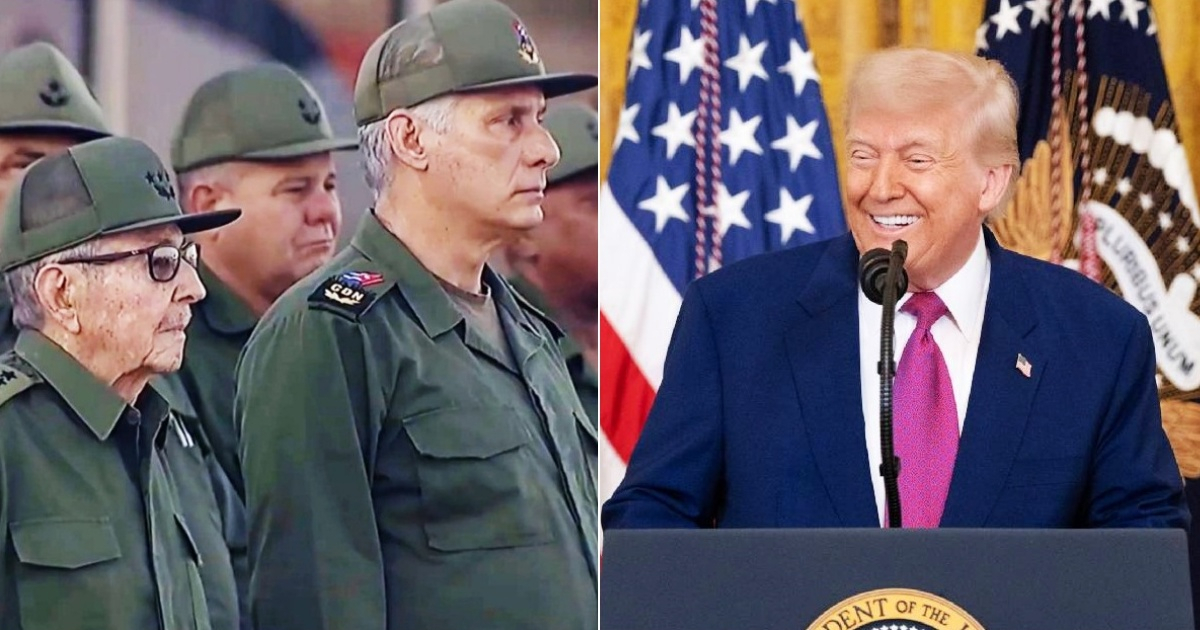
The Cuban regime has once again portrayed itself as a victim of "impunity" and "abuse," highlighted in an official statement from the Ministry of Foreign Affairs (MINREX). This time, the grievance is directed towards a new executive order from President Donald Trump aimed at halting fuel supplies to the island.
This contradiction is hard to ignore: a state known for decades of repression, censorship, and systematic abuse against its own population now demands global respect, legality, and solidarity.
On January 30, 2026, Havana labeled this move as an "escalation of the economic blockade" by the United States, following Washington's declaration of a national emergency to levy tariffs on countries supplying oil to Cuba.
Hypocrisy in the Name of International Law
The official text accuses the United States of breaching International Law, employing "blackmail, threats, and coercion." It further urges the international community to denounce "aggression, impunity, and abuse."
Yet, these very concepts have been systematically denied in Cuba for more than sixty years.
While the regime speaks of government ethics and mutual respect, Cuba remains a place where thousands of political prisoners are jailed for ideological reasons, peaceful protests are violently suppressed, independent journalists are persecuted, and the security apparatus operates with total impunity against its citizens.
The Irony of Denouncing Threats
The regime's statement insists that Cuba "poses no threat" and portrays itself as "a nation of peace, solidarity, and cooperation."
However, the same government demanding international respect has increased its hostility even against foreign diplomats, such as U.S. Ambassador Mike Hammer.
The official narrative attempts to present the regime as a pillar of stability while holding its citizens hostage to a chronic crisis triggered by its own flawed economic model and refusal to allow basic freedoms.
Blaming the Embargo: A Perpetual Excuse
The statement reiterates the old Castroist narrative: the embargo as the all-encompassing cause of national issues.
Yet, the regime remains silent on internal corruption, economic collapse, resource diversion to military elites, and lack of structural reforms.
While the United States may intensify sanctions, it is the Cuban system that keeps its people without political rights, economic freedoms, or the ability to determine their own future.
Propaganda and Ideology Amidst Crisis
The statement's closing — “¡Patria o Muerte, Venceremos!” — confirms Havana's continued commitment to ideological confrontation, even as the country endures one of its worst contemporary crises.
Faced with a lack of genuine solutions, the regime once again resorts to revolutionary rhetoric and the notion of an external enemy to justify its grip on power.
Understanding Cuba's Political Landscape
Why does Cuba continue to blame the U.S. embargo for its problems?
Cuba blames the U.S. embargo as a means to deflect attention from internal issues such as corruption, economic mismanagement, and lack of reforms. The regime uses this narrative to maintain control and justify its policies.
How does the Cuban regime treat political dissent?
The Cuban regime suppresses political dissent through imprisonment of political activists, censorship of the press, and violent repression of peaceful protests. This creates an environment where freedom of expression is severely restricted.