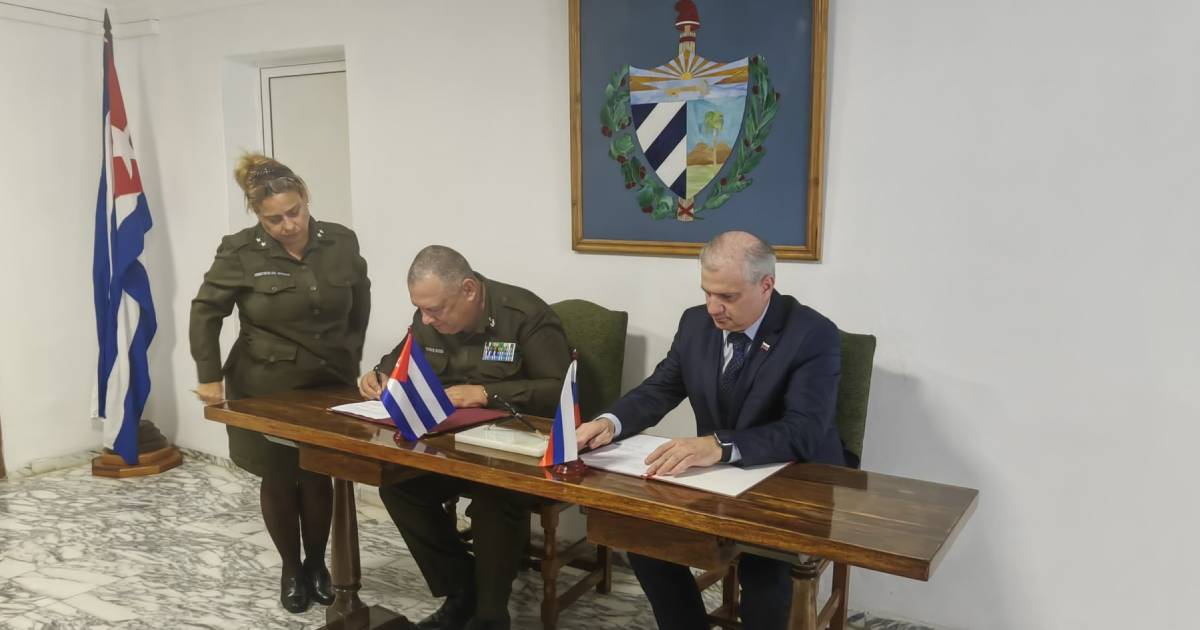
In a move that underscores the deepening ties between Havana and Moscow, Cuba and Russia have formalized a prison cooperation agreement for the period 2026-2028. This development comes at a time when the United States has intensified its pressures on the Cuban regime, while the Kremlin has openly backed the Cuban government against any potential internal upheaval.
The agreement was signed in Havana following a visit from a delegation led by Andrei Kochukov, the Deputy Director of the Russian Federal Penitentiary Service. The signing ceremony was attended by Russian Ambassador to Cuba, Viktor Koronelli, alongside officials from Cuba's Ministry of the Interior.
According to the Russian Embassy in Cuba, the agreement was the result of several days of discussions focused on sharing expertise in prison management and enhancing institutional cooperation. Despite being presented as a technical collaboration, the timing of this accord is laden with political symbolism.
Recently, Moscow has made it clear that it will not allow Cuba to face a situation akin to Venezuela's, where, according to Russian authorities, an "internal betrayal" facilitated the capture of Nicolás Maduro through an operation approved by former U.S. President Donald Trump.
“That kind of scenario will not be repeated in Cuba,” asserted Russian Ambassador Vasily Nebenzya at the United Nations, emphasizing that there are no cracks within Cuba's power structure nor any high-ranking officials ready to side with Washington.
These statements align with the Trump Administration's new sanctions, which declared a national emergency, labeling the Cuban government as an "unusual and extraordinary" threat to U.S. security due to its alignment with hostile nations and actors, including Russia.
In this context, the prison cooperation takes on a significance beyond mere administrative matters. For countless Cuban families, both on the island and abroad, the prison system is not just a diplomatic notion but a harsh reality characterized by allegations of overcrowding, insufficient medical care, and punitive measures against political prisoners, including participants in the 11J protests.
While Moscow strengthens its political and diplomatic support for Havana — albeit with recognized economic limitations — this prison agreement further cements the alliance between the two governments in crucial areas such as security and internal control.
Understanding the Cuba-Russia Prison Agreement
What is the purpose of the Cuba-Russia prison cooperation agreement?
The agreement aims to enhance collaboration between the two countries in managing prison systems, focusing on the exchange of expertise and institutional cooperation.
Why is the timing of this agreement significant?
The agreement comes amid heightened tensions between Cuba and the United States, with the Kremlin showing strong support for Cuba against potential internal challenges.
How does the U.S. view the relationship between Cuba and Russia?
The U.S. perceives the alliance as a threat, declaring a national emergency and imposing sanctions due to Cuba's alignment with Russia and other hostile entities.