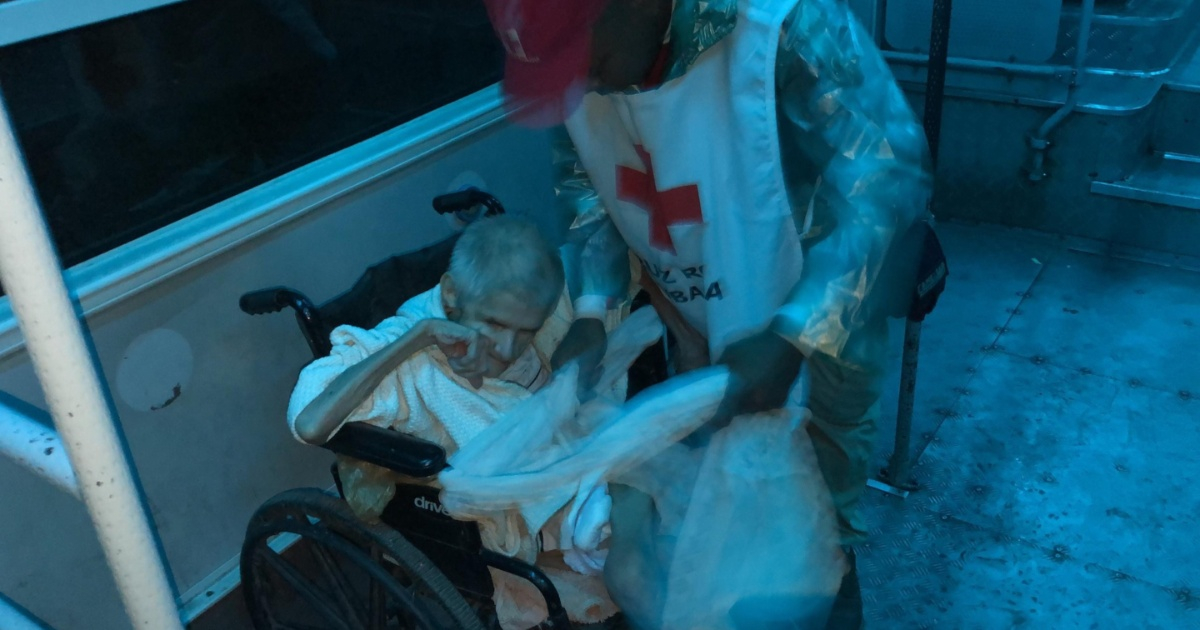
On Saturday afternoon, local authorities in the Plaza de la Revolución district announced the relocation of residents at risk to safer locations due to the impending threat of flooding. This situation arises from a cold front and strong swells expected to impact the northern coast of the western region, with a likely effect on Havana.
According to the alert, the frontal band is moving through the western region, bringing increased cloudiness, showers, and light rain. It is projected to continue moving eastward.
Images shared on the government's official social media channels showed elderly individuals with physical disabilities being assisted onto a bus.
Northern coastal areas are expected to experience increased northwesterly winds and strong swells from Saturday night into Sunday.
The Insmet (Institute of Meteorology) has forecasted waves potentially reaching four meters in height.
Reports indicate that strong swells are already intensifying along the Havana Malecón, with the situation likely to worsen during high tide at 8:00 p.m., significantly increasing the likelihood of coastal flooding.
Authorities have urged the public to adhere strictly to official guidance, emphasizing that "life is the most important," ensuring that "nobody" is left "to their fate."
Instructions for those in low-lying areas include securing potable water in tanks, moving motors or water pumps to safe locations, elevating essential resources, and preparing documents, medications, and necessary items for potential evacuation. Additionally, residents are advised to stay informed and assist vulnerable individuals.
Between April and October 2025, Havana faced a series of meteorological events highlighting the capital's vulnerability to rain and swells.
In April, a severe storm submerged streets, vehicles, and entire neighborhoods.
In August, even light rain caused several streets to flood again.
Residents in Cuatro Caminos and Centro Habana reported completely blocked sewage systems, which they had to clear on their own initiative.
Finally, in October, intense rains once more led to severe flooding in various parts of the capital.
Streets turned into rivers, garbage floating in the water, and trapped vehicles have become familiar scenes for the citizens of Havana.
Public complaints consistently pointed to the deterioration of urban drainage, the accumulation of waste, and the lack of official foresight as factors worsening the effects of increasingly common meteorological phenomena.
Understanding the Flood Risks in Havana
Why were residents in El Vedado relocated?
Residents in El Vedado were relocated due to the threat of flooding from a cold front and strong swells expected to impact the northern coast, posing a significant risk to low-lying areas.
What measures are advised for residents in flood-prone areas?
Residents in flood-prone areas are advised to secure potable water, move essential equipment to safe locations, elevate resources, and prepare necessary documents and items for evacuation while staying informed.
How has Havana's infrastructure impacted flood management?
The deterioration of urban drainage systems, waste accumulation, and lack of official planning exacerbate the impact of flooding, making it a recurring issue in Havana.