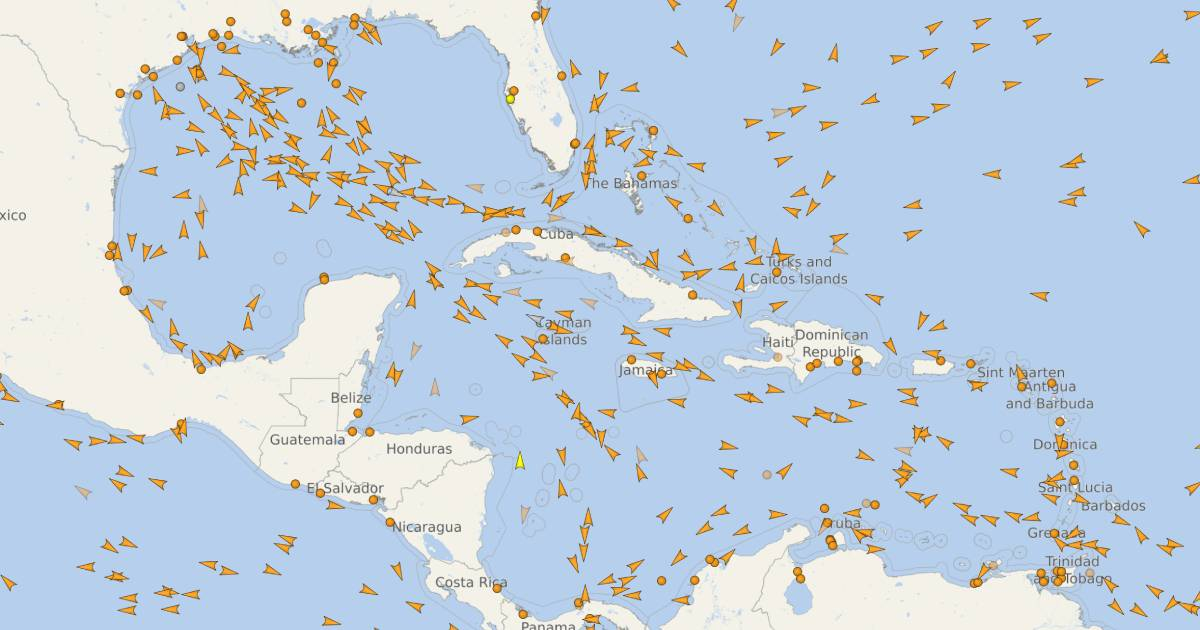
While oil flows relentlessly through the Caribbean and the Gulf of Mexico, Cuba finds itself largely excluded from these crucial energy routes. According to maritime tracker VesselFinder, numerous oil tankers navigate the waters surrounding the island, yet only a few, if any, make their way to its ports.
Initial searches, filtering for tankers bound for Cuba, reveal just two local movements in the area. In contrast, removing this filter shows a map crowded with oil vessels off the coasts of Florida, Central America, northern South America, and the Antilles arc, leaving Cuba conspicuously empty—an isolated spot in a sea teeming with crude oil.
These images starkly illustrate the immediate effects of the new energy blockade driven by Washington. President Donald Trump recently signed an executive order declaring a national emergency, paving the way for tariffs on nations that sell or supply oil to Cuba. This serves as a direct warning to any potential supplier thinking of replacing Venezuela.
This policy shift could not come at a worse time for the island. Data from the Financial Times, based on Kpler's insights, indicate that Cuba's oil reserves currently would last only 15 to 20 days. As of 2026, the island has received just one shipment of crude, from Mexico on January 9, as it grapples with a severe fuel oil shortage crucial for electricity generation.
The collapse of Venezuelan supplies following Nicolás Maduro's capture, the reduction or halt of shipments from Mexico, and direct U.S. pressure have left Cuba with scant options.
Surrounded by oil yet unable to access it, Cuba faces an energy isolation that has resulted in prolonged blackouts, disrupted transportation, and a black market where fuel prices are beyond reach for most citizens.
Miguel Díaz-Canel himself condemned what he termed Washington's attempt at "total suffocation," accusing Trump of seeking to deprive the island of the fuel necessary for economic stability and daily life.
The repercussions are evident in everyday life. Endless lines, fear of running out of gas or electricity, and hospitals and public services operating at the brink. In many areas, daily life is marked by over 20-hour power outages and uncertainty about the energy system's resilience.
As the U.S. tightens its strategy and insists that Cuba will receive "neither oil nor money," the island approaches a critical juncture. Cut off from the oil surrounding it, the nation faces a dire scenario where, once more, the greatest burden falls on its people.
Understanding Cuba's Oil Crisis
Why is Cuba isolated from oil supplies?
Cuba is isolated from oil supplies due to U.S. policies that impose tariffs on countries supplying oil to the island, along with the collapse of Venezuelan oil shipments and reduced deliveries from Mexico.
What are the consequences of the oil shortage in Cuba?
The oil shortage in Cuba has led to extensive blackouts, stalled transportation, and a black market for fuel with prices too high for most citizens, severely affecting daily life and economic stability.
How is the Cuban government responding to the energy crisis?
The Cuban government, led by Miguel Díaz-Canel, has condemned U.S. actions as a deliberate attempt to choke the island's economy, emphasizing the need for alternative solutions to sustain its energy demands.