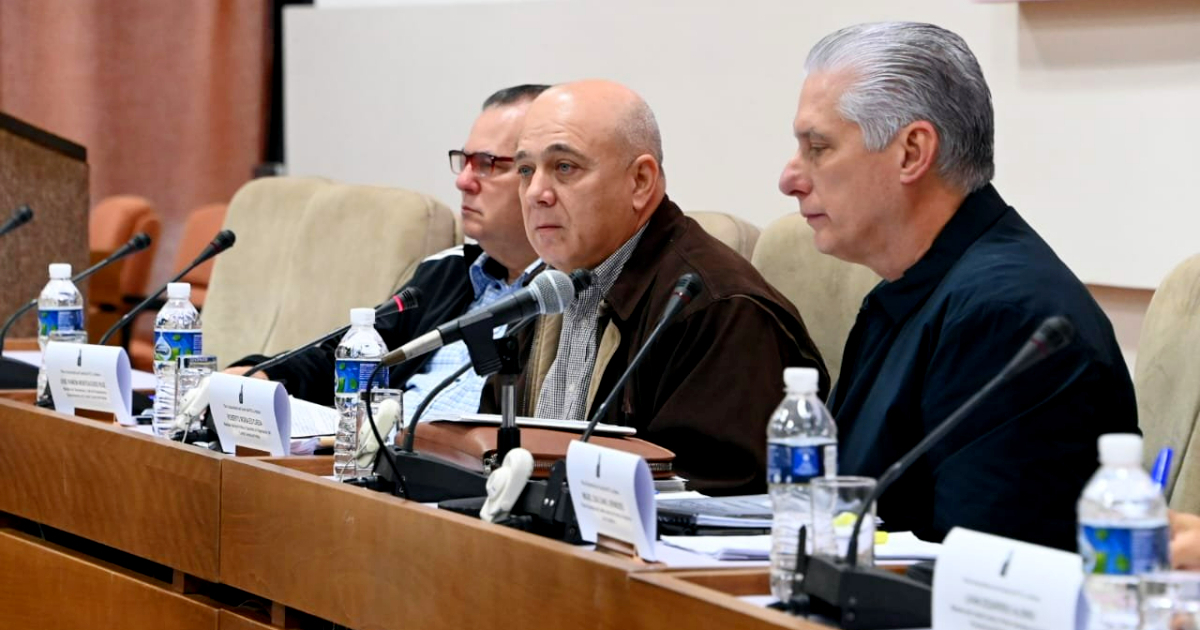
In an unusual display of candor, the Communist Party of Cuba has openly acknowledged the severe decline in living conditions in Havana.
A report released by the Presidency following an Extraordinary Plenary Session of the Provincial Committee of the Party highlighted the critical state of basic services, housing, and infrastructure in the capital. According to the official document, public transportation is operating at a mere 42% of its planned capacity, housing construction has plummeted to 41%, and overall physical production has been halved.
Alarmingly, infant mortality rates, often manipulated to uphold the myth of social "achievements," have reached 14 per 1,000 live births, marking the highest rate in the country. The report, penned by state journalist René Tamayo León, aimed to showcase the "efforts of the Party" against the so-called "imperial encirclement," but inadvertently exposed the urban and economic collapse plaguing the capital.
One section of the text acknowledges that despite intense institutional campaigns and repeated threats from authorities, "no progress was made in debris collection, pruning, or recycling efforts," and water supply was disrupted by 3% to 20% throughout the year. This paints a devastating picture: entire neighborhoods without transportation, streets turned into dumps, and families enduring days without running water. All this occurs while state media celebrates "balance meetings" and promises "energy transformations" that never materialize.
Havana, once a showcase of power and a symbol of the revolutionary project, has become the most visible representation of the system's failure. The crumbling buildings, frequent collapses, and accumulating trash starkly contrast with propaganda that continues to tout "victories."
Despite implicitly acknowledging the crisis, the official note insists that the province "was profitable" and "exceeded net sales and business profits." Economists consulted by CiberCuba dismissed these claims as "accounting fiction," noting they don't reflect the actual collapse of production or the widespread impoverishment of the population.
While the government blames U.S. sanctions, it avoids mentioning corruption, resource misallocation, and military control over the economy. However, the regime's triumphant rhetoric increasingly clashes with the data from its own press: the capital of all Cubans is in ruins, and not even the propaganda machine can hide it anymore.
The official acknowledgment of Havana's decay aligns with numerous reports confirming the complete breakdown of public services in the Cuban capital. In recent weeks, fuel shortages have plunged the city deeper into chaos. Entire streets are buried under heaps of garbage that communal services cannot remove due to the immobilization of collection vehicles.
Residents of Cerro, Centro Habana, and Diez de Octubre have reported the proliferation of pests and foul odors in both residential and tourist areas, as authorities attempt to justify the situation with "energy and logistical deficits" triggered by the blockade.
Simultaneously, the capital remains shrouded in darkness for much of the day. Massive blackouts now surpass 18 hours in some municipalities, with the country facing an electricity deficit of over 2,000 megawatts, as confirmed by the state-run Unión Eléctrica.
In iconic neighborhoods like El Vedado, the situation is particularly symbolic: the once-bright G street is now enveloped in darkness, while the López-Calleja Tower—owned by the military conglomerate GAESA—remains illuminated every night.
The deterioration has also struck tourism, one of the few revenue streams the regime tries to keep afloat. Classic car drivers report a lack of gasoline, dwindling income, and a drop in visitor numbers, who encounter a city that is dirty, devoid of transportation, and lacking electricity.
Public figures, like comedian Ulises Toirac, have started openly criticizing the government's management, pointing out that blackouts and fuel shortages have "spiraled out of control" and that the country is experiencing "an unsustainable situation for ordinary people."
The picture confirms that Havana is not only collapsing by the numbers, as acknowledged by the Communist Party itself, but also in the everyday experiences of its citizens, suffocated by darkness, garbage, and despair. While the regime repeats slogans about resistance and sovereignty, the reality on the capital's streets tells a different story: Cuba is dimming, dirtying, and crumbling before the world's eyes.
Understanding the Collapse in Havana
What are the key factors contributing to Havana's collapse?
Havana's collapse is attributed to the severe degradation of basic services, housing, and infrastructure, compounded by fuel shortages, widespread blackouts, and the accumulation of waste due to halted garbage collection services.
How has the crisis in Havana impacted the tourism industry?
The tourism industry in Havana has been severely affected due to fuel shortages, leading to a lack of transportation and electricity. Visitors perceive the city as dirty and lacking in basic amenities, causing a decline in tourist numbers and revenue.