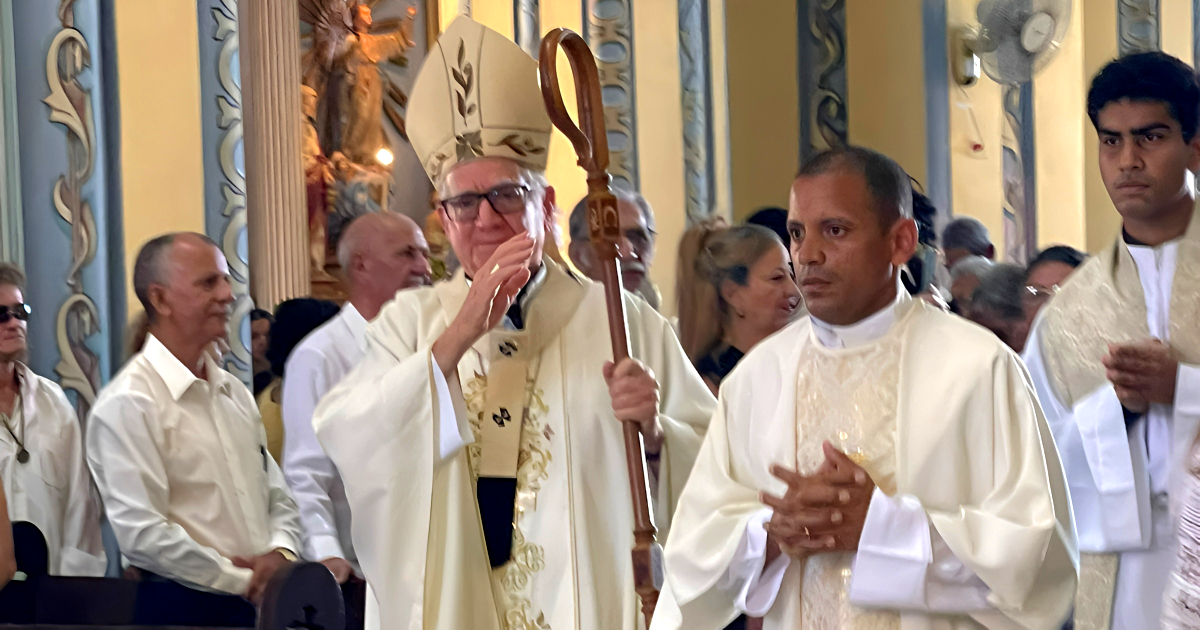
The Cuban Conference of Catholic Bishops (COCC) issued a powerful plea this Friday, addressing the nation's growing economic and social crisis. They urged for "structural, social, economic, and political changes" to restore hope to the people and prevent a potential outbreak of violence.
In a message directed towards "all Cubans of goodwill," the bishops expressed their "deep concern over the increasing hopelessness." They warned that the country is facing one of its most critical periods in decades, with the risk of "social chaos" if genuine dialogue and reforms are not initiated.
The episcopal statement—broadcast from the Archbishopric of Santiago de Cuba and read in parishes nationwide—emphasized: "Cuba needs changes that are increasingly urgent, but it does not need more anguish or pain. No more bloodshed or mourning in Cuban families."
The bishops recalled that back in June 2025, during the Jubilee Year themed "Pilgrims of Hope," they had called on the government to initiate profound transformations "without internal or external pressures or conditions." They emphasized that the situation has worsened, especially after announcements regarding the potential halt of oil supplies to the island.
The statement implicitly referred to recent measures by the United States, led by President Donald Trump, intended to sanction countries supplying fuel to Cuba. Such pressures, the bishops noted, "trigger alarms, particularly for the less fortunate."
However, the bishops also cautioned that conflicts should be resolved "through dialogue and diplomacy, never through coercion or violence." Drawing on the words of Saint John Paul II during his historic 1998 visit, they called for “the world to open up to Cuba, and for Cuba to open up to its own people, without exclusions.” The bishops reminded that economic and political isolation indiscriminately impacts the most vulnerable.
The message also expressed gratitude for the solidarity received after Hurricane Melissa, highlighting the efforts of Caritas and the assistance from governments and international organizations that "have looked upon the affected with love and compassion."
Without directly naming the regime, the bishops demanded "an environment of plurality and respect" within the country, where fundamental freedoms are acknowledged and all social sectors, especially the most impoverished and marginalized, have a voice. "To build a homeland with all and for the good of all requires a great soul, as José Martí envisioned," they stated.
The document reaffirmed the Church's commitment to defending human dignity and its willingness to participate in mediation or reconciliation initiatives if requested by the parties involved.
"The Catholic Church will continue to accompany this beloved people, offering its readiness to help lower the tone of hostilities and create spaces for fruitful collaboration for the common good," the message concluded.
Invoking Our Lady of Charity of El Cobre, Cuba's patroness, the bishops called for "the hour of love" to arrive, urging for reason and sanity to prevail over "threats, discord, and irreconcilable stances."
With a calm yet firm tone, the bishops' statement emerges as one of the clearest voices from within the country advocating for urgent changes, inclusive dialogue, and an opening that returns hope and dignity to the Cuban people.
The Courageous Voices of the Clergy
The bishops' message coincides with a time when several Cuban priests, including Father Alberto Reyes, have become moral beacons for a weary and disillusioned populace. Reyes, the parish priest of Esmeralda in Camagüey, has published a series of reflections asserting that "change is already walking among us" and that Cuban society, despite decades of indoctrination and fear, "can learn to live in freedom."
His discourse consistently calls for the country's ethical reconstruction: moving beyond simulation, double standards, and dependence on the "state as a parent" to learn to think, decide, and coexist in plurality.
"Perhaps we are not entirely ready for freedom, but neither are we prepared to continue in decline," he wrote in one of his recent publications.
Father Reyes has frequently been targeted by State Security, summoned and threatened alongside Father Castor José Álvarez for their critiques of the political system. Nevertheless, he has reiterated his commitment to "seeking the greater good of the homeland," despite the regime's warnings.
In previous writings, Reyes criticized repression, show trials, and the complete disconnect of power from the country's reality: "This people stopped identifying with the Revolution a long time ago. Cuba is falling apart and collapsing in every sense," he lamented after the sentencing of writer José Gabriel Barrenechea for protesting during a blackout.
In another reflection, the priest urged his compatriots to look beyond mere survival and transform the everyday into service: "Life is not just about enduring, but making the environment a more humane place."
Father Reyes symbolizes the increasingly vocal role of a Church that, despite pressures and threats, is beginning to regain a public voice in the face of national collapse. His message of change, rooted in Christian ethics and personal dignity, aligns with the bishops' call for sincere dialogue, without exclusions, enabling Cuba to finally open up to its own people.
Key Questions on the Cuban Bishops' Call for Change
What did the Cuban bishops call for in their recent statement?
The Cuban bishops called for urgent structural, social, economic, and political changes to restore hope to the people and prevent potential violence.
How did the bishops view the role of dialogue in resolving conflicts?
The bishops emphasized that conflicts should be resolved through dialogue and diplomacy, rejecting coercion and violence as means of resolution.
What role has Father Alberto Reyes played in Cuban society?
Father Alberto Reyes has become a moral beacon, advocating for ethical reconstruction and urging for freedom and plurality in Cuban society.