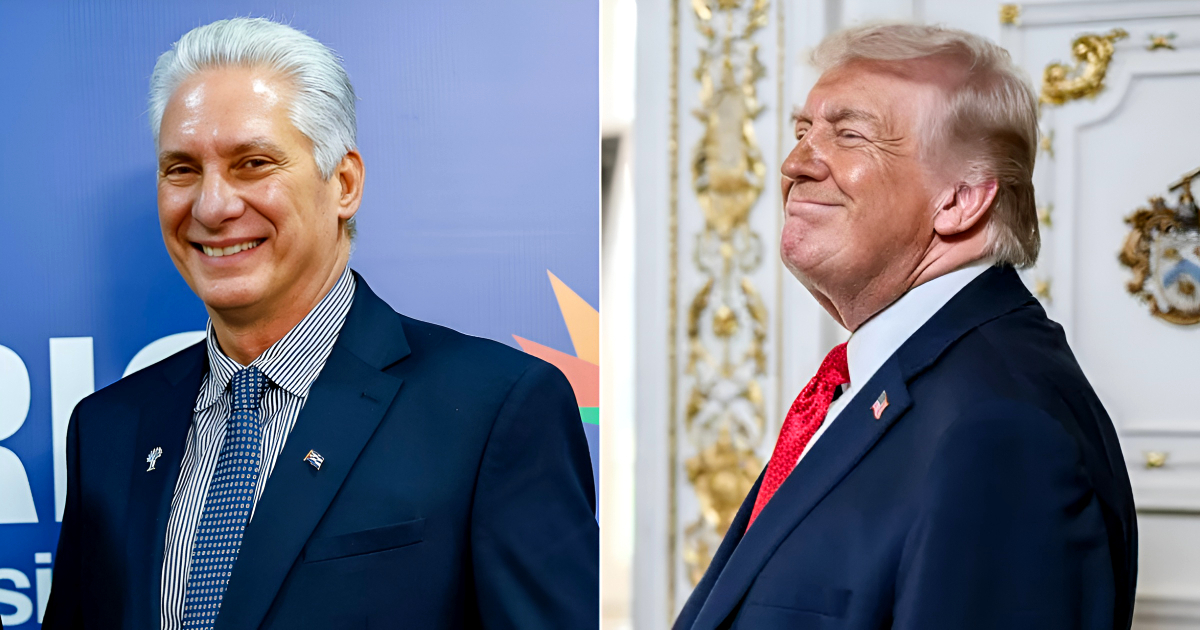
Cuban leader Miguel Díaz-Canel made an unexpected adjustment to his tone this Friday after a period of silence and verbal attacks against Washington.
In a post shared on the official Presidency of Cuba account on X (formerly known as Twitter), the leader appointed by Raúl Castro expressed Cuba's willingness to engage in discussions with the U.S. government, albeit with a caveat that such discussions must occur without pressure.
"We are a nation of peace. Even amidst this aggression and the blockade that has persisted over the years, we've declared our readiness to dialogue with the U.S. government. However, such dialogue must not be under pressure. Despite the fuel blockade, Cuba will not be overpowered by the empire," he stated.
This statement contrasts sharply with comments made the previous week, where Díaz-Canel labeled the Trump administration as "fascist, criminal, and genocidal" in response to an executive order aimed at cutting Cuba's oil supply by sanctioning countries that provide fuel to the island.
He made these remarks during an Extraordinary Plenary of the Communist Party's Provincial Committee in Havana, where he continued with the customary anti-imperialist rhetoric: condemning "the empire's aggression," likening Trump to Hitler, and reiterating that Cuba "will not surrender."
Yet, his public message on Friday suggested a shift in tone: the possibility of dialogue was not entirely dismissed, though it was cloaked in the familiar language of resistance.
Diplomatic sources in Havana, consulted by CiberCuba, interpret this as an attempt to project a willingness to negotiate amid growing international pressure and the country's severe energy crisis.
"This is Cuba's version of the Venezuelan model: outward defiance paired with private negotiations," commented a foreign observer.
Díaz-Canel's remarks come amid a tense regional climate, with the United States intent on cutting off the regime's energy supplies and several governments warning about the rapidly deteriorating situation on the island.
Meanwhile, the Cuban propaganda apparatus seeks to portray the crisis as solely the result of external sanctions, ignoring the internal mismanagement and structural corruption that have driven the nation to the brink of collapse.
Despite the rhetoric of "resistance and sovereignty," Díaz-Canel's message indicates the regime's quest for political and economic relief, aware that international isolation and the fuel shortage could hasten its ultimate suffocation.
Understanding Díaz-Canel's Shift in Approach
Why did Díaz-Canel change his stance regarding dialogue with the U.S.?
Díaz-Canel's shift is seen as a strategy to project a willingness to negotiate in light of increasing international pressure and Cuba's severe energy crisis.
How does Díaz-Canel's message differ from his previous statements?
His latest message marks a departure from earlier, more aggressive rhetoric, as he now expresses openness to dialogue with the U.S., provided it occurs without pressure.
What is the significance of Díaz-Canel's willingness to negotiate?
This willingness to negotiate suggests a potential shift in Cuba's approach to international relations, possibly seeking economic relief and political goodwill amid isolation.