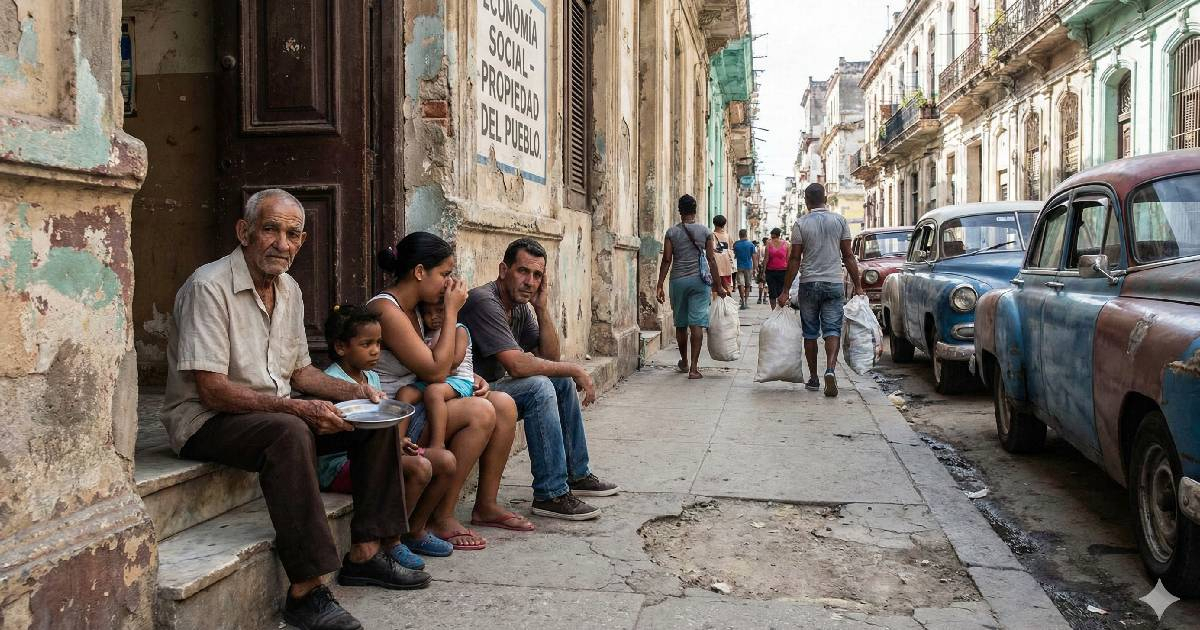
Those familiar with my work know my stance on the Cuban regime. I have no doubt about its authoritarian nature, entrenched corruption, relentless repression, and its failure to provide a decent quality of life. However, it's precisely for these reasons that I reject, without hesitation, the new narrative advocating for halting flights, remittances, and the flow of content from the United States to Cuba as if this were a serious liberation strategy.
Let's be clear: these actions don't strike at the regime; they strike at the people.
Remittances aren't propping up the regime; they're sustaining families. They support mothers feeding their children, grandparents purchasing medicine, and young people scraping by. Flights aren't ideological tourism; they're reunions, farewells, emergencies, funerals, and long-awaited embraces. Videos, information, and cultural exchanges from the outside aren't propaganda; they're a breath of fresh air for a society suffocating under censorship.
We're being sold the notion that suffocating the population will spark an "internal explosion" to topple the dictatorship. This begs the question: where was the tangible support on July 11, 2021? When the people took to the streets unarmed, leaderless, and unprotected, crying out for freedom, they faced repression, imprisonment, and abandonment. There was no intervention, no structured support, and no international safety net. The people stood alone.
Now, from the comfort of exile, some advocate for more punishment, as if suffering were a political strategy. As if hunger orchestrates revolutions. As if desperation breeds democracy. History tells a different story: authoritarian regimes endure through hardship; it is the citizens who do not.
Halting flights, remittances, and communication doesn't weaken the system; it weakens civil society. It isolates, fragments, drives people to the black market, illegality, and silence. It robs the average citizen of tools, not the oppressive apparatus.
Freedom isn't built through isolation or collective punishment. It's constructed with information, human connections, tangible support for those within, and smart political pressure, not through decisions that amplify the suffering of those already trapped.
Criticizing the dictatorship shouldn't mean losing one's moral compass. If "overthrowing" a regime requires destroying its people, the issue isn't just political; it's profoundly ethical.
And this must also be spoken. Without fear. Without slogans. Without hypocrisy.
Questions About U.S. Policies on Cuba
Why are remittances important for Cuban families?
Remittances provide essential support to Cuban families by helping them afford basic necessities such as food, medicine, and other daily expenses, especially in a struggling economy.
What impact do flight restrictions have on Cuban society?
Flight restrictions affect Cuban society by limiting opportunities for family reunions, urgent travel, and cultural exchange, further isolating the Cuban people.
How do authoritarian regimes typically survive hardships?
Authoritarian regimes often survive hardships by maintaining control over resources, suppressing dissent, and leveraging external threats to consolidate power while the general populace suffers.