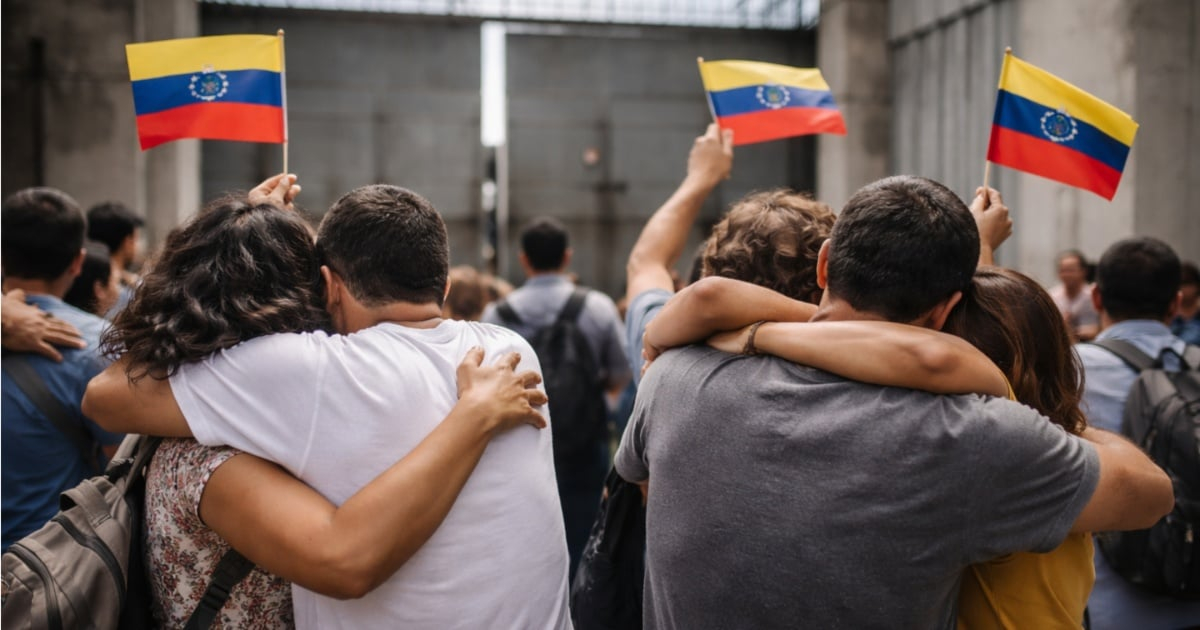
Interim President of Venezuela, Delcy Rodríguez, declared on Friday a comprehensive "amnesty law" for the nation's political prisoners. This initiative aims to "promote coexistence in Venezuela," as Rodríguez articulated.
Reported by El País, the announcement was made during an event at the Supreme Court of Justice. The proposed legislation is expected to be discussed and potentially approved by the National Assembly "as early as next week," according to sources.
The initiative could potentially impact hundreds of political detainees still behind bars. This move follows a series of releases allegedly surpassing 600, although human rights advocates contest this number, suggesting a figure closer to 302.
Rodríguez stated, "I am announcing a general amnesty law, and I am entrusting it to the National Assembly to enhance coexistence in Venezuela," urging a move away from "violence or vengeance" towards living "with respect." She also indicated that the decision had been discussed with Nicolás Maduro.
The amnesty seeks to extend full pardons and "erase charges" for the released individuals, a broader measure than the recent conditional releases, which involved restrictions like travel bans or employment limitations.
Rodríguez clarified that the forthcoming legislation would not apply to those convicted of homicide, drug-related offenses, and common crimes.
During the same event, which barred journalists, Rodríguez announced a surprising development: El Helicoide, a notorious detention center associated with the regime's oppressive measures, would be transformed into a community center offering social and sporting services. She also committed to tackling corruption within the justice system.
This announcement comes nearly a month after the initiation of prisoner releases, which reportedly began following the capture of Nicolás Maduro by U.S. forces on January 3. Although the regime claims these releases are extensive, reports point to a slow and opaque process, lacking clear official information about those eligible for release. Meanwhile, families continue to demand transparency through persistent advocacy for the publication of detainee lists.
In some instances, the so-called releases merely allowed for family visits for those who had been held incommunicado for months.
Contentious Numbers and Social Pressure NGOs report over 300 releases in the past month, yet estimates suggest 600 to 700 political prisoners remain, with over 9,000 individuals facing judicial measures and an undetermined number of political exiles.
Families have established vigils and camps outside prisons to advocate for complete liberation, a movement that has rekindled protests previously stifled by political repression.
Since 1999, Venezuela has not seen a comprehensive amnesty, though pardons have occurred, such as in 2020, when Maduro released 110 opposition figures, including members of Juan Guaidó's team. In that instance, a list was published, but advocates alleged it included common criminals and previously freed individuals.
The call for a general amnesty has been a longstanding demand from opposition factions and victims of government crackdowns. El País notes that this issue gained momentum after Jorge Rodríguez, President of the National Assembly, announced the release of a "significant number" of detainees following Maduro's capture, an effort deemed insufficient by civil society and the opposition.
Simultaneously, the Committee of Mothers for the Defense of Truth has proposed an amnesty law, gathering signatures in support. Their proposal includes political prisoners, exiles, and persecuted individuals, with stipulations for case dismissals and independent verification, as outlined in the cited document.
Understanding Venezuela's Amnesty Proposal
What is the purpose of Delcy Rodríguez's amnesty proposal?
The proposed amnesty aims to foster coexistence in Venezuela by releasing political prisoners and erasing their charges, thus promoting a more harmonious social environment.
Who will be excluded from this amnesty?
Individuals convicted of homicide, drug-related offenses, and common crimes will not be eligible for the proposed amnesty.
What changes are planned for El Helicoide?
El Helicoide, formerly a detention center, is set to be converted into a community facility providing social and sporting services.