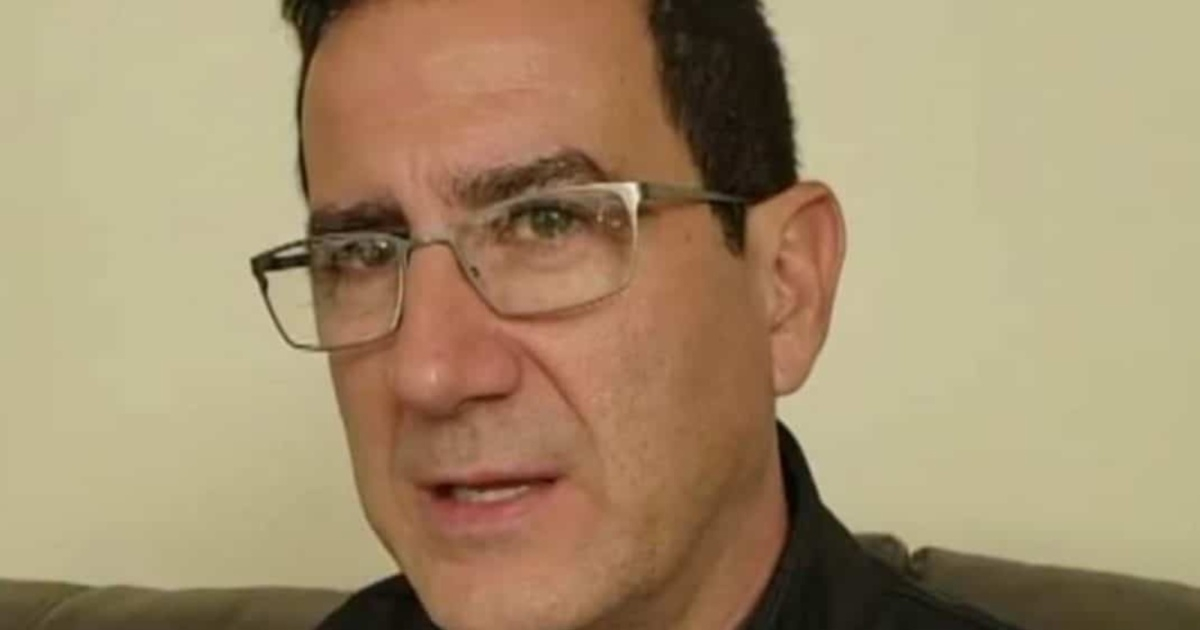
Cuban priest Alberto Reyes shared his thoughts this past Friday, emphasizing that "change is a journey we learn along the way." He warns that, although the transition will be "tough" and "challenging," Cuban society is capable of embracing freedom and rebuilding values that have been eroded over decades of dependency and indoctrination.
Reyes challenges the common belief, which he describes as prevalent, that "island Cubans are not ready for change," arguing that this can only be proven once the change, already underway, is fully realized.
Nonetheless, he acknowledges that the nation bears the weight of accumulated constraints: years without liberty, reliance on a "nanny state" that "gives" and "takes away," and a social culture marred by deceit, pretense, and double standards.
The priest argues that change won't happen as an instant "leap," but rather as a process filled with missteps. He anticipates that when the "definite change" arrives, people will make mistakes, get back up, and learn gradually.
The Challenges of Transition
Reyes lists several factors that, in his view, complicate the transition to freedom and a pluralistic society:
- Indoctrination and lack of personal autonomy: He describes a citizenry "accustomed to not thinking for ourselves."
- State dependency: He refers to a state that dictates daily life.
- Decades-old economic and rights ideologies: He points out ingrained beliefs about paying for services like education and healthcare, the free market, and private property.
- Normalization of "making do": He argues that people learned to obtain necessities "at any cost," sidelining ethical considerations because doing things "the right way" might prevent acquiring essentials.
- Uniformity and intolerance: He asserts that uniformity was taught as a "supreme" value, leading to intolerance and even violence against differing viewpoints, with dialogue seen as a "weakness" for years.
Reyes concedes that society may not be "fully prepared" for a life of freedom and plurality, but he counters with another core idea: it is also not prepared to continue in its current decline.
He highlights sustained suffering, a lack of future prospects for children, the destitution of the elderly, and being "hostages" of an "island-prison" as reasons why remaining in the current state is equally untenable.
To support the notion that learning change is possible, Reyes cites concrete examples: thousands of Cuban emigrants have thrived "often without knowledge or resources"; entrepreneurs on the island have created "new realities"; and some, "amidst difficulties," are teaching, educating, and helping to instill values in new generations.
He concludes his reflection with a recurring thesis: change is already "on the move," and though it won't be easy, "we will succeed."
Understanding Cuba's Path to Change
Why does Alberto Reyes believe Cubans are ready for change?
Reyes believes that despite the ongoing challenges, Cuban society is capable of learning to live in freedom and rebuild values that have deteriorated over time. He argues that the change is already happening and that readiness can only be assessed once the change is fully realized.
What factors complicate Cuba's transition according to Reyes?
Reyes points to factors such as indoctrination, state dependency, entrenched economic and rights ideologies, the normalization of unethical practices, and societal intolerance as complicating the transition to a free and pluralistic society.