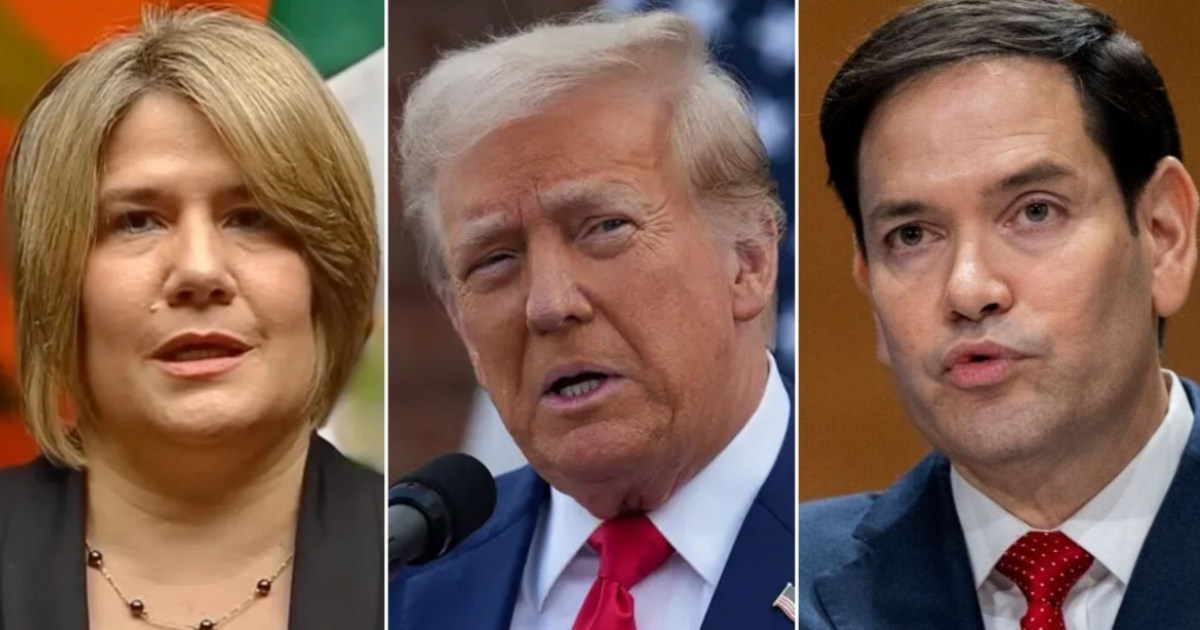
Lis Cuesta, the wife of Miguel Díaz-Canel, took to social media platform X to react to a new executive order by U.S. President Donald Trump targeting Cuba's government, issuing a direct cautionary note.
"Mr. Trump, be wary of those who deceive you and merely aim to occupy your seat in the Oval Office," she posted, challenging the notion that Washington views the island as an "unusual and extraordinary threat" to the U.S.
Cuesta's post, which could be interpreted as a reference to Marco Rubio, followed Trump's signing of an executive order declaring a national emergency. This order contends that "the policies and actions of the Cuban Government" pose such an "unusual and extraordinary threat" to U.S. national security and foreign policy.
According to the document issued from the White House, the decree will take effect on January 30, 2026.
In her statement, Cuesta also condemned the historical and moral stance of the measure, asserting, "There is no merit in emulating Valeriano Weyler or Hitlerian genocides. History will judge them harshly. Homeland or Death. WE WILL WIN!"
U.S. Justifications and Accusations
As outlined in Trump's decree, the U.S. administration asserts that the Cuban government "aligns with numerous hostile nations, transnational terrorist groups, and malevolent actors opposed to the United States," explicitly naming Russia, China, Iran, Hamas, and Hezbollah.
The document accuses Cuba of "harboring dangerous adversaries" and enabling the establishment of "military and intelligence capabilities" that, according to the text, pose a direct threat to U.S. national security.
Among the allegations, it notes that Cuba hosts "the largest Russian intelligence base outside of Russia" and continues to expand defense and intelligence cooperation with China.
International Reactions and Criticisms
The executive order also accuses the Cuban "communist regime" of supporting terrorism, "destabilizing the region" through migration and violence, and committing human rights violations against dissidents, restricting freedoms such as speech, worship, and press, as stated in the document.
Echoing Cuesta's sentiments, Cuban Foreign Minister Bruno Rodríguez Parrilla proclaimed an "international emergency" in response to the executive order on Friday.
Rodríguez labeled the Trump administration as an "unusual and extraordinary threat" stemming "wholly or substantially from the neofascist anti-Cuban right," in a message shared on X and the Ministry of Foreign Affairs (MINREX) website.
The text, attributed to "the people of Cuba, with the solidarity of the international community," concludes that the situation with the U.S. government impacts national security, foreign policy of all countries, international peace, and humanity's survival in the face of nuclear and climate threats.
The U.S. measures establish a tariff system allowing Washington to impose additional levies on imports from countries that sell or supply oil to Cuba, either directly or indirectly.
It also assigns the Secretary of Commerce the responsibility to determine if a country is engaging in such transactions and the Secretary of State, in consultation with other agencies, the authority to decide whether to apply tariffs and to what extent.
FAQs on U.S. Sanctions and Cuba
What is the nature of the new executive order against Cuba?
The executive order declares a national emergency, asserting that Cuba's government poses an "unusual and extraordinary threat" to U.S. national security and foreign policy.
How has Cuba's government responded to the U.S. executive order?
Cuban officials, including Lis Cuesta and Foreign Minister Bruno Rodríguez Parrilla, have criticized the order, declaring it a threat and calling for international solidarity against it.
What are the implications of the sanctions on countries supplying oil to Cuba?
The U.S. may impose additional tariffs on imports from countries that engage in oil supply transactions with Cuba, as determined by the Secretary of Commerce and the Secretary of State.