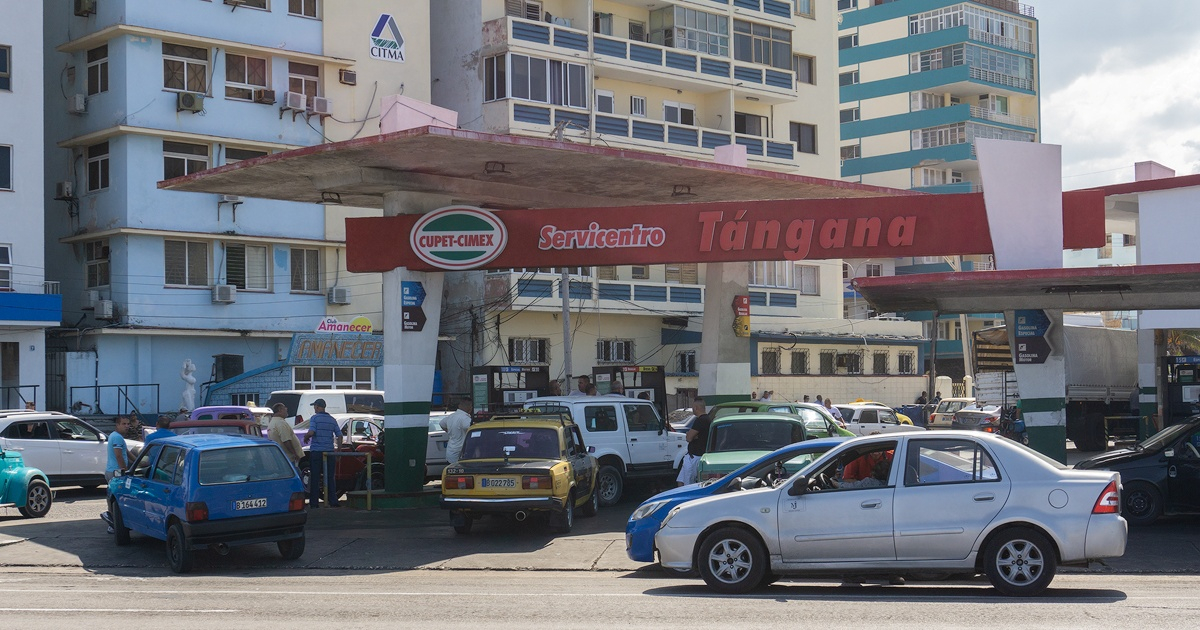
Recently, the Cuban state oil company, *Unión Cuba-Petróleo* (CUPET), firmly dismissed circulating rumors that fuel supplies to the nation's service centers had been halted.
In a brief message on its official channels, CUPET stated: "The information spreading across some digital platforms is false. Fuel supplies to the country's service centers have not been stopped."
The statement included a screenshot of the supposed "joint statement" between CUPET and the Ministry of Tourism (MINTUR), which had rapidly gained attention amidst the worsening shortage issues affecting many parts of the country.
CUPET urged the public to rely on official sources and national media for updates, emphasizing the importance of not spreading unverified information.
The Misleading Message and its Content
The debunked notice, falsely attributed to CUPET and MINTUR and dated January 29, claimed that in response to the energy crisis and "the intensification of the economic, commercial, and financial blockade imposed by the United States government," a decision had been made to:
"Temporarily halt general fuel supplies at gas stations and state-run sales points from the date of this communiqué until further notice."
The fraudulent message stated this suspension was due to an "interruption of imported supplies" caused by "hostile actions and foreign sanctions."
Furthermore, the document mentioned the "genocidal blockade" and called for "unity, discipline, and solidarity among all Cubans."
It also indicated that priority would be given to fuel for strategic sectors and authorized vehicles, advising the public to "avoid unnecessary travel" and coordinate any urgent needs with local authorities.
The message ended with political slogans like "Homeland or Death! We Shall Overcome!" in an attempt to mimic an official tone.
Public Reaction Amid Fuel Shortages
Despite the official clarification, many citizens voiced on social media that the fuel shortage is indeed a reality. While there might not be an official suspension, fuel remains scarce or unavailable in numerous regions.
One user noted, "This announcement may claim the news is fake, but the reality at CUPET stations tells a different story," and added, "Perhaps they only refer to stable service for those who pay in USD."
Additional comments on CUPET's social media highlighted user frustrations:
- "Since January 2, 2026, no gas has been supplied to the CUPET at G and 25. I'd like to know if they'll ever supply again so I can take my ticket elsewhere."
- "At the Tropicana CUPET, I have a ticket for a plant and move between 0 to 20 spots per day."
- "Gas sales stopped even when there are supplies, according to workers' comments. I think it might be for dollar sales."
- "In Santiago de Cuba, they should start selling liquefied gas. Since sales were halted, there's been no word, and people are struggling."
Some users accused the system of irregularities, favoritism, and corruption: "Cimex charges for the spot, and the shameless ones take it all," one user complained.
Most comments reflect a sense of uncertainty and frustration. Many claim that supplies are available but "only in dollars," not through the ticketing system.
Energy Crisis Exacerbated by International Pressure
This conflict of narratives arises during a particularly sensitive period for Cuba.
The release of the fake communiqué coincided with a statement from then-President Donald Trump, introducing an executive order allowing tariffs on countries supplying oil to Cuba.
The document accused the Cuban government of "collaborating with malign actors such as Russia, China, Iran, Hamas, and Hezbollah," labeling it an "unusual and extraordinary threat" to regional stability.
"The United States has zero tolerance for the depredations of the Cuban communist regime," the statement warned, blaming Havana for "harboring terrorist organizations," utilizing "intelligence infrastructure" for rival powers, and its alleged destabilizing role in the region.
According to The Wall Street Journal, this diplomatic and economic push aims to hasten the collapse of the Cuban regime, following the loss of Venezuelan support and the worsening internal crisis.
Denial at Odds with Reality?
Although CUPET denies halting fuel supplies, public complaints and the partial distribution paralysis suggest a disconnect between official statements and the everyday experiences of Cubans.
The denial merely refutes the existence of the false communiqué, offering no figures, logistical details, or explanations regarding the fuel shortages in many areas.
No mention is made of any immediate plans to restore normal sales flow. This omission, combined with social unrest and increased external pressure, feeds the perception that the situation may be more severe than authorities are willing to acknowledge.
Understanding the Fuel Crisis in Cuba
What was the false communiqué about?
The false communiqué, attributed to CUPET and MINTUR, falsely claimed that fuel supplies to gas stations and sales points in Cuba would be halted due to the energy crisis and U.S. sanctions.
How did CUPET respond to the false information?
CUPET issued an official statement denying the claims in the false communiqué, affirming that fuel supplies to service centers have not been stopped.
What are the public's reactions to the fuel shortage?
Many Cubans have expressed frustration and disbelief, noting that despite official statements, fuel scarcity is a significant issue in the country, with some suggesting supplies are available only in USD.