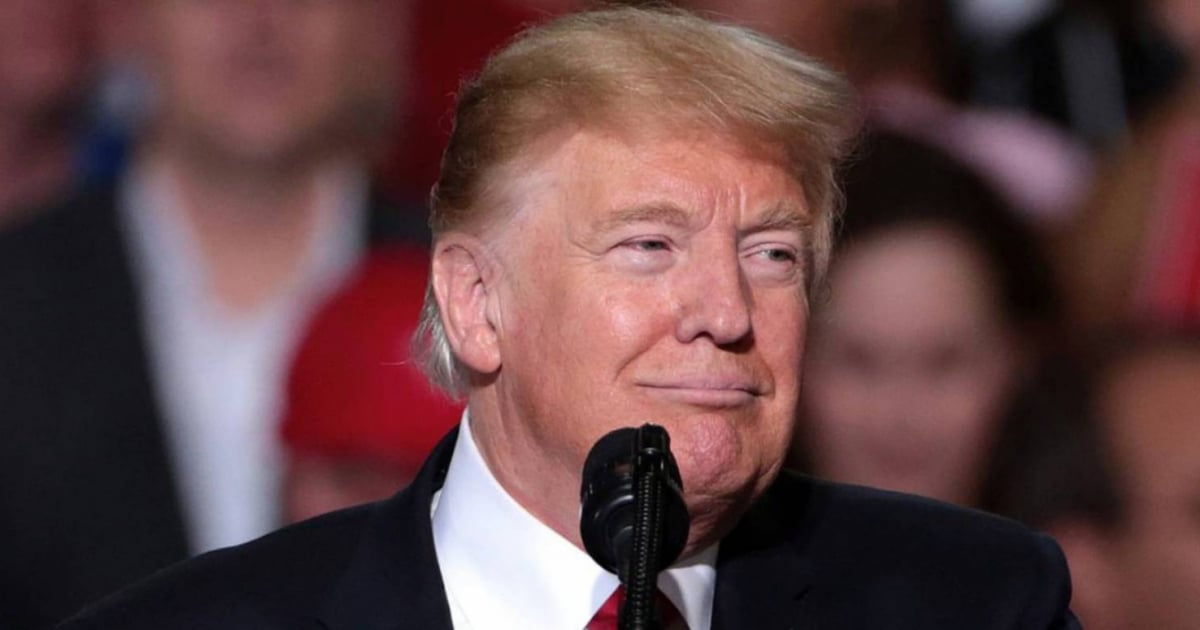
Social media platforms have been buzzing with reactions following President Donald Trump's recent executive order, which broadens the national emergency concerning Cuba and paves the way for imposing tariffs on countries supplying oil to the island.
While the emergency declaration isn't entirely new—it's a continuation of a decree issued in 1996 after two civilian planes were shot down, renewed annually by U.S. presidents—the latest version introduces a mechanism to sanction third countries, aiming to limit the Cuban regime's energy supplies.
The White House asserts that Cuba maintains connections with Russia, China, Iran, Hezbollah, and Hamas, and reportedly hosts “the largest Russian intelligence facility abroad.” According to Washington, the regime "spreads its communist policies across the region" and poses a threat to hemispheric stability.
Social Media Outcry: "Tick Tock" and "Real Blockade"
Official regime sites like Cubadebate were flooded with openly critical or sarcastic comments following the order. "Negotiate now, or look what happened to Maduro," one user posted. Another chimed in, "It's coming," while someone else noted, "Well, the time is coming."
Irony dominated the discourse. "Cubadebate won't sleep tonight. Neither will Canelo," joked another commenter. "The law of attraction, they called for the blockade so much it was granted," read one comment with numerous reactions.
Expressions like "tick tock" appeared across various threads, paired with phrases such as "The freebies are over," "Go cry to your mother," "Now there's a real blockade," and "Finally."
Some comments were more blunt: "Pack up what you've stolen, leave the island, and let democracy start anew"; "The Castro cartel, that's the biggest threat to the United States"; "Let go of power, Cubans want dignity and freedom, leave already."
Mixed Reactions and Calls for Dialogue
Amid the discussions, some focused on the need for dialogue: "It's time for the Cuban government to negotiate with the Americans. Everything except sovereignty is negotiable. After all, there's been neither revolution nor socialism for a while now."
Others celebrated the move with festive undertones: "Willy Chirino, play that song...," "It's coming oh oh oh," "The night won't last forever," "The Cuban people have lost their fear."
Criticism of the government mingled with calls to end repression and change the system. "The PCC's sham is over," one commenter wrote. Another added, "Time is running out, and they know it."
Some ridiculed the official narrative: "Now there's a real blockade, not your invention"; "See you at the rally tomorrow," quipped another.
Cuban Government's Response
Bruno Rodríguez, the Cuban Foreign Minister, condemned the decision as a "brutal act of aggression," accusing Washington of "blackmail and coercion" against other governments. "We strongly condemn the new escalation by #USA against #Cuba. They now aim to impose a total blockade on fuel supplies to our country," he declared on social media platform X.
Rodríguez argued that "the only threat to peace, security, and stability in the region is the one exercised by the United States against the nations and peoples of Our America," according to the Cuban regime's official response.
Cuban-American congressman Carlos Giménez responded directly: "Bruno, you still have time to return to your native land of Mexico. President Trump's actions are not a game. He keeps his word. Your time is running out. This is until the end."
Heightened Tensions and Potential Impact
The executive order expands the U.S. government's powers under the National Emergencies Act and the International Emergency Economic Powers Act. It authorizes the Department of Commerce and the Department of State to identify countries continuing to supply oil to Cuba and decide on potential tariffs.
The document leaves room for adjustments if Havana takes "significant" steps to align with U.S. national security and foreign policy interests.
These measures add to the restrictions imposed in recent years, aimed at increasing pressure on the regime and accelerating political change.
Amid power outages, fuel shortages, and a deep economic crisis, social media has become a gauge of social unrest. In recent days, Cubans have spoken candidly. One message sums it up succinctly: "Get ready, because the Cuban people have lost their fear."
Questions and Answers about Trump's Executive Order on Cuba
What does the new executive order on Cuba entail?
The executive order broadens the national emergency regarding Cuba, enabling the imposition of tariffs on countries supplying oil to the island and increasing economic pressure on the Cuban regime.
How has the Cuban government reacted to the executive order?
The Cuban government, through Foreign Minister Bruno Rodríguez, condemned the order as an act of aggression and accused the United States of blackmail and coercion.
What have been the social media reactions to the new measures?
Social media reactions have been mixed, with many users criticizing the Cuban regime and calling for change, while others expressed skepticism or criticized the U.S. government's actions.