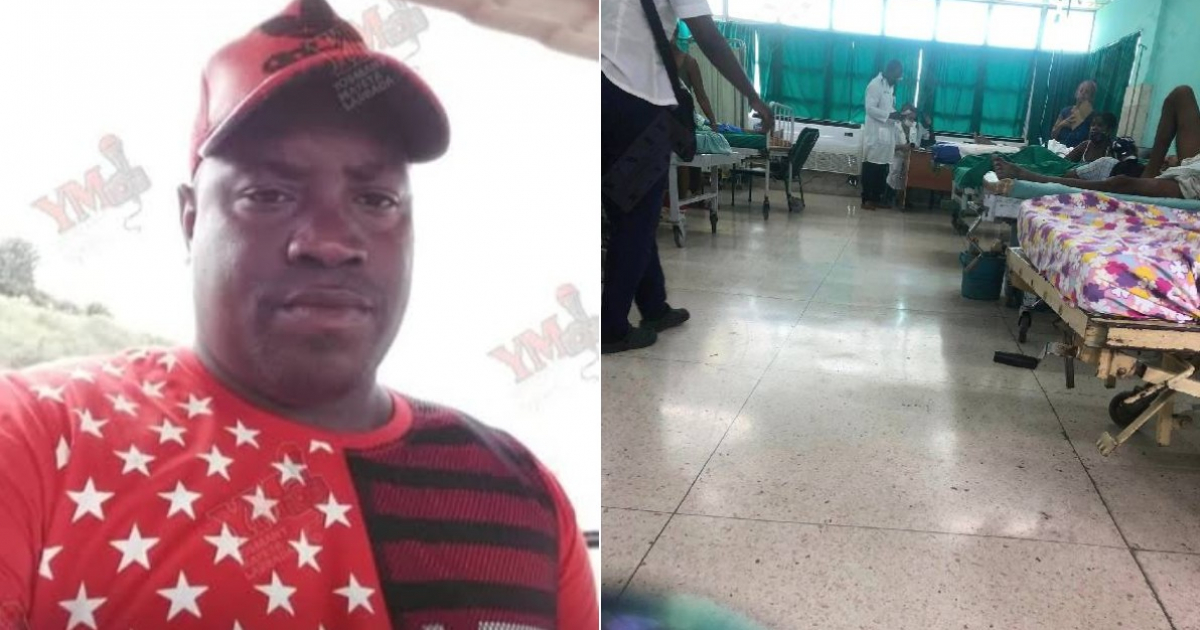
Santiago de Cuba has once again witnessed a tragedy highlighting the collapse of the island's healthcare system. Yordanis Beltrán Beltrán, a 42-year-old former police officer, died due to medical negligence, lack of medications and supplies, and a critical delay in receiving urgent care.
The family of Beltrán reported that he was first taken to the José Martí district clinic, where the absence of electricity made it impossible to provide even the most basic care for a critically ill patient.
A report by journalist Yosmany Mayeta Labrada on Facebook revealed that the lack of essential resources and a slow response marked the beginning of a fatal series of errors.
Despite the seriousness of the situation, the ambulance took over two hours to arrive, a delay that proved to be crucial. The family attempted to seek help by contacting the government's command center, but they claim their pleas went unanswered.
Eventually, Yordanis was transported to the emergency room of the Saturnino Lora Provincial Hospital, where he suffered a cardiac arrest and died shortly thereafter, underscoring the hospital network's incapacity to handle critical emergencies.
His family insists that his death was not "natural" but a consequence of neglect.
Healthcare Crisis in Cuban Hospitals
This incident once again exposes the deep crisis plaguing Cuban hospitals: dilapidated buildings, outdated medical equipment, scarcity of drugs and basic supplies, and healthcare staff often demotivated or indifferent to the severity of situations.
Every day, neglect and medical oversight lead to deaths that might have been preventable, while the population is left at the mercy of a collapsing system without effective government solutions.
Some point out the irony of Yordanis's situation: a former patrol officer who once defended the regime, ultimately neglected by the very government he served.
"That's how things are in Cuba: they use you and then discard you. We're just pieces in their game of theft and illusion. Then they don't want us to say this government is worthless," a neighbor of the victim remarked.
This reflection underscores how the island's political and healthcare systems have transformed once "useful" citizens into victims of inefficiency and neglect.
Yordanis's family voices a sentiment widely shared among Cubans: "I think it would be better to be under capitalism, even if we have to pay for healthcare, but at least earning in dollars... That's this regime for you: it uses you."
With each death, it becomes increasingly clear that the healthcare collapse and the government's lack of commitment to its citizens' lives continue to result in preventable tragedies across the island.
Understanding the Healthcare Collapse in Cuba
What led to Yordanis Beltrán Beltrán's death?
Yordanis Beltrán Beltrán died due to medical negligence, a shortage of medications and supplies, and a critical delay in urgent medical care.
How does this incident reflect the healthcare situation in Cuba?
The incident highlights the deep crisis in Cuban hospitals characterized by resource scarcity, outdated equipment, and demotivated staff, leading to preventable deaths.
What are the criticisms regarding the Cuban government's handling of healthcare?
Critics argue that the Cuban government has failed to provide effective solutions and is responsible for the inefficiency and neglect within the healthcare system.