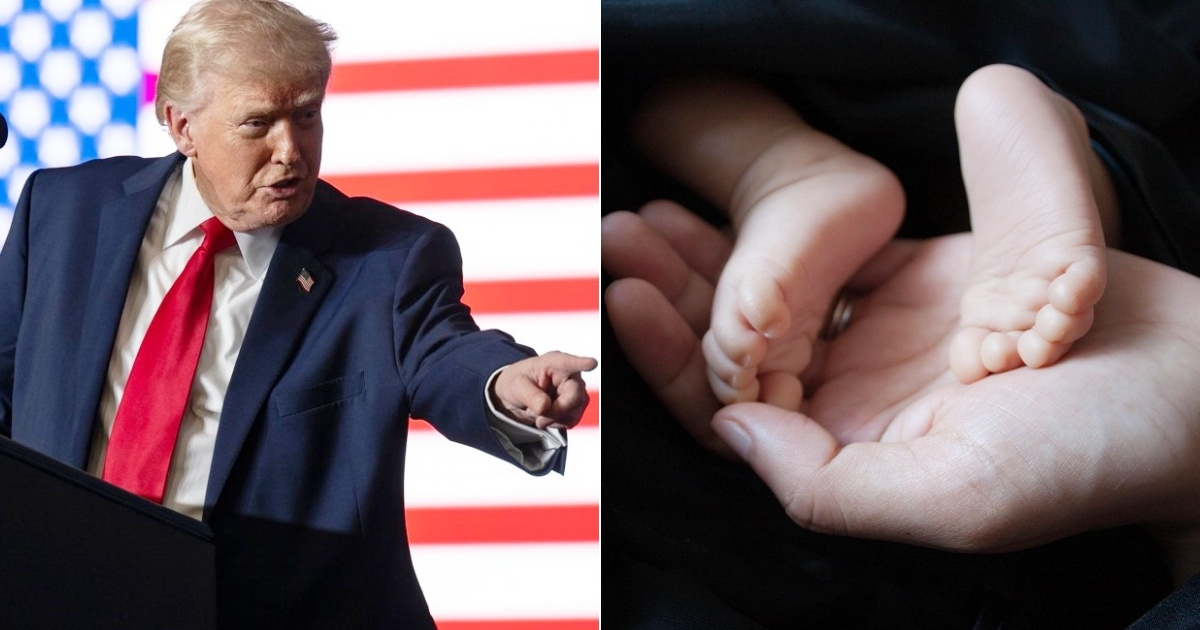
The administration under President Donald Trump has revealed a new initiative aimed at boosting its economic narrative by offering a direct $1,000 incentive for every newborn during his tenure. This program is intended to highlight economic growth and wealth creation.
Named "Trump Accounts," these investment vehicles are designed to serve as long-term savings tools for American children. The program, however, has been met with skepticism, with critics cautioning that it may exacerbate economic disparities, favoring wealthier families over those in poverty.
Understanding Trump Accounts
Trump Accounts are individual investment accounts set up for newborn U.S. citizens. The Treasury Department will deposit an initial $1,000, provided parents complete the account setup process. The funds will be invested in the stock market via index funds managed by private firms.
These accounts will remain inaccessible until the child turns 18 and can only be used for specific purposes such as higher education, starting a business, or purchasing a home. "We aim to introduce more individuals to the stock market, offering even children born into poverty a chance to benefit," stated Treasury Secretary Scott Bessent.
The accounts will have a maximum annual fee of 0.10%, and parents can contribute an additional $2,500 annually in pre-tax income. Other contributions from employers, family members, charitable organizations, or local governments are also permitted, with an annual cap of $5,000, except for public and philanthropic entities, which are exempt from the cap.
Eligibility for the $1,000 Incentive
Only babies born between January 1, 2025, and December 31, 2028, will qualify for the initial $1,000 incentive. They must have U.S. citizenship and a Social Security number, but there is no specific immigration status requirement for the parents. The incentive is unavailable for older children, though parents may open accounts for children under 18 and invest voluntarily.
"Any parent can open an account for an eligible child, regardless of the parent's immigration status," states the official Trump Accounts website.
Additional Incentives from Billionaires
While children born before 2025 won't receive the $1,000 Treasury deposit, some private initiatives offer small opening incentives. In December, billionaires Michael and Susan Dell pledged $6.25 billion to provide $250 to children under 10 whose parents open an account, limited to those living in areas with a median household income below $150,000 annually.
Investor Ray Dalio and his wife Barbara have joined this effort, promising $75 million to benefit 300,000 children in Connecticut under similar conditions.
How to Open a Trump Account
Interested parents must complete IRS Form 4547, either on their current year's tax return or via an online portal available starting July 2026. Registration is mandatory to receive the $1,000; it will not be automatically granted. Once registered, further instructions will be provided in May to complete the account setup process.
The Program's Objectives
The White House claims that Trump Accounts aim to foster a savings culture, bolster capitalism, and increase participation in financial markets from a young age. There is also a political motive to counter the growing popularity of progressive or socialist candidates advocating more redistributive measures.
According to the U.S. Securities and Exchange Commission, only 58% of households owned stocks or bonds in 2022, with the wealthiest 1% holding nearly half of the investment value. "Trump Accounts reinforce capitalism at a time when openly socialist candidates are gaining traction," a White House statement declared.
Critics' Opinions
Social equity advocates and analysts have criticized the initiative, arguing it does little to combat real child poverty, especially during the most vulnerable early years of life. "These accounts do little to assist children in their formative years when they are most susceptible to poverty," critics warn.
There is also criticism over the consistency of this proposal with social program cuts, such as reductions in Medicaid and food assistance, enacted by the same administration. The accounts were part of the same tax law that reduced funding for these services.
Critics argue that wealthier families will benefit the most, as they can make larger tax-deductible contributions. Even with the $1,000 incentive, low-income families unable to contribute additional funds will benefit far less than affluent families. With an average return rate of 7%, the initial amount would grow to approximately $3,570 in 18 years.
Inclusive Capitalism or Illusion of Equity?
While the Treasury promotes the "50 State Challenge" to attract wealthy philanthropists to the program, experts remind us that early access to housing, healthcare, or childhood education cannot wait 18 years to materialize. Previous programs in California, Connecticut, and Washington D.C. had tested similar schemes with more social criteria, such as bonuses for children in foster care, COVID orphans, or low-income families, managed by the state.
In contrast, Trump Accounts will be managed by private companies and available to all babies without economic need criteria.
FAQs about Trump Accounts
Who can open a Trump Account?
Any parent of a newborn U.S. citizen between January 1, 2025, and December 31, 2028, can open a Trump Account, regardless of the parent's immigration status.
What are the limitations on using Trump Accounts?
Funds in Trump Accounts can only be accessed when the child turns 18 and are restricted for use in higher education, starting a business, or purchasing a home.
Are there any additional contributions allowed in Trump Accounts?
Yes, parents can contribute up to $2,500 annually in pre-tax income, and other contributions from employers, family, or charitable organizations are permitted up to $5,000 annually.