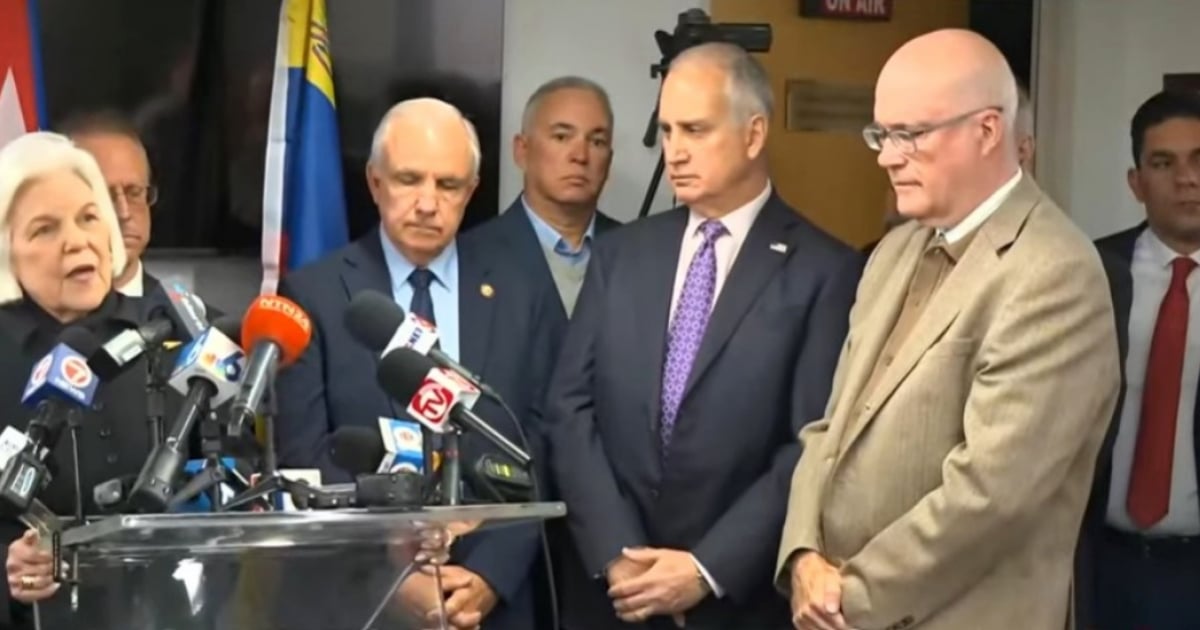
In Miami, at the headquarters of the Cuban Democratic Directorate, federal representatives Carlos Giménez and Mario Díaz-Balart declared their intention to formally ask President Donald Trump's administration to halt all flights to Cuba and stop the flow of remittances to the island nation.
The announcement was made during a press conference with members of the Cuban Resistance Assembly, exiled organizations, local elected officials, and community activists in attendance.
These lawmakers from South Florida justified their proposed actions as part of a plan to economically suffocate the Cuban regime, which they did not hesitate to describe as "a cancer in our hemisphere."
Carlos Giménez also suggested urging Mexico’s President Claudia Sheinbaum to cease oil shipments to Cuba, aiming to cut off one of Havana’s last energy support channels.
The message from the congressmen was unequivocal: the United States—and especially South Florida—must stop being part of an economic system that props up the Cuban government while it continues to oppress its people.
The rallying cry of the day was: "No more flights, no more remittances, no more mechanisms that sustain the dictatorship."
Support from María Elvira Salazar
Though absent from the event, Congresswoman María Elvira Salazar showed her explicit support through a post on social media platform X, urging the Cuban exile community to adopt a firm stance against the regime and to cease all economic flows.
"The time for Cuba’s freedom has come. Today we have a President and a Secretary of State committed to cleansing our hemisphere of tyrants, drug traffickers, and dictators. But the exile community also has a historical responsibility: to stop giving oxygen to the dictatorship," Salazar wrote.
She emphasized that everyday actions like sending remittances or visiting family inadvertently contribute to the survival of the island's political system.
"Because every dollar, every trip, and every gesture of false normality prolongs the life of a criminal regime and condemns the Cuban people to another 60 years of misery, repression, and enslavement. This is the moment to stop everything: no more tourism, no more remittances, no more mechanisms that continue funding and supporting the dictatorship," she asserted.
Acknowledging the human dilemma posed by cutting off resources to an impoverished population, Salazar also reflected on the emotional consequences of such decisions.
"And yes, I understand: it’s devastating to think of a mother’s hunger, a child needing immediate help. No one is indifferent to that pain. But that is precisely the brutal choice we face as exiles: to address short-term suffering or liberate Cuba forever."
She appealed directly to the historical responsibility of the Cuban exile community, urging them not to continue being an involuntary financial instrument for the same regime they escaped.
"We cannot remain hostages to a regime that even from exile forces us to finance our own oppression. In the regime's final hour, the exile must choose: freedom," she concluded.
Shifting Strategy Among Exiles
The congressmen's announcement marks a new phase of political alignment with the Trump administration, which has resumed its hardline rhetoric toward Havana.
Although the proposals have yet to be formally presented to the White House, the congressmen claim they have the backing of other key Republican figures and influential Cuban exile groups.
Organizations present, including the Cuban Resistance Assembly and the Cuban Democratic Directorate, have been pushing for a more vigorous policy toward the Cuban regime for months.
The joint initiative reinforces the notion that there is a push for not just an institutional response from Washington, but also a mobilization of the exile community as a significant political force.
The Enduring Dilemma: Family Aid vs. Political Pressure
The proposal, however, is not without controversy. While some exiles support stringent measures to cut the Cuban government's resources, others fear these actions will directly impact families who rely on remittances and flights to survive or stay connected.
María Elvira Salazar acknowledged this moral dilemma, yet urged for a strategic decision: to stop relying on stopgap solutions and commit to a definitive change.
FAQs on the Proposed Measures Against Cuba
What measures are Florida lawmakers proposing against Cuba?
They are proposing a total suspension of flights to Cuba and the elimination of remittances to the island.
Why do lawmakers believe these actions are necessary?
Lawmakers argue that these actions are part of a strategy to economically weaken the Cuban regime, which they describe as oppressive.
How does Congresswoman María Elvira Salazar view the situation?
Salazar supports the measures and emphasizes the need for the exile community to stop financially supporting the Cuban regime.