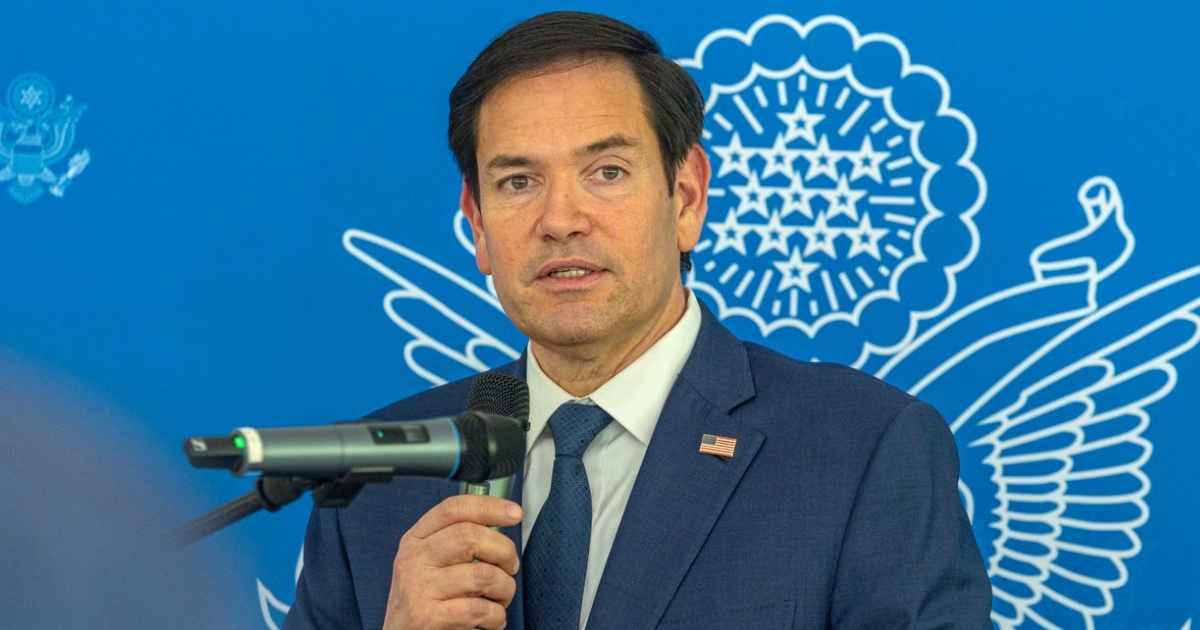
In a Senate Foreign Relations Committee hearing held this Wednesday, Secretary of State Marco Rubio articulated the administration's stance on the economic embargo against Cuba and the potential for regime change on the island.
Amidst international tensions, particularly following the recent capture of Venezuelan leader Nicolás Maduro, Rubio's statements—bearing significant weight as the son of Cuban immigrants—drew notable attention.
Legal Foundations of the Embargo: "More Than a Political Preference"
Rubio emphasized that the U.S. policy towards Cuba is grounded in existing legislation rather than being a result of temporary foreign policy decisions. He highlighted the Helms-Burton Act of 1996, which codified the economic embargo and stipulates that sanctions can only be lifted following a regime change in Cuba.
According to Rubio, this requirement “is not merely a political preference but a mandate of U.S. law.” He argued that adherence to this condition is crucial for any substantial shift in the relationship between the two nations.
Rubio dismissed the notion that the U.S. government might unilaterally lift sanctions, at least while the current political system in Havana remains intact. "The lifting of the embargo will only occur once there is a regime change," he reiterated, aligning this stance with federal law.
Prospects of Regime Change: "We Would Welcome It"
The topic of regime change was directly addressed when Democratic Senator Brian Schatz from Hawaii inquired if the Trump administration, under which Rubio serves as head of diplomacy, would abandon efforts to promote political transition in Cuba.
Without hesitation, Rubio responded that the administration "would love to see a change" in the Cuban government. However, he clarified that this "does not mean we will instigate it directly," suggesting that while the United States desires change, the initiative must originate from within the island.
"We would welcome it. It would be beneficial for the U.S. if Cuba were not under autocratic rule," Rubio stated, emphasizing that this goal aligns with Washington's strategic interests, though it should occur through internal means.
Economic Crisis and Historical Regression: "Unrecognizable Even to Soviets"
Rubio also used the hearing to hold the Cuban regime accountable for the nation's severe economic crisis. He dismissed the narrative attributing the island's structural woes to the U.S. embargo.
He argued the real source of the economic collapse lies in the autocratic and ineffective model that has persisted for over six decades. "The economic model implemented has not demonstrated functionality in any global context," he stated, adding that the situation in Cuba has deteriorated to the point that "even the founders of Soviet thought would not recognize the current system on the island."
As an example of economic regression, Rubio mentioned the sugar industry, recalling that Cuba was once the world's largest sugar producer, whereas now it must import the product. "The suffering in rural areas is a direct result of the regime's inability to manage the national economy," he said, pinpointing internal policies as the primary cause of the country's impoverishment.
A Multi-Layered Political Message
Rubio's appearance before the Senate took place in a particularly sensitive political context. Although the initial focus of the hearing was on Venezuela, the discussion about Cuba clearly outlined the general guidelines steering Washington's foreign policy towards Havana: sustained pressure, an embargo contingent on structural changes, and rhetoric that identifies the Cuban regime as the root cause of the island's social and economic issues.
In summary, Marco Rubio reaffirmed what various exile figures and Republican political sectors have long advocated: lifting the embargo is non-negotiable without regime change. Simultaneously, his remarks avoided endorsing direct destabilization actions, instead leaving it to the Cuban people to initiate and bear the cost of any transition.
Key Insights on the U.S. Embargo and Cuba
What is the legal basis for the U.S. embargo on Cuba?
The U.S. embargo on Cuba is legally grounded in the Helms-Burton Act of 1996, which requires a regime change in Cuba for the sanctions to be lifted.
How does Marco Rubio view the economic situation in Cuba?
Marco Rubio attributes Cuba's economic crisis to its autocratic and ineffective governance, not to the U.S. embargo, arguing that the existing system has failed globally.
What is the U.S. stance on regime change in Cuba?
The U.S. would welcome a regime change in Cuba, seeing it as beneficial, but insists that any such change must originate internally within the island.